



The demand for digital products has grown faster than most businesses can build for it. Customers now expect apps, dashboards, chatbots, and communication tools that feel custom made, yet building every one of these from scratch requires development time, technical expertise, infrastructure, ongoing maintenance, and a steady stream of updates. This is exactly the gap that white label software fills. Instead of building every feature in house, a business can take an existing, well maintained product and offer it to its own customers under its own brand. This approach has become common across marketing agencies, SaaS companies, consultants, and technology resellers who want to expand their offerings without expanding their engineering teams.
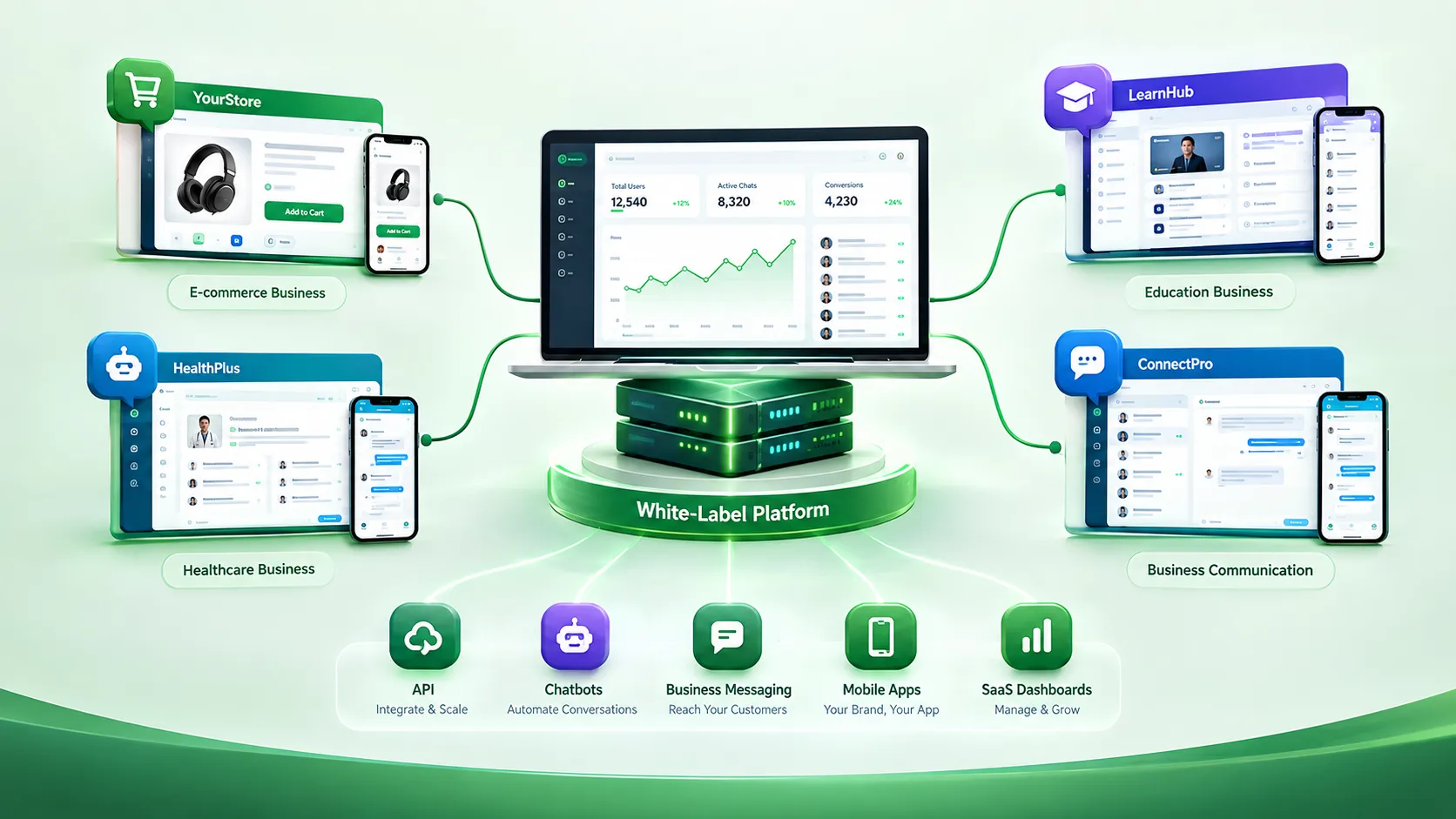
This guide explains what white label software actually means, how it works behind the scenes, where it is commonly used, and how a business can evaluate a provider before committing to one.
What Is White Label Software?
White label software is a product built and maintained by one company (the technology provider) but sold or distributed by another company under its own brand name. The end customer typically has no idea that the underlying technology was built by a third party they simply see the branding, interface, and support of the business they signed up with.
This is different from simply reselling a product. A reseller usually promotes someone else's software as is, often with the original brand still visible. A white label solution, on the other hand, is customized so the underlying provider becomes invisible to the end user. Common customization options include:
Brand name and logo
Custom domain or subdomain
User interface colors, layout, and terminology
Customer-facing communication such as emails and notifications
Pricing models set independently by the reselling business
Product positioning and packaging in the market
The technology provider handles the engineering servers, updates, bug fixes, and core functionality while the branding business focuses on sales, customer relationships, and service delivery.
How Does White Label Software Work?
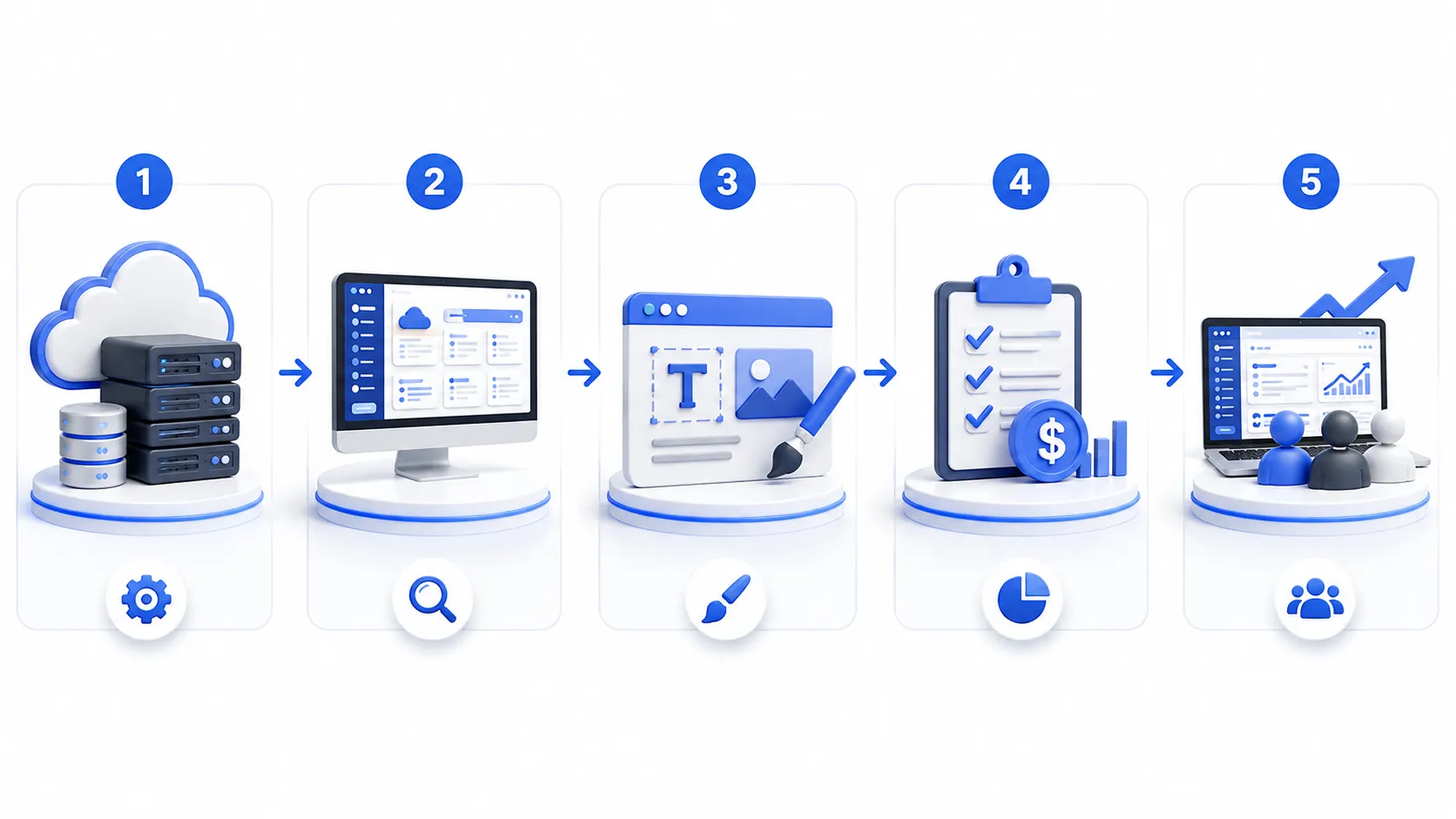
The process generally follows a predictable flow:
A technology provider builds the product. This includes the core features, backend infrastructure, and security systems.
A business selects a white-label offering that matches a gap in its own product line or service catalog.
Branding and customization are applied, replacing the provider's identity with the business's own name, logo, and domain.
The business creates its own pricing and service model, often bundling the software with consulting, onboarding, or support.
Customers interact with the branded product, unaware that a separate company built the underlying technology.
The technology provider continues maintaining the infrastructure, releasing updates and fixing issues in the background.
This division of labor is the main appeal of the model. A business does not need an engineering department to offer a capable white label platform to its customers it needs a clear understanding of its market, a dependable technology partner, and a plan for sales and support. Because the heavy technical lifting sits with the provider, the business can spend more time on marketing, account management, and growing its customer base.
Types of White Label Software Businesses Can Use
White label offerings fall into a few broad categories, each suited to different business needs.
White Label SaaS
White label SaaS refers to cloud-based software such as CRM tools, marketing platforms, automation systems, communication tools, analytics dashboards, and customer support software that a business can rebrand and offer as its own subscription product. Agencies and consultants often use this model to add recurring, technology based revenue alongside their existing services, without hiring a development team.
White Label App
A white label app allows a business to launch a mobile or web application without building every screen, feature, and backend service independently. Common use cases include:
Customer engagement or loyalty apps
E-commerce applications
Booking and appointment platforms
Communication and messaging apps
Industry-specific applications, such as tools built for clinics, gyms, or real estate agencies
This approach is particularly useful for businesses that want a branded mobile presence quickly, since app development from zero can take months and require ongoing technical staff.
White Label API
A white label API allows a business to integrate a provider's technical capabilities directly into its own product or service, rather than offering a full standalone application. When evaluating a white label API, businesses typically look at:
Quality and completeness of documentation
Authentication and access control methods
Scalability under increasing usage
Security practices, including data encryption and compliance
Flexibility to integrate with existing systems
Availability of technical support during implementation
APIs are especially relevant for software companies that want to embed a capability like messaging, payments, or data enrichment into a product they already own.
Why Are Businesses Choosing White Label Software?
The appeal of this model comes down to a few consistent advantages:
Faster time to market, since the core product already exists
Lower initial development effort, avoiding the cost of building from zero
Reduced infrastructure requirements, as hosting and maintenance sit with the provider
More focus on branding and customer acquisition, rather than engineering
Ability to test new markets without a large upfront technology investment
Recurring revenue opportunities through subscription-based pricing
Access to specialized technology that would otherwise require niche expertise
Potential scalability, since the provider is typically built to handle growth
A white label business can take many forms depending on how a company positions itself as an agency reselling a branded tool, a SaaS provider layering added features on top of a base platform, a consultant bundling software with services, or an industry specific provider tailoring a general purpose tool for a niche audience.
White Label Software vs Building Software From Scratch
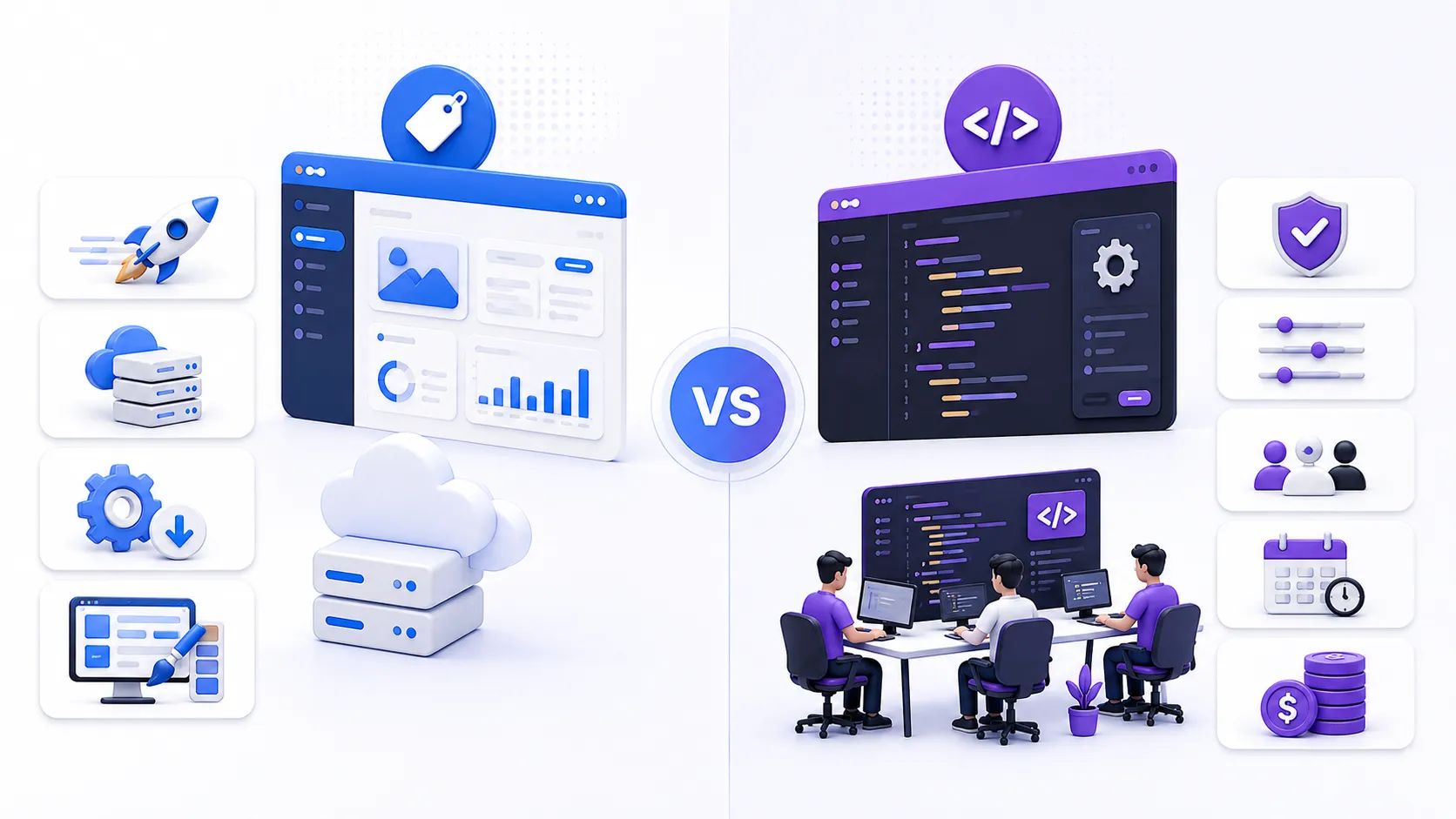
Neither approach is universally better. The right choice depends on budget, timeline, required control, and long term product strategy.
Time to launch: White label software takes weeks to a few months, while custom software development takes several months to years.
Initial investment: White label software requires lower investment, often subscription based, while custom development requires higher upfront cost and a dedicated development team.
Control over core product: White label software offers limited control, restricted to the provider's customization options, while custom development offers full control over features and architecture.
Customization: White label software allows branding and configuration level customization, while custom development can be built to exact specifications with no limits.
Maintenance: White label software maintenance is handled by the provider, while custom software maintenance is handled internally or through contractors.
Technical responsibility: With white label software, technical responsibility is shared with, or owned by, the provider, while with custom development, it is entirely owned by the business.
Scalability: White label software scalability depends on the provider's infrastructure, while custom software scalability depends on internal engineering capacity.
Speed of testing a new idea: White label software allows fast, low commitment testing, while custom development is slower and requires higher commitment.
A business validating a new market idea often benefits from starting with white label software, since it allows testing demand before investing heavily in custom development. A business with very specific, differentiated technical requirements may eventually need custom development to achieve full control.
Who Can Benefit From White Label Software?
Several types of businesses commonly adopt this model:
Digital marketing agencies looking to add technology-based services
Technology consultants who want to offer tools alongside advice
SaaS startups validating a new product category
Entrepreneurs launching a service business without a technical co-founder
Telecom and communication providers expanding their product suite
Customer engagement companies serving multiple client verticals
Industry-specific solution providers, such as those focused on healthcare, education, or retail
Established businesses expanding into new digital services
For many of these businesses, white label services offer a practical way to add new revenue lines without building every underlying technology internally. An agency, for example, can add automation or messaging capabilities to its service catalog without hiring developers, as long as it partners with a reliable technology provider.
White Label Marketing and Growth Opportunities
White label marketing refers to agencies and service providers offering marketing tools, platforms, or automation software under their own brand, rather than sending clients directly to a third-party tool. This might include:
Branded marketing automation dashboards
Campaign management and analytics tools
Communication and messaging add-ons
Subscription-based recurring revenue models
Bundling technology with existing consulting or managed services
It's worth distinguishing between simply promoting another company's product as an affiliate and building an actual branded service around a white label product. The former is a referral relationship; the latter involves owning the customer relationship, support, pricing, and branding which is where most of the long term business value lies.
White Label Chatbots and AI-Powered Customer Engagement
Chatbots have become a standard part of customer communication, handling everything from support queries to lead qualification. A white label chatbot allows agencies, SaaS providers, and communication companies to offer branded automation and conversational experiences to their own clients, without building natural language processing or conversation management systems from scratch.
Typical use cases include:
Customer support and FAQ handling
Lead qualification and routing
Appointment booking
Product discovery and recommendations
Sales automation for repetitive queries
When evaluating a white-label chatbot provider, businesses should also consider a few practical factors: the quality of the underlying AI, how data privacy is handled, whether conversations can be handed over to a human agent when needed, how much the bot's tone and flow can be customized, and how easily it integrates with existing systems like a CRM or helpdesk.
White Label Software for WhatsApp and Business Communication
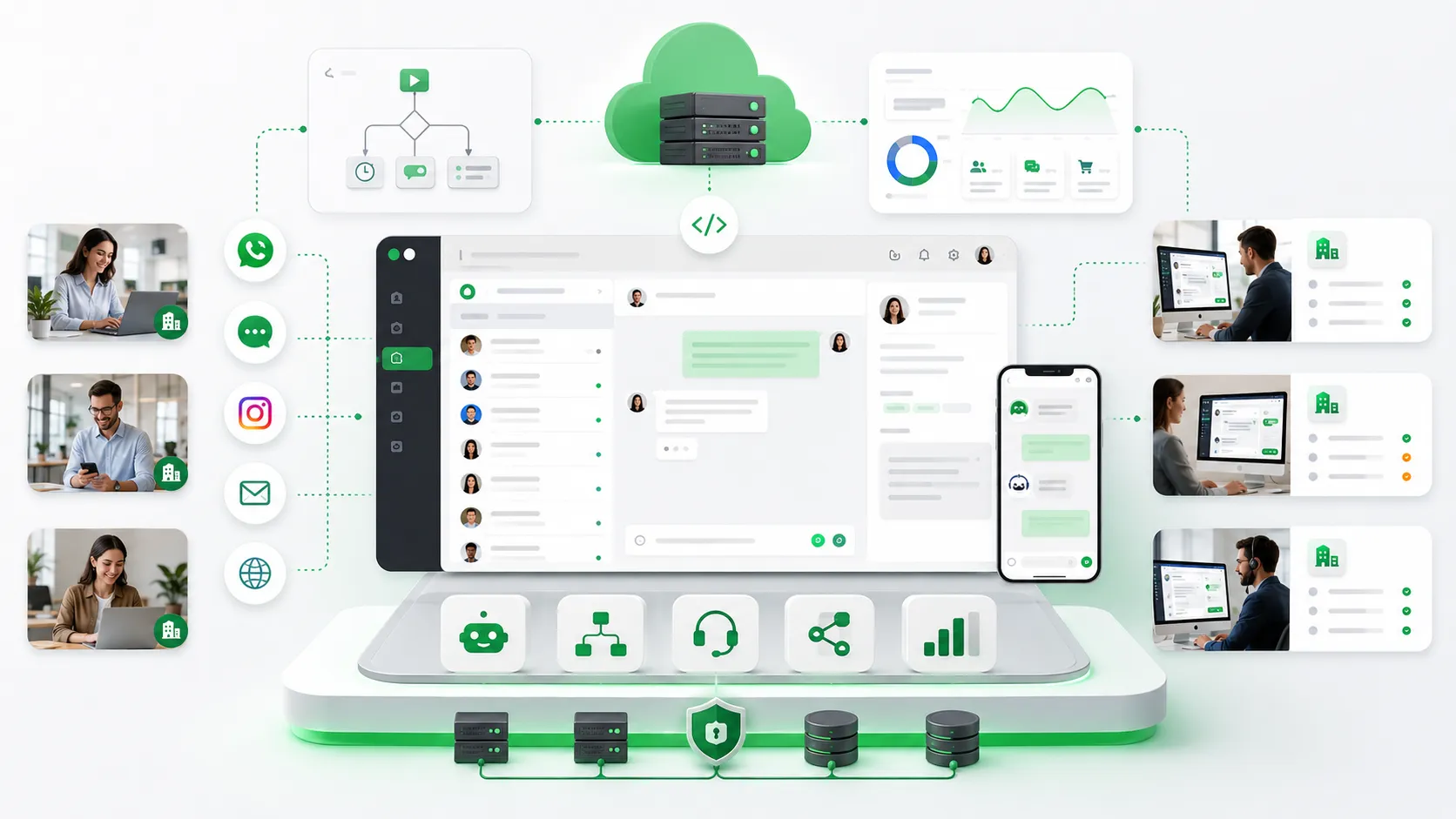
Messaging platforms have become a central channel for business communication, and WhatsApp is one of the most widely used examples of this shift. Businesses increasingly rely on messaging for customer support, marketing communication, order notifications, lead engagement, sales conversations, and automated workflows.
This idea plays out clearly in the messaging space. Many agencies and communication companies now offer their clients a white label WhatsApp experience a dashboard, chat interface, and set of automation tools that carry the agency's own branding, even though a specialized provider builds and maintains the technology underneath. Instead of every business negotiating and integrating with messaging infrastructure on its own, a whatsapp api white label arrangement lets a provider manage the technical layer connectivity, message delivery, compliance with messaging platform requirements while the business focuses on branding, pricing, and the client relationship.
A related term, whatsapp saas, describes a subscription based offering that typically combines messaging, automation, analytics, customer management, and integrations into a single branded platform. This allows a business to offer a complete communication toolkit to its clients rather than a single point feature. It's worth noting that specifics around WhatsApp's business policies and approval processes are managed by Meta directly, and businesses should always verify current requirements with their chosen provider rather than assuming blanket permissions.
White Label WhatsApp Chatbot
A white label WhatsApp chatbot extends this idea into conversational automation specifically for messaging channels. Agencies and businesses can offer automated, branded conversational experiences to their clients without building the underlying bot infrastructure themselves. Common use cases include:
Lead qualification through automated conversations
Customer support for common questions
Order and delivery updates
Appointment scheduling
Frequently asked questions
Guided product discovery
Before adopting a solution, businesses should evaluate the provider's integration options, scalability under higher message volumes, how customer data is handled, the depth of automation features available, and the overall reliability of the underlying platform.
How to Choose the Right White Label Software Provider
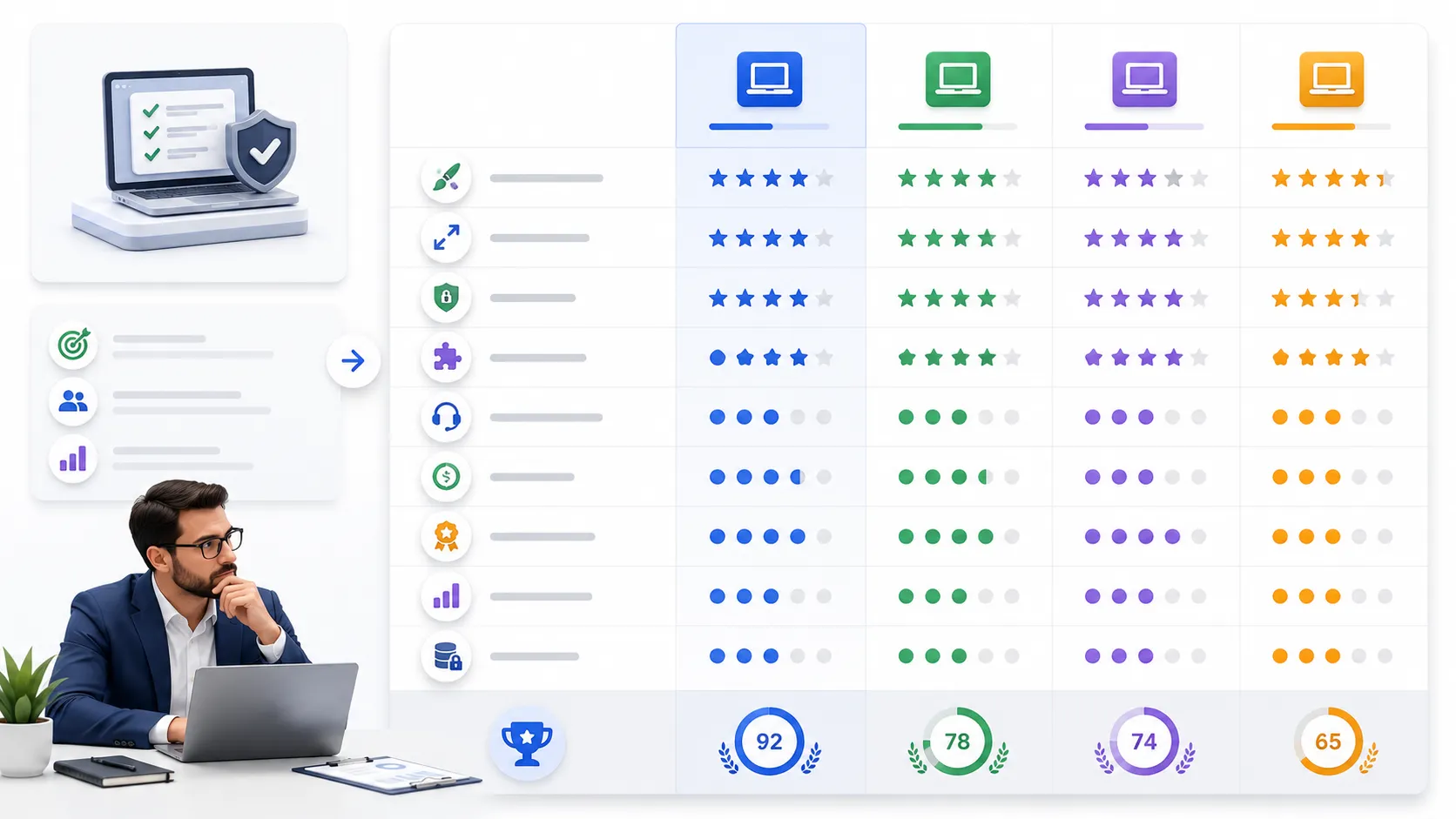
Selecting a provider is one of the most important decisions in this model, since the business's reputation depends on a product it doesn't fully control. A practical checklist includes:
Customization and branding options — how much can realistically be rebranded
Feature set — whether it matches what your customers actually need
API and integration capabilities — for connecting with other tools
Scalability — performance as usage grows
Security practices — encryption, access controls, compliance standards
Data handling — where data is stored and who can access it
Pricing structure — clarity on costs, margins, and any hidden fees
Reliability — uptime history and incident response
Technical support — availability and responsiveness
Product updates — frequency and communication of changes
Documentation — quality and completeness for your team
Analytics and reporting — visibility into usage and performance
Multi-client management — ability to manage multiple accounts if reselling
User permissions — control over access levels
Infrastructure — hosting, redundancy, and disaster recovery
Exit and migration options — what happens if you need to switch providers later
Price alone should never be the deciding factor. A cheaper provider with weak support, limited scalability, or unclear data practices can create far more cost in the long run through customer churn or operational issues.
Questions to Ask Before Choosing a White Label Solution
Before signing an agreement, it helps to get clear answers to a few direct questions:
How much branding control is actually available?
Can the software scale as customer numbers increase?
What technical support is included, and at what response time?
Are APIs and integrations available for connecting other tools?
How frequently is the software updated, and how are changes communicated?
Who is responsible for infrastructure uptime and maintenance?
Can pricing be customized to fit different customer segments?
Are there usage limits, and what happens if they're exceeded?
What happens if the business wants to migrate to a different white label solution later?
Getting these answers in writing, rather than relying on sales conversations, helps avoid surprises after the contract is signed.
Potential Challenges of White Label Software
While the model has real advantages, it also comes with trade offs that businesses should plan for:
Dependence on the technology provider for uptime, updates, and support quality
Limited control over the core product, since deep changes are usually not possible
Customization restrictions that may not match every business's exact needs
Provider pricing changes that can affect margins over time
Platform updates that may change workflows without much notice
Integration limitations with certain third party tools
Data and security considerations, since sensitive customer data may pass through the provider's systems
Difficulty differentiating if competitors are using the same or a similar underlying technology
Because the underlying technology may be shared with other businesses, differentiation has to come from elsewhere branding, service quality, customer support, industry expertise, thoughtful integrations, and any additional value layered on top of the core product.
How Businesses Can Build a Successful White Label Strategy
A practical framework for approaching this model:
Step 1: Identify the customer problem. Start with a real need, not just an available technology.
Step 2: Choose the right technology category. Match the product type SaaS, app, API, chatbot, messaging to the problem you're solving.
Step 3: Evaluate white-label providers. Use the checklist above to compare options thoroughly.
Step 4: Define branding and customization requirements. Know exactly what needs to be rebranded before committing.
Step 5: Build a pricing model. Decide margins, packaging, and any bundled services.
Step 6: Create a go-to-market strategy. Plan how you'll reach and convert your target customers.
Step 7: Provide onboarding and customer support. This is where much of the perceived value and trust is built.
Step 8: Measure performance and improve the offering. Track usage, feedback, and churn to refine the product over time.
Technology alone rarely makes a white label offering successful. The businesses that do well are the ones that deeply understand their audience and build a clear value proposition around the technology, rather than simply reselling it.
The Future of White Label Software
Several trends are likely to shape how this model develops:
Greater use of AI powered features embedded directly into white label products
Increased automation across customer service and marketing functions
Growth of industry specific SaaS tools built for narrow, well defined use cases
More API first platforms designed for easy integration rather than standalone use
Expansion of conversational commerce, where messaging becomes a sales and support channel
Continued growth in messaging automation across multiple channels
Wider adoption of no code and low code tools that make customization more accessible
Rising demand for integrated business tools that combine multiple functions in one place
As businesses continue looking for faster ways to launch digital services, white label models are likely to remain a practical option, especially in categories where building from scratch is neither necessary nor cost-effective.
How Anantya ai Fits Into the White Label Communication Ecosystem

Businesses exploring white label communication technology typically evaluate providers based on their specific requirements around messaging, APIs, automation, chatbots, integrations, and customer engagement. Anantya.ai is one example of a platform operating in this space, offering business communication and WhatsApp related technology capabilities that can be relevant for companies looking to build or offer branded communication solutions.
Depending on a business's needs, this can include areas such as WhatsApp API capabilities, automation workflows, chatbot functionality, customer engagement tools, business messaging infrastructure, and white label opportunities for agencies or resellers. As with any provider, the right approach is to evaluate whether the available features, infrastructure, customization options, support quality, and integration capabilities align with your specific business requirements, rather than assuming any single platform is the right fit for every use case.
Conclusion
White label software offers a practical path for businesses that want to launch technology driven services without the time, cost, and complexity of building everything from scratch. It can reduce time to market, lower initial investment, and let businesses focus on what they do best understanding customers, building relationships, and growing their brand. At the same time, success with this model isn't automatic. It depends on choosing the right provider, understanding the needs of your specific market, building a strong and trustworthy brand, and adding real value beyond the underlying technology itself.
For businesses exploring white-label communication, messaging, automation, chatbot, or WhatsApp related solutions, platforms like Anantya.ai are worth evaluating as part of a broader research process alongside a clear understanding of your own business goals and customer needs.