



Diwali campaigns are easy to plan on paper.
You decide the offer, create a festive creative, write a WhatsApp message and schedule the campaign.
The difficult part usually starts after the message goes out.
Customers start asking questions. Leads arrive faster than the sales team can call them back. Some people want a product brochure, others want pricing or an EMI breakdown, and someone else has already added a product to their cart but hasn't completed the purchase.
During the festive season, businesses also have to deal with old customer data, multiple offers, limited campaign windows and customers who are already receiving promotional messages from several other brands.
That is the part of Diwali marketing that often gets missed.
From the festive campaigns our CX teams work around across industries such as auto, loans and education, the recurring lesson is simple: the challenge is not just getting a customer to notice an offer. It is managing what happens after the customer shows interest.
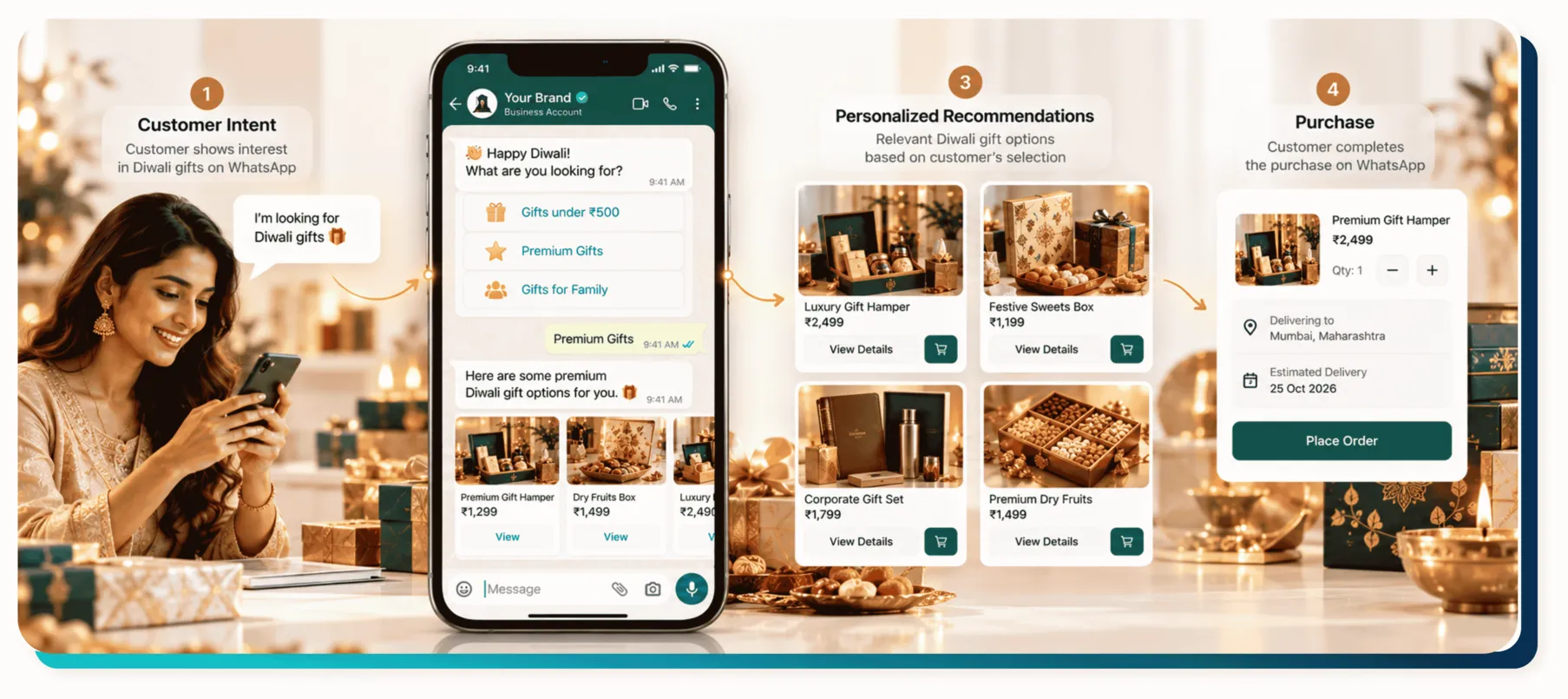
A WhatsApp marketing campaign can take a customer from an advertisement or promotional message into a conversation, share the information they need, qualify an enquiry, connect them to a salesperson and continue the conversation after the sale.
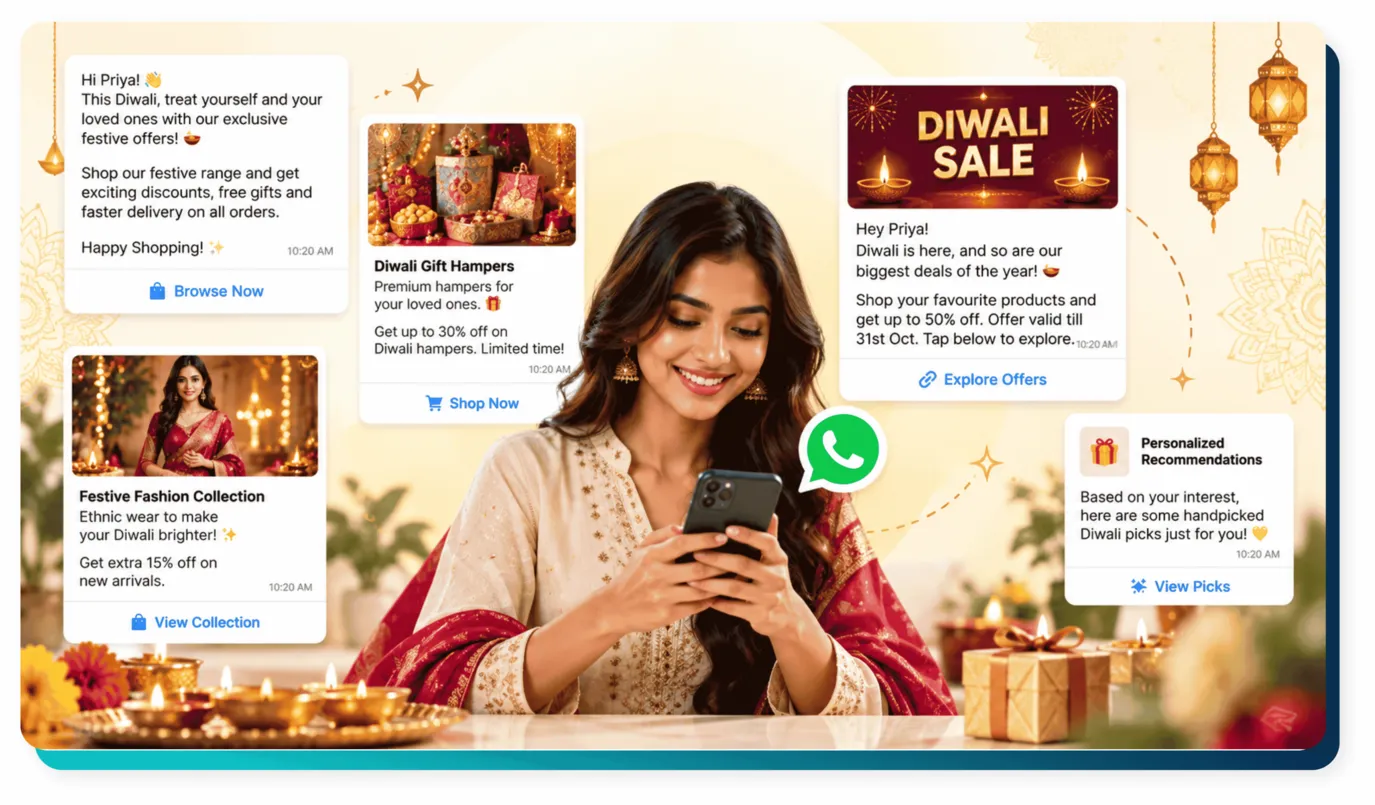
So, instead of looking at WhatsApp as another place to send a Diwali promotion, let's look at 15 practical Diwali marketing ideas and where WhatsApp can actually make the execution easier.
Diwali Marketing starts before Diwali Week
One of the patterns we see in festive campaigns is that businesses sometimes start too late.
By the time Diwali week arrives, customers are already comparing offers, planning purchases and receiving messages from multiple brands.
That's why Diwali marketing ideas should be planned across the festive window rather than around a single day.
In 2026, Dussehra falls on October 20 and Diwali on November 8, giving brands several weeks to build their festive marketing campaign.
For one business, the first stage could be an awareness campaign. For another, it can be a Navratri booking offer. The point is to start when customers start planning, not when everyone else has already started shouting about their Diwali offers.
15 Diwali Marketing Ideas that work better with WhatsApp API
1. Send Different Diwali Offers to Different Customer Segments
One of the most practical Diwali promotion ideas is also one of the simplest: stop treating your entire database as one audience.
A recent buyer doesn't need the same message as an inactive customer.
Follow this thumb-rule to make your directories and shoot personalized campaigns:
New customer: Introduce your festive collection. Pictures last more than words, share your products in a carousel, share videos, documents, a link to your website (not recommended to make the user hop from one platform to another but there’s the option is available)
Existing customer: Give them an exclusive customer offer- repeat purchases see a surge during festivities, make sure you can milk it with existing clients as they are more willing to buy from a trusted source rather than exploring options elsewhere.
High-intent lead: Share the product or offer they were already considering. Drip campaigns are a great way to nudge your warm leads into making a sale. The most day-to-day example everyone has experienced is dealing with beauty brands like Nykaa, mCaffeine who are increasing their ROI with WhatsApp campaigns that get triggered automatically when someone abandons their cart due to xyz reasons.
Recent buyer: Recommend complementary festive products. Cross-selling products is a great tactic- initially introduced by Amazon which entails recommending products to the buyer based on their purchase history. “People also buy” has a calculated analysis that is bound to work on the shoppers in festive season. Ordering diyas? Also try fairy lights!
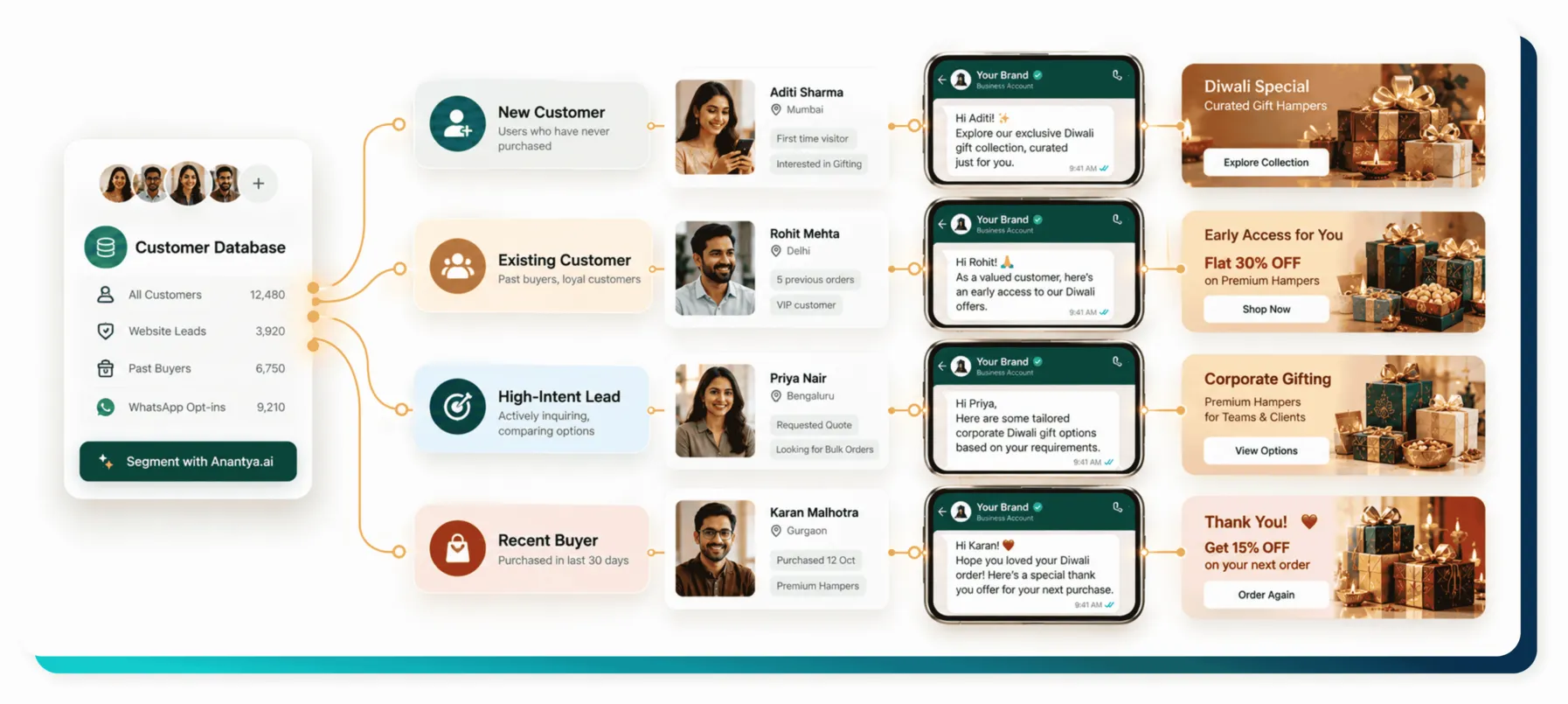
This is where WhatsApp marketing becomes more useful than simply broadcasting the same discount to everyone.
And there is a practical reason for it. The CX feedback we see repeatedly points to old, unsegmented data as one of the problems businesses run into during festive campaigns.
2. Run a Short, Focused WhatsApp Broadcast
A WhatsApp broadcast can be useful when the message has one clear purpose.
The mistake is trying to put your entire festive catalogue, every offer and every announcement into one message.
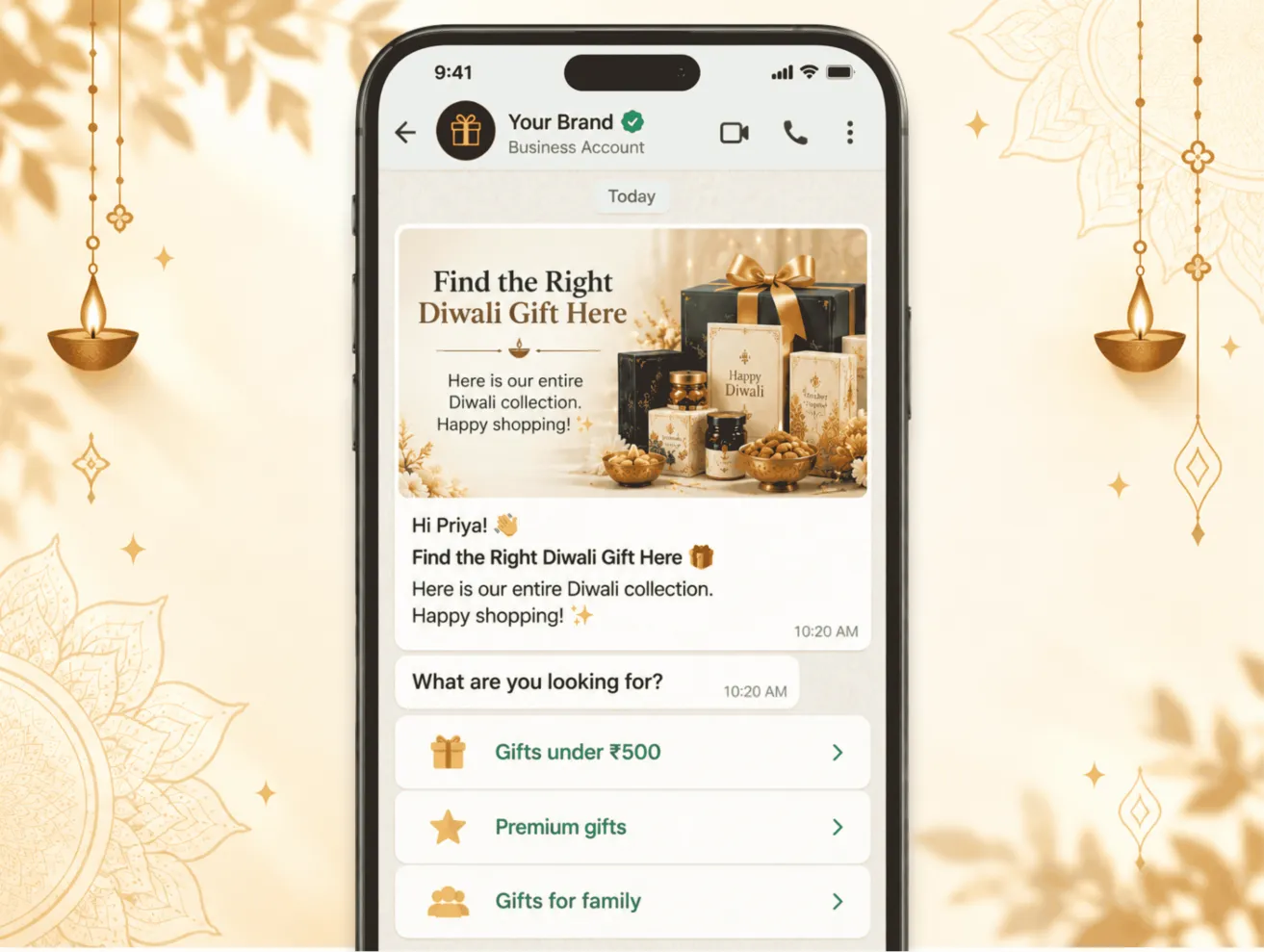
One offer. One CTA.
That structure is particularly useful when customers are already receiving a lot of festive communication from different brands.
Brands using the WhatsApp Business Platform also need to follow WhatsApp's messaging requirements, including using approved templates when initiating business conversations outside the customer-service window and respecting applicable consent requirements.
3. Start Your WhatsApp Diwali Campaign From Navratri
For some businesses, starting at Navratri instead of Diwali week makes a meaningful difference.
The first message doesn't have to sell.
It could simply introduce the festive collection, tease an upcoming offer or let customers know that a limited-period promotion is coming.
Then the messaging can become more sales-focused as the season moves toward Dhanteras and Diwali.
This is one of the more useful Dussehra marketing ideas too: rather than creating a separate campaign for every festival, connect them into one longer festive marketing campaign.
Considering if your client base is from regions other than India, you should still start planning your campaigns around Halloween, Black Friday, Thanksgiving, Hanukkah, Christmas, New Years. Even the wedding season can be leveraged with the relevant product offers.
4. Put Your Festive Products on a WhatsApp Catalog
Customers do not always want to click through several pages just to decide what to buy.
A WhatsApp catalog can give them a simpler route to product discovery.
For example, a retailer could organize festive products around:
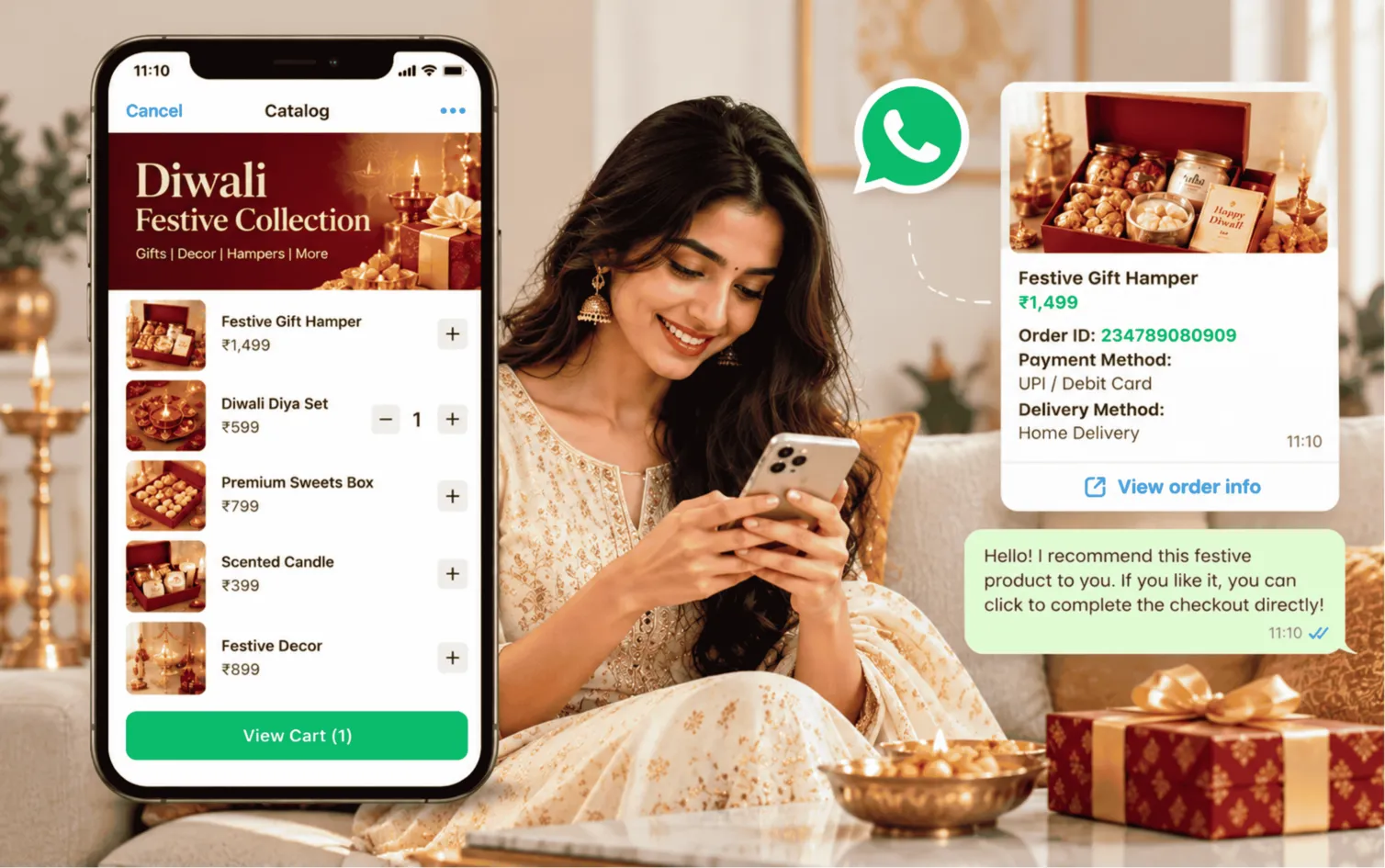
Anantya's retail use cases cover catalog sharing, product recommendations and personalized promotional communication through the WhatsApp Business API.
5. Don't Make Customers Work to Find the Right Diwali Gift
One of the biggest problems during Diwali is not lack of choice. It's too much choice.
A customer knows they need gifts for 20 employees or clients, but they don't necessarily know what to buy. Sending them a huge catalogue and asking them to “explore” is basically giving them more homework.
This is where WhatsApp marketing ideas can be used to make the buying process simpler.
Now the customer has fewer things to look at and a much easier decision to make.
The problem: too many choices.
The solution: use WhatsApp to narrow the choices down instead of dumping the entire catalogue on the customer.
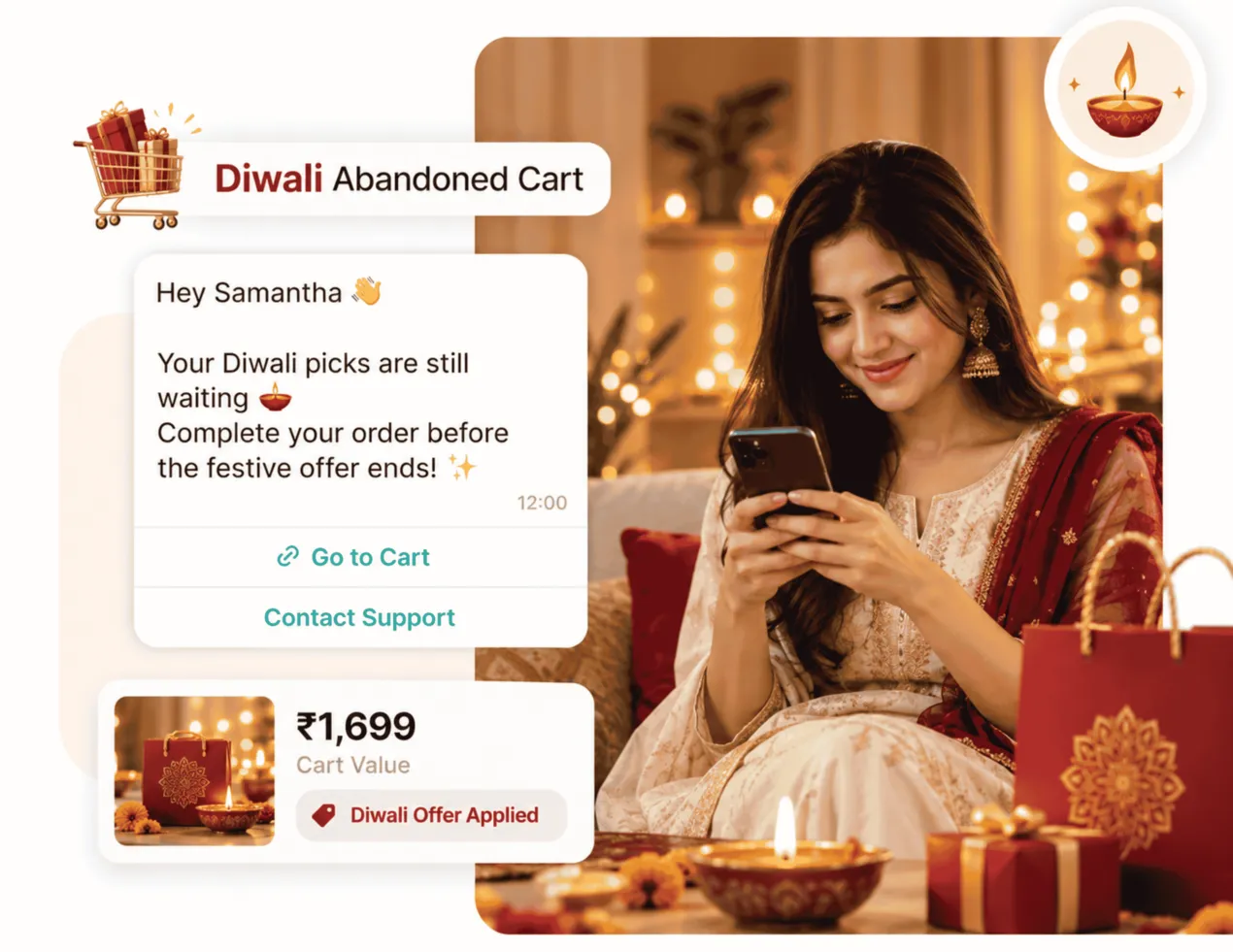
6. Recover Abandoned Carts Without Immediately Throwing a Discount
A customer adds something to their cart and disappears. Don't go assuming that the price was the deal breaker. Thanks to capitalism and consumerism, you’ll always find an audience that can afford your products.
There could be ten reasons behind an abandoned cart and price is only one of them. A timely WhatsApp automation can bring the product back to their attention without immediately training them to expect a coupon every time they leave checkout.
7. Run Click-to-WhatsApp Ads for Products That Need a Conversation
Not every festive product needs a landing page. Sometimes the customer just has one question:
Will this arrive before Diwali?
Is this available in my size?
Can I customise the gift box?
Instead of making them click an ad and find the product again, run Click-to-WhatsApp Ads and let them ask directly. This works particularly well for products where buying depends on a little extra information.
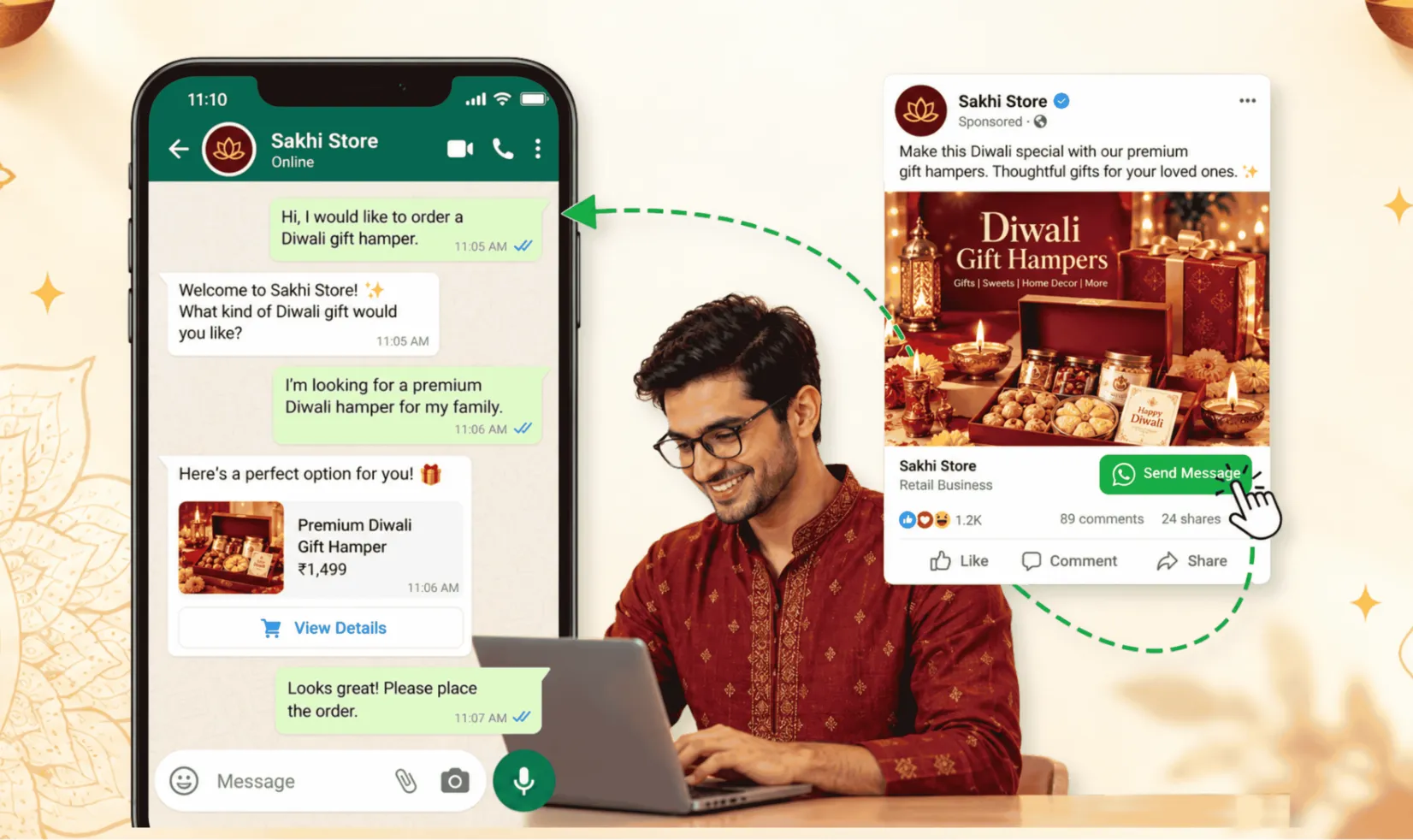
The ad is not the full campaign here. What happens after the click matters more.
A customer asking about a specific product should land in a conversation where the relevant product, offer and next action are already easy to find, not in another generic “Hi, how may we help you?” queue.
8. Use “Back in Stock Before Diwali” as a Campaign
Every festive campaign does not need another sale. Sometimes the strongest message is:
The thing you wanted is back.
If a bestselling festive kurta, gift box, beauty set, décor piece or jewellery design sells out and gets restocked, message the customers who had already viewed, enquired about or tried to buy it.
You are not manufacturing urgency. The customer already wanted the product and availability changed. Retail businesses sit on this kind of intent all the time but still choose to send the same Diwali blast to the entire database.
Sometimes the best festive promotion is not a lower price. It’s making sure the right person knows the product they wanted can finally be bought.
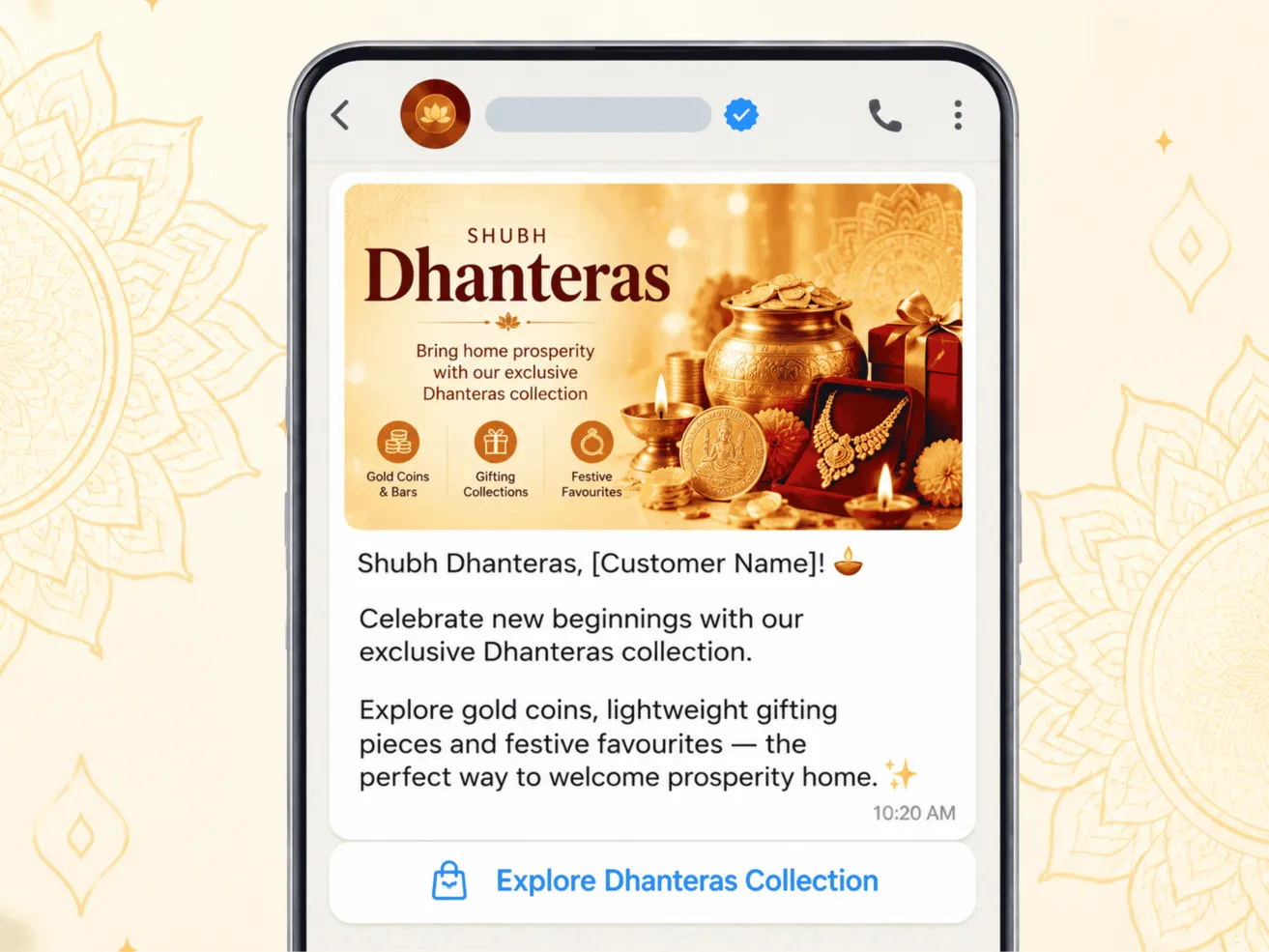
9. Make Dhanteras a Different Campaign, Not a Different Poster
Dhanteras deserves more thought than changing the Diwali creative from orange to gold. People shop with a different intent around Dhanteras, especially in categories like jewellery, electronics, appliances, cookware, premium home products and gifting.
So the products you push should change too. A jewellery brand can focus on coins, lightweight gifting pieces or entry-level festive purchases. An electronics retailer can bring TVs, phones and appliances forward. A home brand can build a Dhanteras edit around cookware or premium household products.
The point is not “we need a Dhanteras campaign because Dhanteras is on the calendar.”
The point is to ask: What is the customer more willing to buy today than they were a week ago?
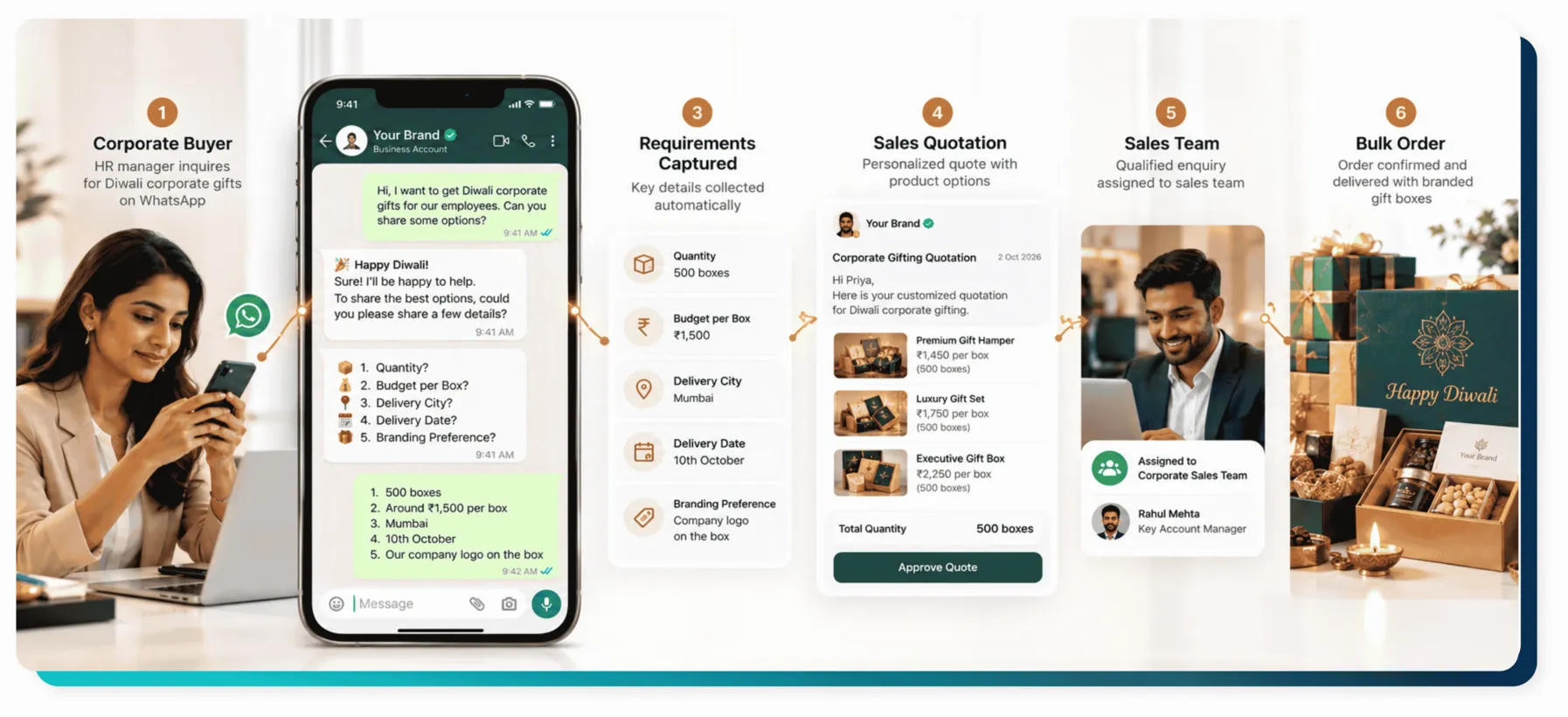
10. Give Corporate Buyers a Bulk-Enquiry Flow
An HR manager ordering 200 hampers needs prices, branding options, invoices and delivery arrangements. Asking them to browse your consumer collection leaves most of their questions unanswered.
Build a WhatsApp Flow with company name, quantity, per-gift budget, required date, delivery locations and branding preference. Send the completed brief to a corporate-sales owner, who confirms stock, customisation charges, tax, shipping and production time in the quote.
Once the buyer accepts, share the deposit link and order reference. For delivery to multiple homes, use a secure address-collection process rather than asking someone to paste a staff directory into the chat. Track qualified enquiries, accepted quotes and order value through WhatsApp.
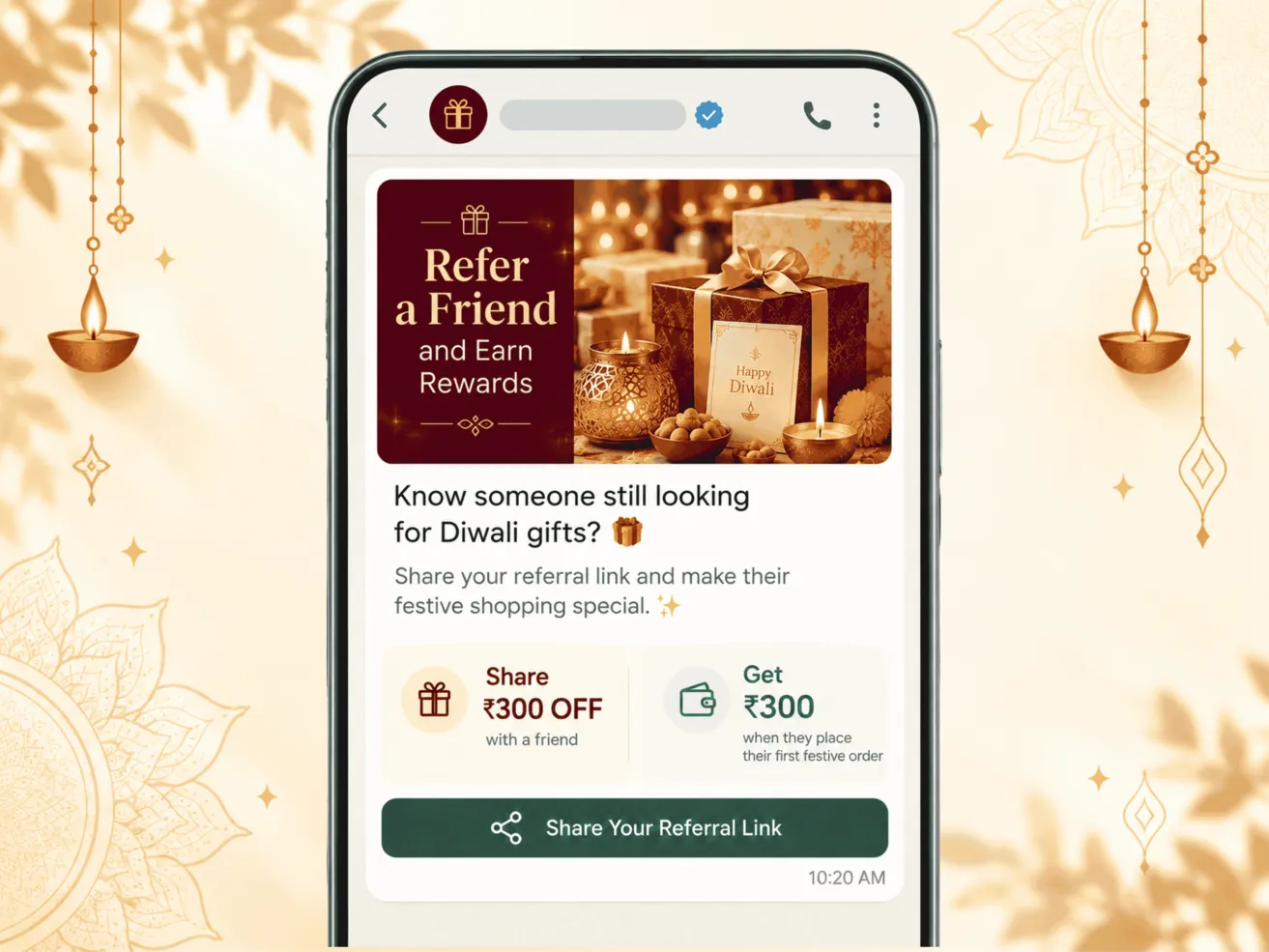
11. Run a Festive Referral Campaign People Actually Want to Forward
Diwali is already a high-sharing season. People are exchanging gift ideas, outfit links, offers, restaurant plans, home décor references and “see this!!” messages all day.
A referral campaign fits naturally into that behaviour.
For retail brands, this works especially well when customers already trust the product enough to recommend it to someone else. You are not trying to convince a completely cold buyer from scratch. You are borrowing trust from someone who has already bought from you.
12. Create a WhatsApp-Only Festive Drop
If every message on your WhatsApp channel is available everywhere else, customers have no real reason to care about being there.
You create urgency around the festive campaign, and you also teach customers that being connected with the brand on WhatsApp gives them something they will not always get elsewhere.
That is a much better reason to stay opted in than another “Happy Diwali from Team XYZ” message.
13. Let Customers Build Their Own Festive Bundle
Retailers love bundles during Diwali.
Usually the customer gets whatever three products someone internally decided should go together. Let the customer build the bundle themselves.
A beauty brand could do:
Pick 1 skincare product + 1 fragrance + 1 makeup product → unlock festive bundle pricing.
A home brand:
Pick a candle + diffuser + décor piece → build your own Diwali box.
Now the campaign becomes more than:
Buy 3, get 15% off.
It becomes interactive, gives the customer more control and also gives the brand a very natural cross-sell opportunity. And for gifting brands, this can be especially useful for bulk enquiries.
An HR team ordering 200 employee gifts probably does not want the exact same hamper your individual customer is buying for their aunt. Give them options to build around budget, quantity and recipient.
14. Turn Delivery Cut-Offs Into a Marketing Campaign
Closer to Diwali, you already have something marketers usually spend a lot of time trying to manufacture: Real urgency. Instead of:
⚡ HURRY! ONLY 24 HOURS LEFT!
Do this:
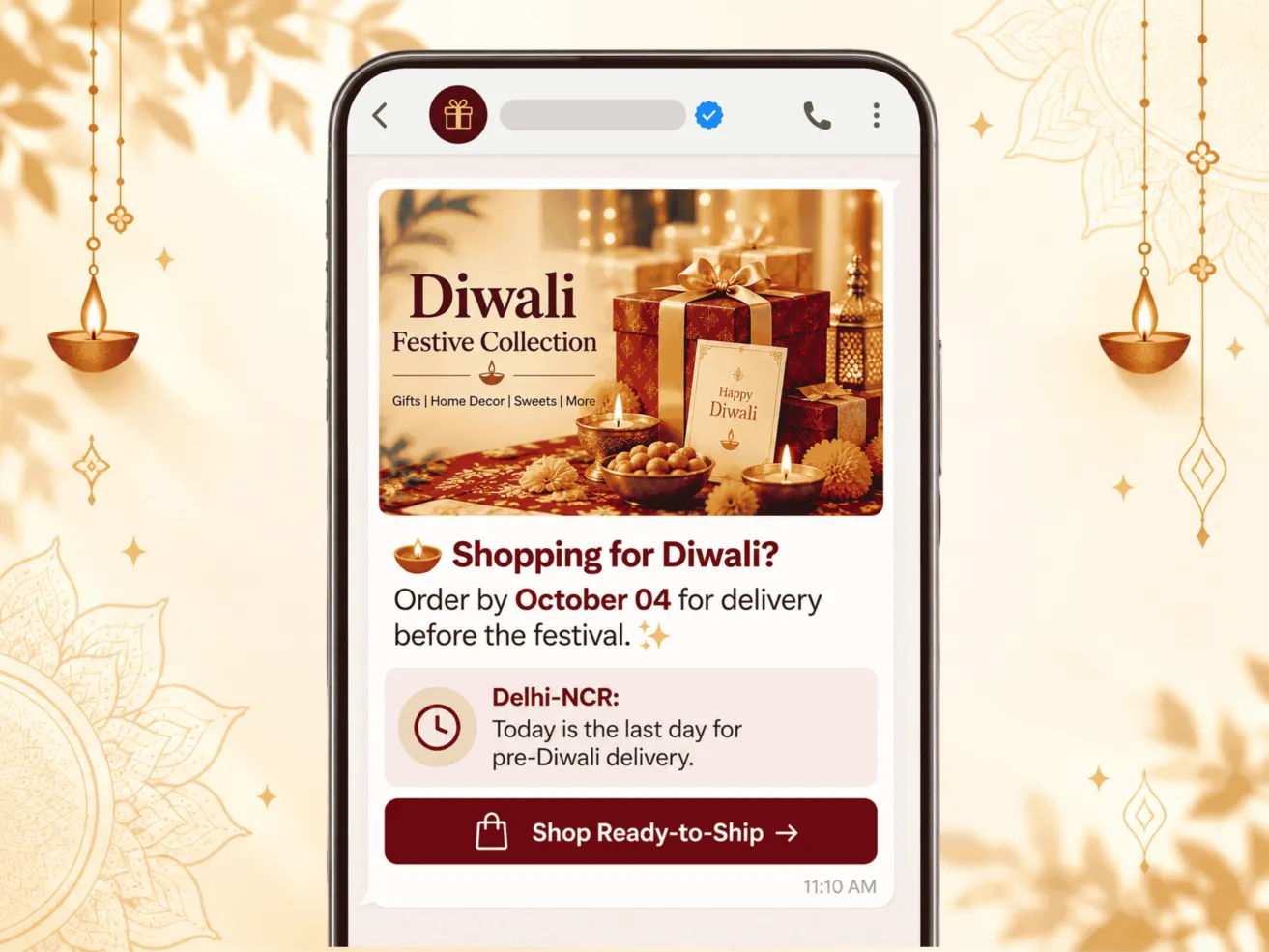
This works for fashion, gifting, beauty, sweets, décor and practically any category where the customer needs the product for the occasion itself. And unlike fake countdown timers, this urgency actually helps the shopper make a decision. The delivery promise itself becomes part of the campaign.
15. Don't Let Your Diwali Customers Disappear on November 9
Festive campaigns usually spend all their energy on getting the order.
A home customer who bought festive décor does not need another campaign two weeks later, but they may be interested in home or gifting products around the next occasion. And customers who had a good festive purchase experience are also the easiest people to ask for a review, feedback or referral.
Diwali should not only give you a temporary sales spike. It should give you a better customer base for the campaigns that come after it.
What We See Go Wrong With Festive WhatsApp Campaigns
Technology is rarely the only problem. Some of the most common issues are operational.
Sending to the full database
A full-database blast may look efficient, but old or irrelevant contacts can hurt the campaign and increase the risk of negative customer reactions.
Sending four or five messages a week
More WhatsApp marketing is not automatically better WhatsApp marketing.
When customers keep seeing the same promotion, they stop paying attention.
Launching without preparing the team
If a campaign generates more leads than the sales team can call back, the campaign has created a response-time problem.
Starting template preparation too late
Last-minute template rejections can leave teams scrambling just when the campaign is supposed to go live.
Business-initiated messages on the WhatsApp Business Platform require approved templates, so campaign preparation should include enough time for that process.
Measuring messages instead of outcomes
Delivery and read rates matter, but they are not the final answer.
Businesses should also ask:
How many customers responded?
How many became qualified leads?
How many were purchased?
Which offer performed better?
How quickly were leads contacted?
That's how Diwali marketing ideas become measurable business activity rather than a list of festive posts.
Diwali Marketing Ideas 2026: A Simple Campaign Timeline
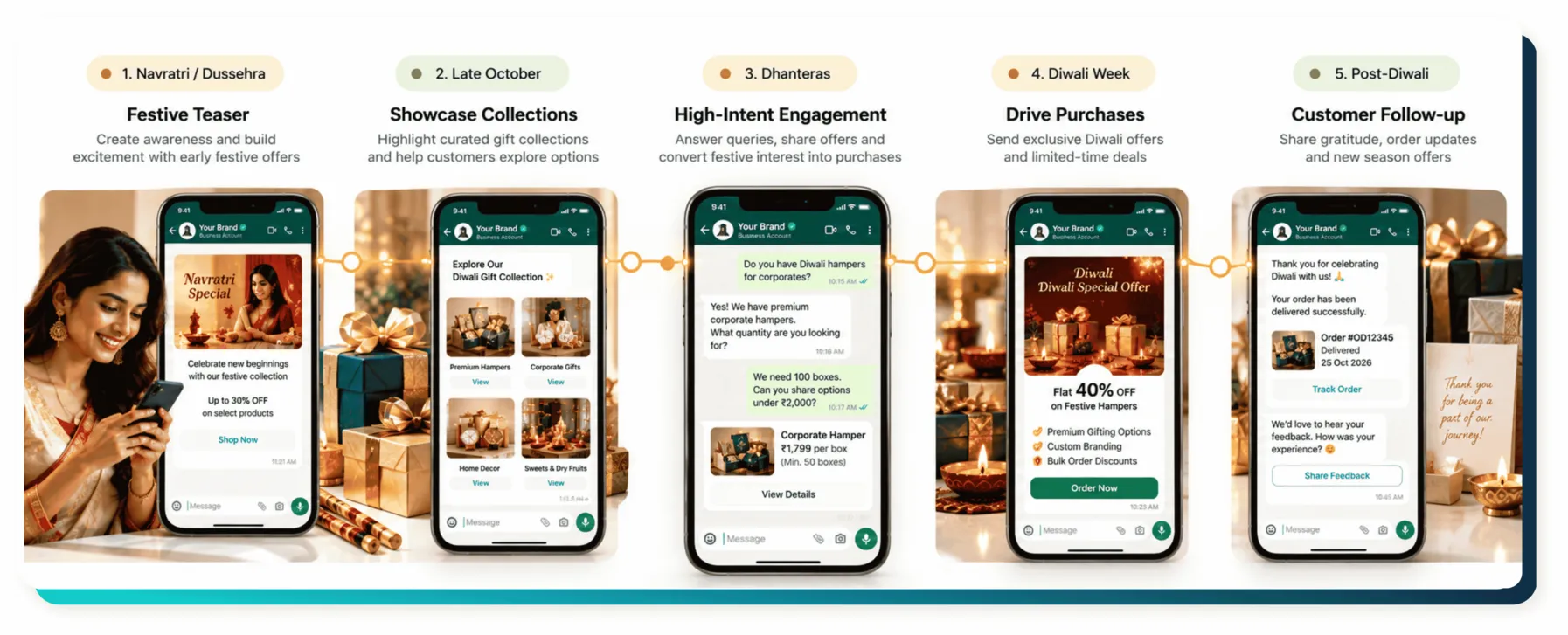
The 2026 central-government holiday calendar places Dussehra on October 20 and Diwali on November 8.
Your exact campaign calendar should still depend on the industry. An auto brand may push bookings before Dhanteras while retailers are already done with booking their wholesale orders from vendors like you.
A Quick Checklist Before You Launch
Before launching your WhatsApp Diwali campaign, ask:
Is the audience segmented?
Is there one clear offer?
Does the message have one clear CTA?
Are WhatsApp templates ready?
Is the catalog or supporting document updated?
Is the chatbot ready for predictable questions?
Is there a human handover for complex enquiries?
Is the sales team ready for the expected lead volume?
Is there a follow-up plan?
Can you track conversions back to the campaign?
If several of these answers are “no”, the problem probably isn't that you need another Diwali promotion idea. The campaign simply isn't ready to scale yet.
Use Anantya to execute marketing campaigns effortlessly
Brands can use WhatsApp for simple festive communication themselves. As the campaign becomes more complex, however, the challenge shifts from sending messages to managing the entire customer journey.
Alongside WhatsApp Business API, automation, broadcasting, chatbots, catalogs, integrations and team communication tools, Anantya provides campaign strategy and dedicated support to help clients get more value from their setup. Anantya's published product material also covers campaign management, segmentation, human handoff, CRM integration and WhatsApp Commerce capabilities.
For a retail brand, that can mean looking at the full picture:
Who should receive the campaign?
What should they receive?
What happens when they reply?
That's ultimately where WhatsApp marketing becomes useful during the festive season: not because businesses need another place to send a sale message, but because a well-planned WhatsApp marketing campaign can connect marketing, conversations, sales and customer retention.
Enough to successfully plan festive campaigns on your own?
The best Diwali marketing ideas are not necessarily the ones that send the most messages.
They are the ones that help a business handle the entire journey:
And for businesses planning their Diwali campaign ideas for 2026, the question worth asking isn't:
“What should we send on WhatsApp?”
It is:
“What should happen after the customer responds?”
Once that part is planned, the technology- be it a WhatsApp broadcast or Click to WhatsApp ads- has a much clearer job to do.