



Customer Engagement: How Strong Customer Communication Drives Business Growth
What is expected from a business in the current scenario is everything to do with customer service and engagement. Modern consumers see brands as a robot that's working on weekends, at nights, answering their queries instantly, and being personalized across every interaction. Businesses that fail to adapt to these expectations often struggle with customer retention. While companies that prioritize customer engagement build stronger relationships and celebrate all-rounded business growth.
Reliable customer engagement comes from consistent customer communication. Every interaction between a business and its customers whether it's a support message, a marketing campaign, or an order update is directly proportional to customers perception of your brand.
A well-defined business communication strategy ensures that these interactions are timely, personalized, and meaningful. With the help of modern customer communication tools, businesses are delivering seamless experiences across multiple channels like Whatsapp, SMS, Emails, etc.
This guide explores everything businesses must know about customer engagement. Why it matters, common communication challenges that everyone faces when they start, and how companies can improve engagement using the right customer communication tools with communication strategies that are specifically suitable to their industry.
Understanding Customer Engagement in Modern Business
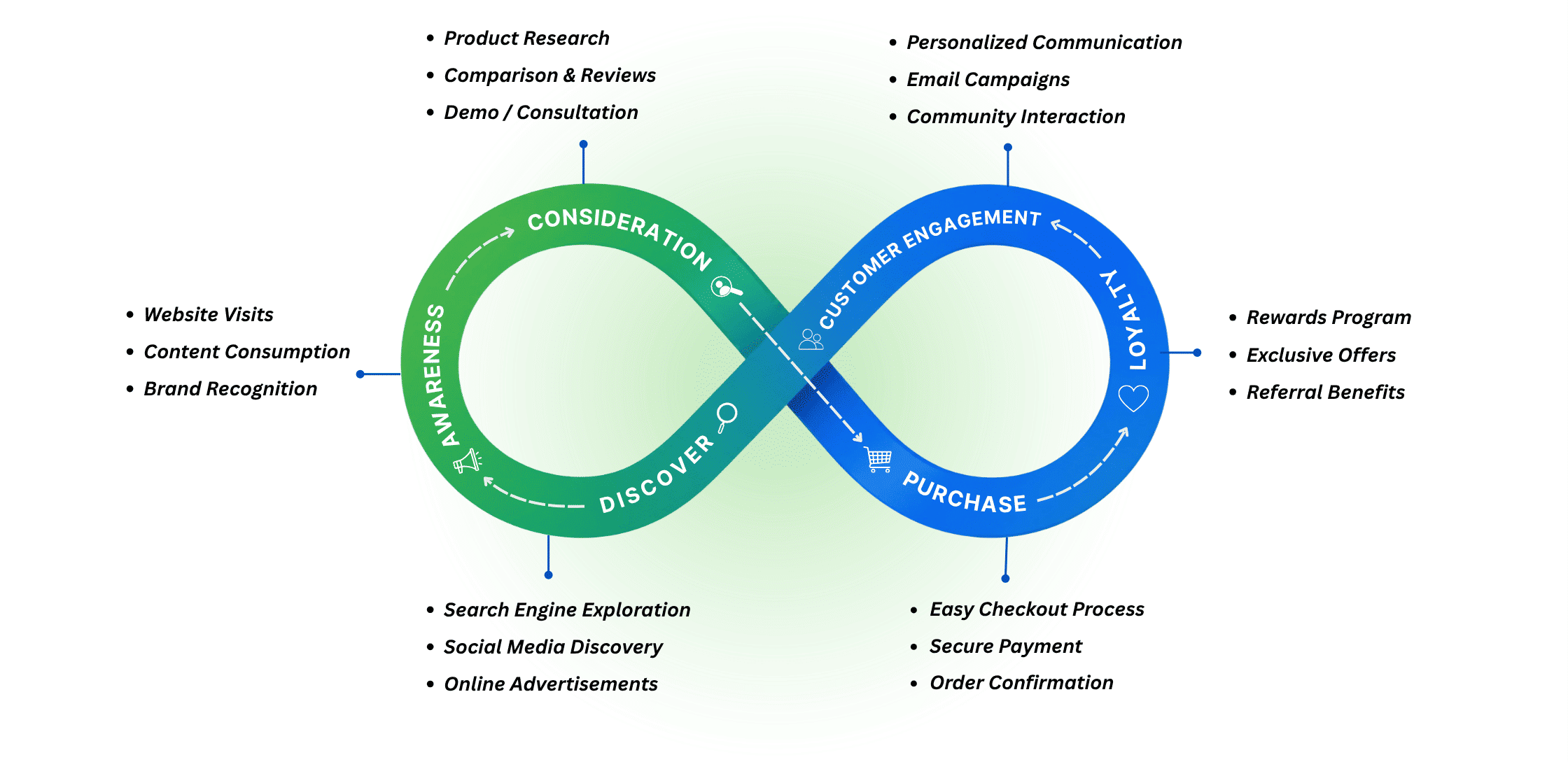
Customer engagement is the interaction happening between a business and its clientele throughout the sales lifecycle (Pre Sales - Nurture - Acquisition - Post Sales Care). So naturally, interactions that occur before a purchase, during the buying process, and long after a transaction all entails under customer engagement.
Unlike traditional marketing approaches that focus heavily on only selling products, customer engagement focuses on building useful relationships. The goal is to create a familiar environment that keeps customers connected to a brand and view them as a person rather than a professional entity.
Strong customer communication plays a critical role in this process. Verified Businesses on Whatsapp that are building this through automation, create memorable experiences that foster trust and loyalty among their user-base.
Customers appreciate getting instant responses to their queries, time-to-time order updates, and exclusive offers that mention products related to their purchase history. These interactions make customers feel valued and increase their willingness to engage with the brand in future.
Now, if you only have 20, 50, 100 clients, maybe you can manage it very well manually. But increase this number upto thousands and it'll all start going downhill. Thus, a well-executed business communication strategy keeps up with every customer and makes them feel like there's a human sitting there just to assist them throughout the day with any number of queries.
Why Customer Engagement is Critical for Business Growth
Businesses currently investing in customer engagement are outperforming competitors by a significant margin. The three metrics that define business success- Revenue, Retention and Reputation, are all heavily dependent on customer engagement. Why? Because engaged customers are more likely to:
- Buy from a brand more than once
- Tell their friends about the hassle-free services
- Invest in a membership/loyalty program
- Give positive feedback
- Buy expensive products
Effective business communication plays a major role in driving these outcomes fruitfully. When customers receive clear, helpful, and timely replies, they are naturally more inclined towards a brand.
Companies that have a functional business communication strategy benefit from improved operational efficiency. Teams can manage conversations more effectively, respond faster, and deliver consistency across different platforms from a single dashboard.
By combining a well-structured communication strategy with an advanced customer communication tool, brands are getting the recognition they deserve.
The Connection Between Customer Communication and Customer Engagement
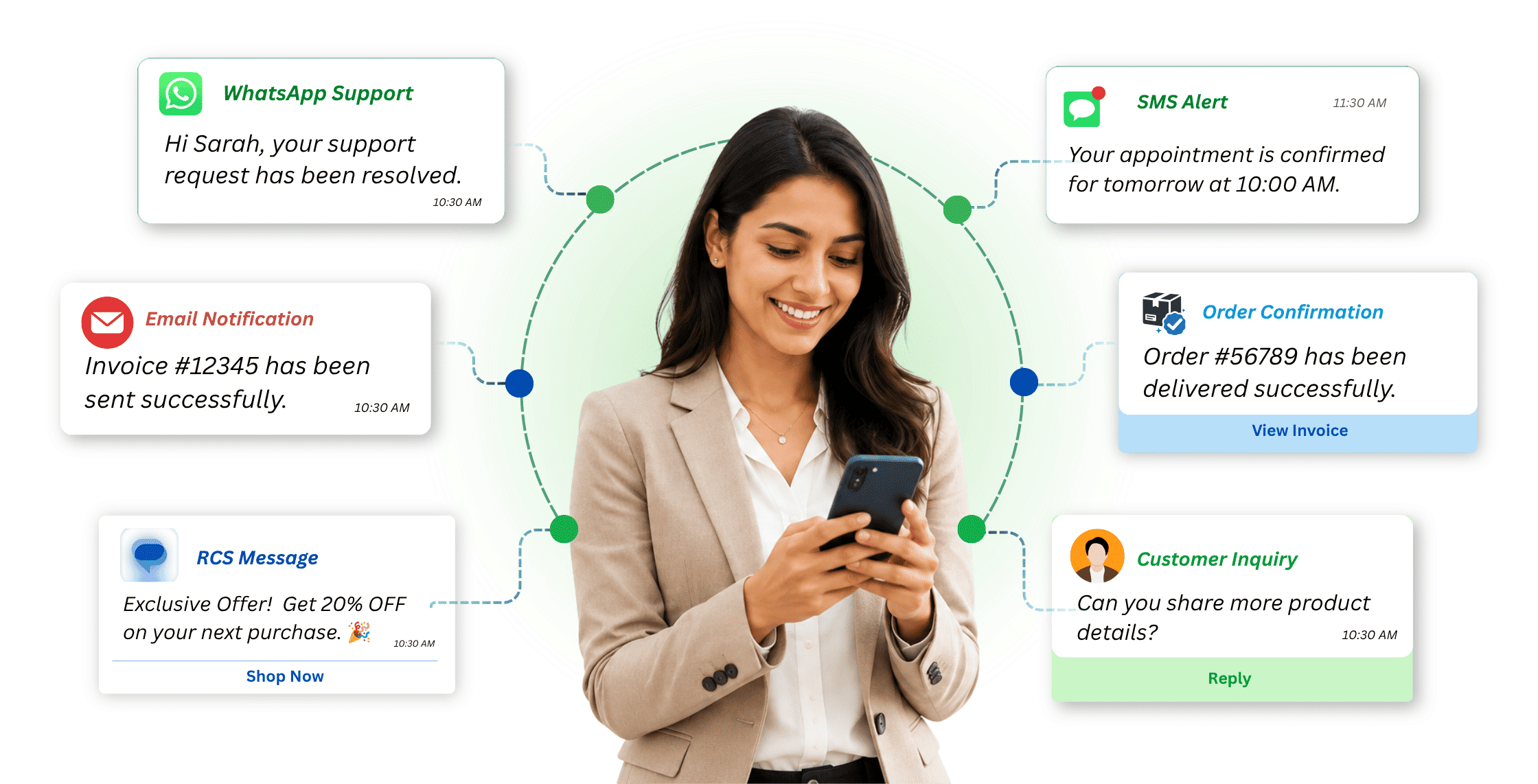
Every message sent to a customer whether it's a promotional offer (marketing), answering a query/ FAQ (utility), or an OTP verification (authentication) contributes to a positive customer experience.
When brands implement helpful business communication, customers feel valued. This builds trust and encourages them to interact more frequently with the brand. End result being an increase in brand authority, which also leads to an increase in referrals.
However, poor communication can quickly damage engagement. Delayed responses, confusing messages, or generic marketing campaigns often lead to frustration and ultimately getting blocked by the user.
To avoid these issues, companies adopt business communication strategies supported by reliable customer communication tools.
Both help businesses manage conversations efficiently with a personalized approach.
Common Customer Communication Challenges Businesses Face
Now some of you might be familiar with customer communicationand its increasing importance in recent times. But what are the common problems encountered by enterprises that start working on improving their communication channels? We have listed some below-
Fragmented Communication Channels
One prospect will call you, another might reach out to you through text. Whatsapp, Instagram, Emails, SMS- there is no stone left unturned. People can send you an inquiry from anywhere. Lacking integrated customer communication tools, organizations will find that manual replies are too slow, infrequent, and ultimately unfeasible for achieving positive results.
Slow Response Times
What do you do when people find your brand during their midnight scroll session? They want to know more, but your team is not available. With a reducing attention span with every passing decade, if businesses fail to keep up with their prospects' time-blind queries, they simply cannot succeed. Delayed customer communication significantly reduces the chance of converting an interested prospect into an actual buyer.
Lack of Personalization
Generic messaging rarely drives strong customer engagement. Customers expect businesses to understand their preferences and deliver tailored experiences.
Disconnected Internal Teams
When marketing, sales, and support teams operate independently, business communication becomes inconsistent.
Implementing the right customer communication tools can help businesses overcome these challenges that are common in customer engagement.
Customer Communication Channels That Drive Engagement
So what is a full proof method of driving customer engagement? Meet your potential buyers right where they are, not in the middle, but where they are spending their free time- relaxing, scrolling, ingesting information from the whole world at an inhumane rate.
Channels can be categorised into the following:
Good Ol' SMS
Messaging platforms allow businesses to deliver instant customer communication. Customers prefer messaging because it is fast, convenient, and accessible.
GMail, Outlook, …is Yahoo still relevant?
Email remains a reliable channel for sending updates, newsletters, and targeted campaigns.
Voice Calls
Phone support is still quite valuable for resolving complex customer issues.
And Ofcourse, Meta Channels
Social media platforms allow brands to engage directly with customers and build stronger relationships, creatively.
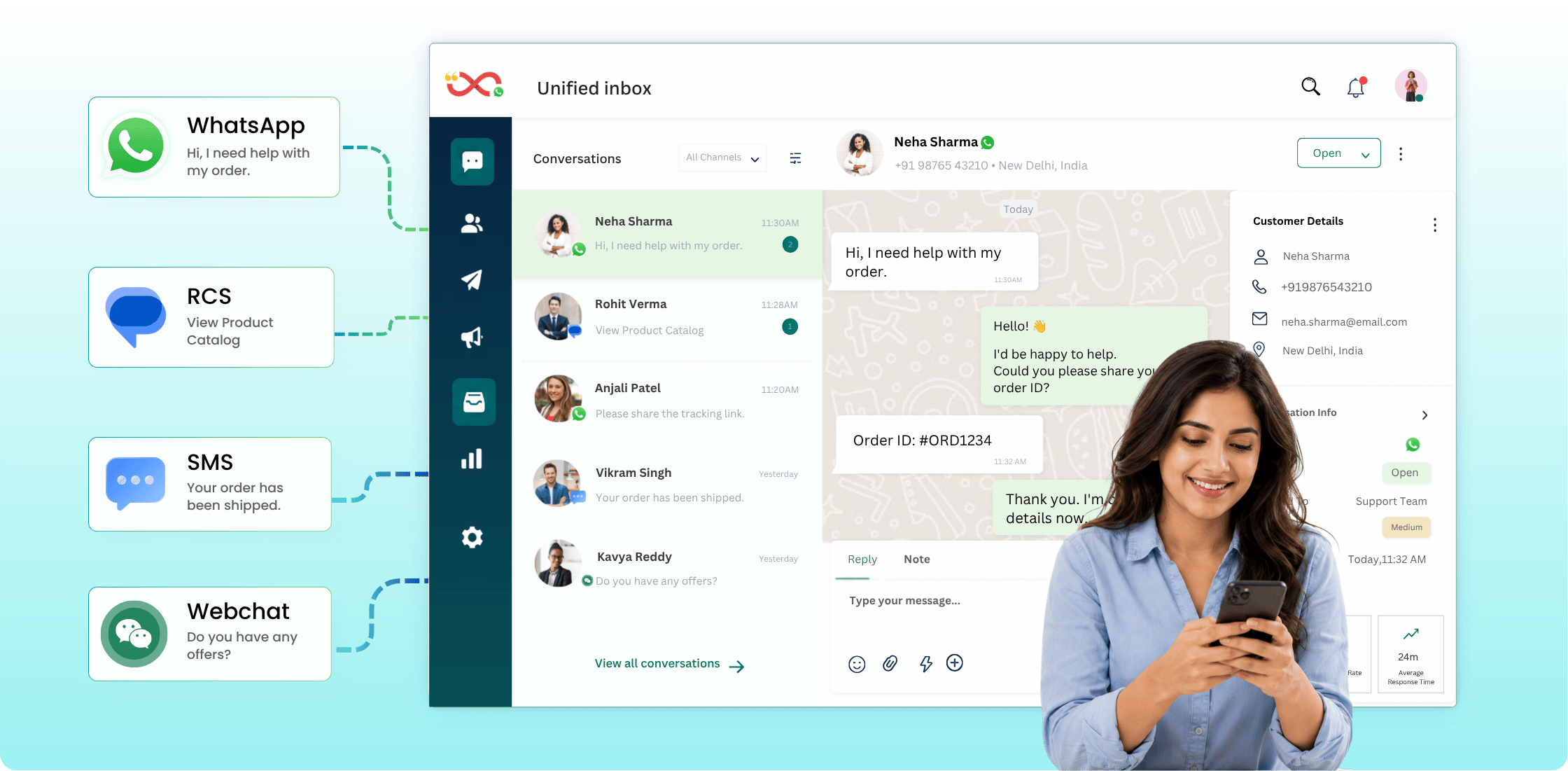
However, managing incoming queries from every platform is not practical. That is why customer communication tools like Whatsapp Business API or Facebook Business Manager allows businesses to handle customer queries from a single dashboard with necessary integrations, automatically.
Customer Communication Tools That Enable Scalable Engagement
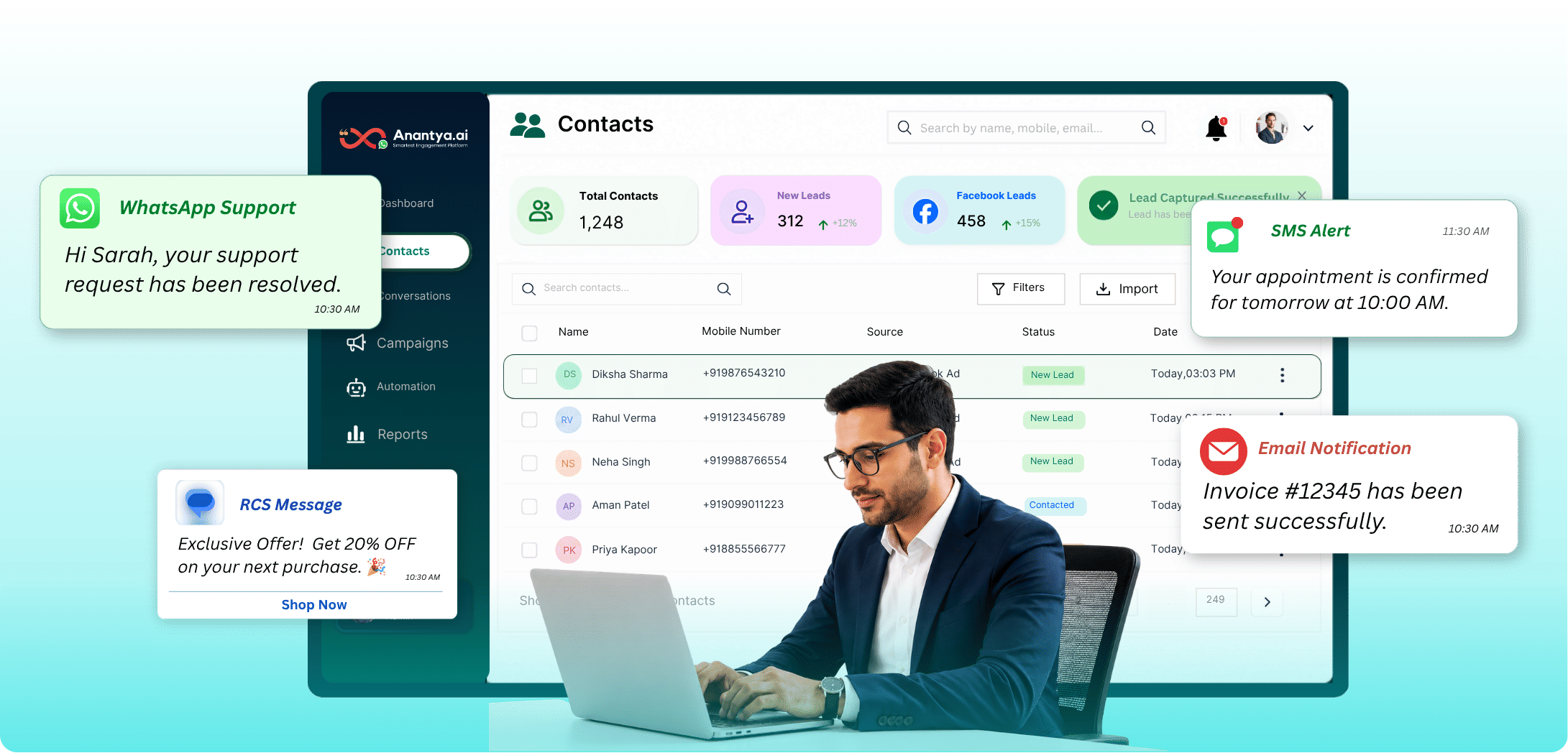
Modern customer communication tools enable businesses to handle customer communication, be it shooting promotional campaigns, sending OTPs on an instant, or sharing product information and order updates in a fraction of minutes to thousands of people simultaneously.
These tools often include features such as:
- Unified inbox for multiple channels
- Automated responses and workflows
- Lead management capabilities
- Campaign management tools
- Conversation history tracking
- Customer analytics and insights
When integrated into a broader business communication strategy, these tools help businesses deliver faster responses and more personalized experiences. This unified approach significantly improves customer engagement and operational efficiency.
Boost Your Customer Engagement with Anantya.ai
How to Build a Strong Business Communication Strategy
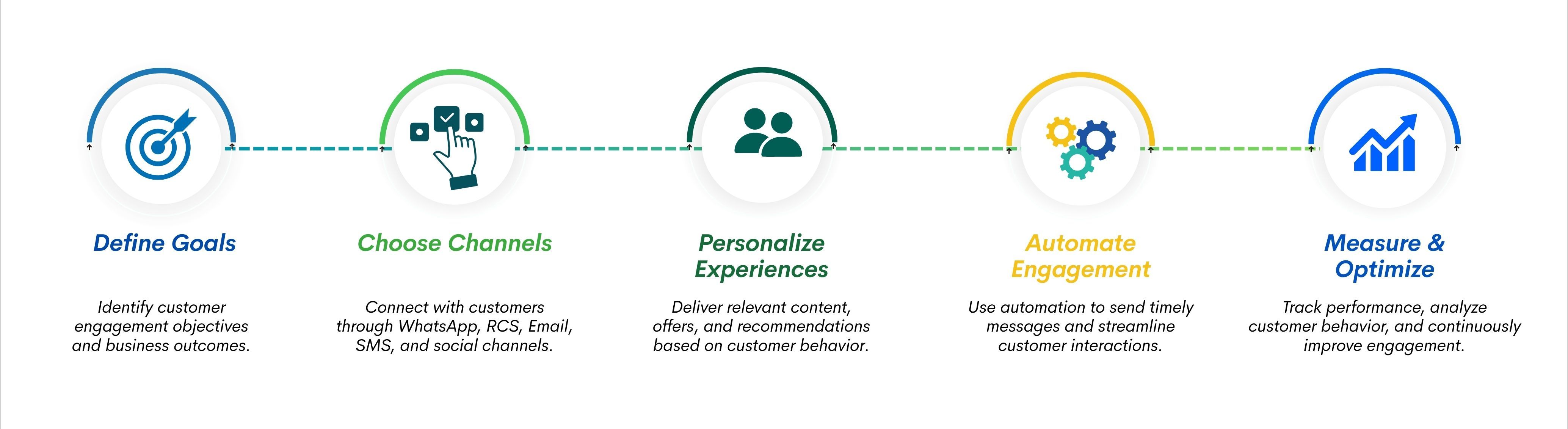
The need for a set of practical business communication strategies is more than necessary to ensure customers are taken care of at every stage of the sales journey.
The elementary steps of a generic business communication strategy are:
Define Communication Objective
Businesses should identify what they want to achieve through customer communication, such as improving engagement or increasing conversions.
Choose the Communication Channel
Selecting the right channels ensures messages reach customers where they are most active.
Personalize Customer Interactions
Personalized business communication improves engagement and builds stronger relationships.
Automate Cyclic Communication
Automation helps businesses maintain consistent communication without overwhelming their teams.
A structured business communication strategy enables businesses to deliver better customer experiences.
Real-World Customer Engagement Examples from Businesses
Various industries have successfully marketed with suitable customer engagement and communication practices. They understand that the process of customer engagement is not a one-time thing but a closed loop that strengthens customer relationships over time. Why does this matter? Because good customer relations are directly proportional to generating profitable revenue.
E-commerce Businesses
E-commerce companies rely heavily on consistent customer communication to keep customers informed throughout the sales journey. Customers typically receive order details, verification notifications, shipping updates, and delivery confirmations.
These messages may seem simple, but prove to be crucial for building trust and improving customer engagement. When customers receive real-time updates, they feel reassured that their purchase is being handled professionally.
On top of that, e-commerce businesses use automated follow-up messages to receive feedback, share product recommendations based on purchase history, or provide loyalty points. These practices strengthen overall business communication and encourage repeat purchases.
The Role of Communication in Driving Software Adoption
Sustained customer engagement is essential for successful adoption and continued use of SaaS platforms. This necessitates a proactive business communication strategy. Initially, guided onboarding messages walk new users through key features, ensuring quick initial success.
Post-onboarding, consistent customer communication is vital. Companies use broadcasts to share milestones, usage insights, and new feature updates. These interactions keep users informed, maintain product visibility, and encourage high utilization.
Service-based Businesses
For service-based businesses like healthcare clinics, financial advisors, and consulting firms, strong customer communication is vital for sustained customer engagement. A robust business communication strategy must integrate key practices such as sending timely appointment reminders, service updates, and follow-up communications. By prioritizing customer convenience and keeping clients informed and connected to the brand, these practices significantly boost customer satisfaction.
Across industries, one pattern remains consistent: companies that invest in better customer communication tools are ultimately performing better than their fellow competitors. It's not a question of how, but why. Mainly because people's expectations are not only limited to the product you're selling, but extended to how well you can help them after the purchase is done.
Mistakes That Reduce Customer Engagement
Many businesses strive to enhance customer engagement, yet various communication errors can inadvertently damage customer relationships and decrease overall engagement. By identifying these frequent missteps, organizations can effectively refine their business communication strategy, leading to more robust and positive customer interactions.
Ignoring Customer Messages
One of the most damaging mistakes in customer communication is failing to respond quickly to customer inquiries. Customers expect prompt responses, especially when they reach out through messaging platforms.
Delayed responses create frustration and signal that the business does not prioritize customer concerns. Over time, this can significantly reduce customer engagement and negatively impact brand perception.
Sending Too Many Promotional Messages
Marketing messages are an important part of business communication, but excessive promotional communication can overwhelm customers.
When customers receive too many marketing messages, they may ignore them or unsubscribe altogether. Effective customer engagement requires balancing promotional communication with helpful and informative interactions.
Lack of Personalization
Generic communication rarely creates meaningful engagement. Customers today expect brands to understand their needs, preferences, and past interactions.
Without personalization, customer communication can feel impersonal and disconnected. Businesses that fail to personalize communication often struggle to build lasting customer relationships.
Using Disconnected Communication Systems
Many companies rely on multiple applications to manage communication across channels. This fragmented approach can lead to inconsistent messaging and lost conversations.
Using integrated customer communication tools allows businesses to centralize conversations and maintain consistent business communication across all touchpoints.
Avoiding these mistakes is essential for maintaining strong and sustainable customer engagement.
How to Measure Customer Engagement Success
Improving customer engagement requires more than implementing communication tools and strategies. Businesses must also track and measure engagement performance to understand what works and where improvements are needed.
A strong business communication strategy includes clear metrics that evaluate how customers interact with the brand.
Response Time
Response time measures how quickly businesses respond to customer inquiries. Faster response times often lead to better customer experiences and stronger customer engagement.
Modern customer communication tools allow businesses to automate initial responses, ensuring customers receive immediate acknowledgment even when support teams are unavailable.
Customer Satisfaction Scores
Customer satisfaction surveys help businesses assess customer communication quality.
High satisfaction scores typically indicate that customers feel heard, supported, and valued. These factors play a major role in strengthening long-term customer engagement.
Repeat Purchase Rates
Repeat purchases indicate that customers trust the brand and continue engaging with it. Effective business communication often contributes to higher repeat purchase rates by keeping customers informed and connected.
Campaign Performance Metrics
Marketing campaigns also provide valuable engagement insights. Metrics such as open rates, click-through rates, and conversions help businesses evaluate whether their customer communication strategy is effective.
When businesses track these metrics consistently, they can refine their communication efforts and strengthen customer engagement over time.
Strengthening Customer Engagement with an Omnichannel Communication Platform
As businesses scale, managing customer interactions across multiple channels becomes increasingly complex. Customers may reach out through messaging apps, email, social media platforms, or phone calls.
Without a unified system, managing these conversations becomes difficult and inefficient.
An omnichannel platform addresses this challenge by integrating multiple customer communication tools into a single interface. This allows businesses to manage all customer interactions from one centralized dashboard.
Unified Customer Conversations
An omnichannel system ensures that all customer conversations are stored in one place. This enables teams to access full interaction histories, which improves the quality of customer communication.
When support agents have access to previous conversations, they can provide faster and more personalized responses.
Automated Customer Engagement
Automation is key to scaling customer engagement. Businesses can automate routine messages such as order confirmations, appointment reminders, and follow-up notifications.
Automation allows organizations to maintain consistent business communication without increasing operational workload.
Integrated Lead Management
Many omnichannel platforms also include lead management capabilities. This allows businesses to track potential customers from their first interaction to final conversion.
Integrated lead tracking improves customer engagement by ensuring no opportunity is missed.
Campaign Management
Businesses can also use integrated systems to launch targeted campaigns based on customer behavior and preferences.
This level of personalization significantly improves customer communication effectiveness and helps businesses build stronger relationships with their audience.
By consolidating communication processes into one platform, businesses can maintain consistent business communication and deliver seamless customer experiences.
Driving Long-Term Customer Engagement with Smarter Communication
Long-Term Customer Engagement is driven through continuous communication. That usually requires a thoughtful approach to business communication that evolves with time and expectations.
Businesses that succeed in maintaining strong engagement follow several key principles.
They prioritize responsiveness. Customers value brands that respond quickly and efficiently to their concerns.
Focus on personalization. Tailored messages and recommendations make customers feel valued and understood.
Invest in reliable customer communication tools that enable teams to manage interactions efficiently.
And finally, a continuous refinement of their business communication strategies by analyzing customer behavior and engagement metrics from time to time.
Organizations that adopt these practices are better at creating lasting customer relationships.
The Customer Engagement Lifecycle: From First Interaction to Loyalty
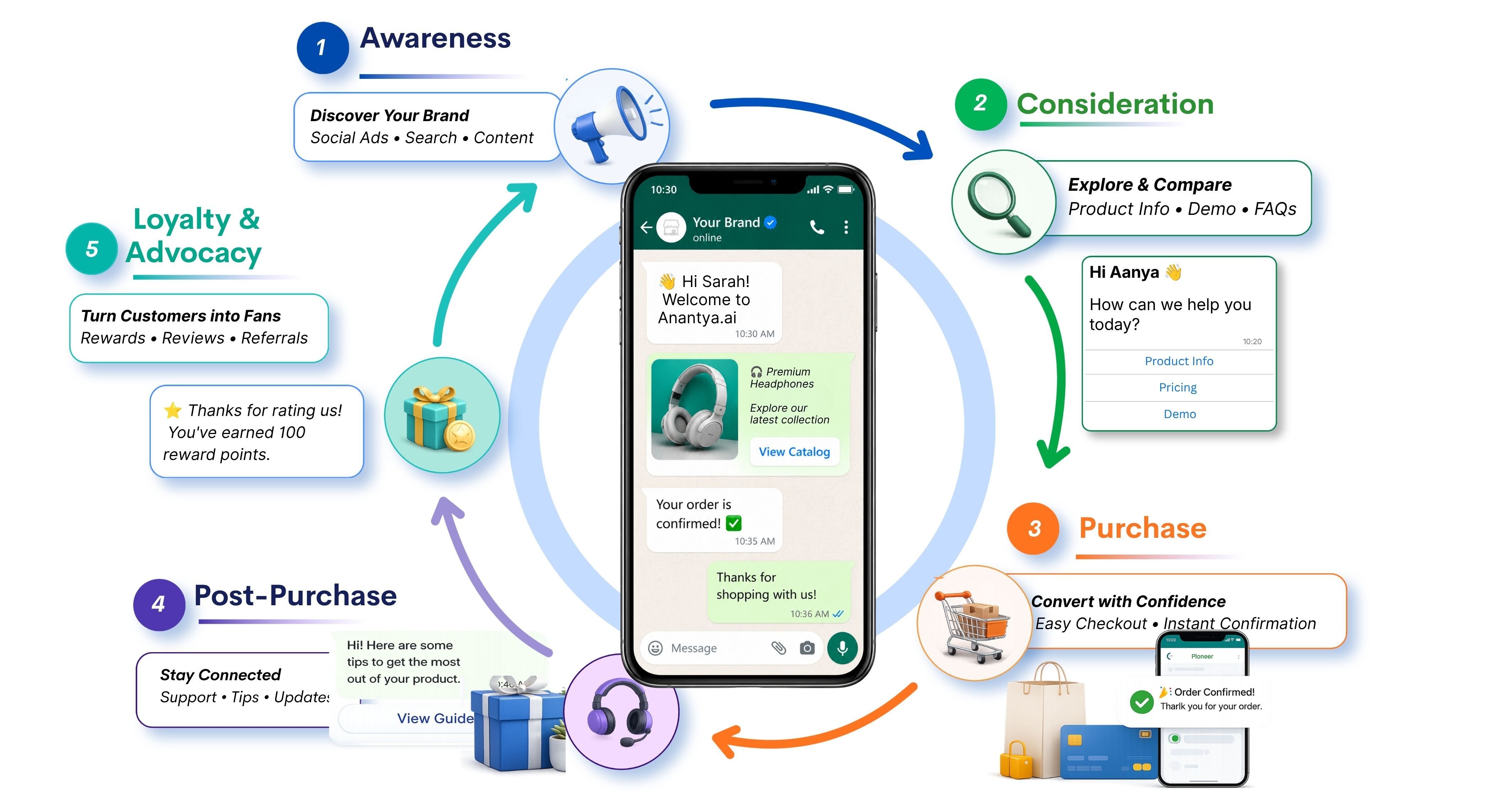
To truly understand customer engagement, businesses must view it as a lifecycle rather than a single interaction. Every customer moves through several stages when interacting with a brand, and each stage requires a different approach to customer communication.
A structured business communication strategy ensures that businesses maintain meaningful engagement throughout this lifecycle.
1. Awareness Stage
At the awareness stage, potential customers are discovering the brand for the first time. This discovery may happen through social media, advertising, referrals, or search engines.
At this stage, business communication focuses on providing helpful information rather than direct selling. Educational content, introductory messaging, and informative campaigns play a key role in encouraging initial customer engagement.
Businesses that communicate clearly during this stage create a positive first impression that encourages customers to explore further.
2. Consideration Stage
Once customers become aware of a brand, they begin evaluating whether the product or service meets their needs.
During this stage, customer communication should focus on answering questions, sharing product information, and building trust. Businesses often use personalized messaging, demos, and targeted campaigns to nurture potential customers.
A well-planned business communication strategy ensures that prospects receive relevant information at the right time.
3. Purchase Stage
The purchase stage is where engagement directly impacts revenue. Clear communication about pricing, product features, and support services can influence buying decisions.
Effective customer communication tools help businesses respond quickly to inquiries, guide customers through the purchase process, and provide reassurance that they are making the right decision.
4. Post-Purchase Engagement
Customer engagement should not end once a transaction is completed. In fact, the post-purchase phase is often where long-term relationships are built.
Follow-up messages, onboarding guidance, and helpful product tips are examples of business communication that strengthen ongoing engagement.
5. Loyalty and Advocacy
The final stage of the engagement lifecycle occurs when satisfied customers become loyal supporters of the brand.
At this stage, businesses maintain strong customer engagement through loyalty programs, exclusive offers, and personalized communication.
Companies that invest in this stage often benefit from referrals and positive word-of-mouth marketing.
How Personalization Improves Customer Engagement
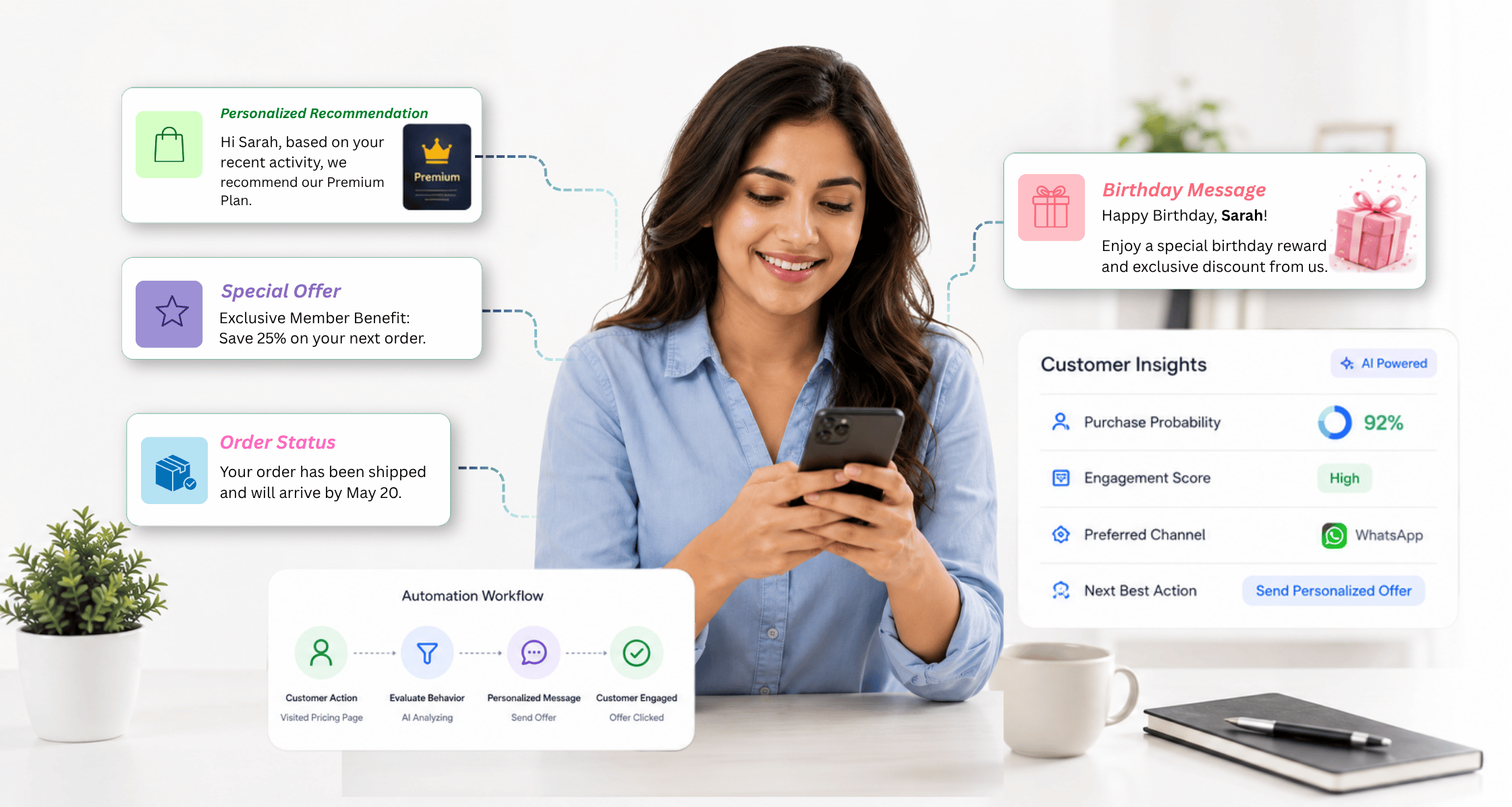
What is the big deal with personalizing every text message? As a user, you must admit that receiving a text from a well recognised brand with your name, items you abandoned in the cart and an exclusive offer does feel like a good way to convince you to re-engage with the brand. Best part about it for your business? You can automate the whole process!
Customers today expect brands to understand their preferences, behaviors, and needs. Generic messaging rarely captures attention or encourages interaction.
Effective customer communication strategies use data and insights to tailor interactions for each customer.
Personalized Recommendations
Businesses often use past purchase history or browsing behavior to recommend relevant products or services. These recommendations create more meaningful interactions and increase the likelihood of conversion.
Behavioral Messaging
Behavioral messaging is another important component of modern customer communication. For example, customers may receive reminders about abandoned carts, follow-up messages after browsing certain products, or suggestions based on previous purchases.
These targeted interactions significantly improve customer engagement.
Contextual Communication
Contextual communication refers to messages delivered at the right time based on customer actions. For instance, sending a delivery update immediately after an order is shipped provides valuable information and reassures the customer.
Advanced customer communication tools allow businesses to automate these personalized interactions at scale.
When personalization is integrated into a company's business communication strategy, it strengthens relationships and encourages deeper engagement.
The Role of Automation in Customer Engagement
Customer engagement across a variety of communication channels seems like a hassle, except it's not. Instead of manually typing every message, BSPs are automating repetitive/expected messages that they receive. Greeting messages, FAQs, order updates, etc., with pre-set variables, can all be automated for a personalized and instant reception.
Customer Support
Automated replies help in providing assistance within seconds to customers who inquire about FAQs. This ensures that customers receive instant responses even outside business hours. Automation thus reduces response time and improves customer experience.
Customized Campaigns
Businesses schedule campaigns that send messages depending on the stage of the customer journey. For example, new customers may receive onboarding messages, while returning customers receive loyalty rewards. Custom campaigns support scalable and well-informed business communication strategies.
Alert Notifications
Notifications such as order confirmations, delivery updates, and appointment reminders help with retention of customer attention due to constant reminders and prolonged customer engagement with no manual effort. Therefore, with advanced customer communication tools, automation allows businesses to maintain high levels of engagement without overwhelming their teams.
Omnichannel Communication and Its Impact on Customer Engagement
Customers interact with businesses through multiple channels, including messaging platforms, email, phone calls, and social media.
An effective business communication strategy ensures all these channels work together to support seamless customer engagement.
Consistent Customer Experience
Customers expect consistent experiences regardless of the channel they use to contact a business.
For example, if a customer begins a conversation through a messaging platform and later follows up through email, the business should have access to the full conversation history.
Unified customer communication tools make this possible.
Improved Response Efficiency
Omnichannel platforms allow support teams to manage multiple conversations from a single dashboard.
This reduces confusion and improves customer communication speed.
Better Customer Insights
When communication channels are integrated, businesses gain a complete view of customer behavior and preferences.
These insights help refine the business communication strategy and improve future engagement efforts.
Companies that adopt omnichannel communication often experience significantly higher levels of customer Engagement.
Customer Engagement Strategies That Businesses Can Implement Today

Improving customer engagement requires a deliberate and well-structured approach. Businesses must create communication strategies that prioritize meaningful interactions and consistent engagement.
Several practical strategies can help organizations strengthen their customer communication.
Proactive Communication
Instead of waiting for customers to ask questions, companies should proactively provide helpful information.
Examples include shipping updates, appointment reminders, and product usage tips.
Educational Content
Educational Content helps customers understand how to use products or services effectively.
Tutorials, guides, and FAQs improve customer engagement by providing valuable insights.
Loyalty Programs
Rewarding loyal customers with exclusive offers or discounts encourages repeat interactions and strengthens long-term relationships.
Feedback Collection
Businesses should regularly collect customer feedback to understand their needs and expectations.
Feedback improves business communication by helping organizations refine their strategies.
Combined with reliable customer communication tools, these strategies can significantly improve engagement levels.
Industry Applications of Customer Engagement
Every industry has a different set of business strategies to imply based on their specific requirements. Customer engagement is based on the metrics that the company is using to measure their success. For instance, for software companies, the target might be getting more people to know about their services. For a fashion brand customer engagement could be all about establishing a culturally relevant identity.
E-commerce
E-commerce businesses rely on automated notifications, personalized recommendations, and targeted campaigns to maintain strong customer communication.
Banking and Financial Services
Financial institutions use secure messaging, transaction alerts, and account updates to ensure transparent business communication with customers.
Healthcare
Healthcare providers improve customer engagement through appointment reminders, follow-up care messages, and health education campaigns.
Each industry relies on advanced customer communication tools to maintain consistent engagement and deliver better experiences.
The Future of Customer Engagement
What can we expect for customer engagement in terms of technological advancement?
Artificial Intelligence, Advanced Analytics, and Automation are some widely discussed topics of customer communication.
As time moves forward, businesses will increasingly rely on automatically retrieved data-driven insights to personalize interactions with their clients and deliver highly relevant experiences.
Customers will continue to expect faster responses and convenient communication channels that lets them shop and talk within a single window. No window switching required to browse products, add-to-cart and final payment.
Organizations that implement modern customer communication tools and adopt business communication strategies quickly will be better prepared to meet these expectations.
Ultimately, the future of Customer Engagement will belong to businesses that prioritize meaningful interactions and consistently create experiences that help their customers in making their shopping journey as smooth and quick as possible.
Customer engagement refers to the ongoing interactions between a business and its customers across different channels. Through effective customer communication and meaningful experiences, businesses build stronger relationships that encourage loyalty, repeat purchases, and long-term brand advocacy.
Customer engagement is essential because engaged customers are more likely to trust a brand, make repeat purchases, and recommend the business to others. Strong customer communication and a clear business communication strategy help companies build lasting relationships and improve overall customer retention.
Customer communication plays a critical role in building customer engagement. When businesses communicate clearly, respond quickly, and personalize interactions, customers feel valued. Consistent business communication across channels helps maintain trust and keeps customers actively connected with the brand.
The best customer communication tools include messaging platforms, CRM systems, email automation software, and omnichannel communication platforms. These tools help businesses manage conversations, track customer interactions, automate responses, and maintain consistent business communication across multiple channels.
A business communication strategy is a structured plan that defines how a company communicates with customers, partners, and internal teams. It ensures consistent messaging, efficient customer communication, and stronger customer engagement across different communication channels.
Businesses can improve customer engagement by responding quickly to customers, personalizing communication, using effective customer communication tools, and creating a strong business communication strategy. Consistent and meaningful interactions help businesses build stronger relationships and long-term customer loyalty.
Many businesses face challenges such as delayed responses, fragmented communication channels, lack of personalization, and poor coordination between teams. Using advanced customer communication tools and implementing a clear business communication strategy can help overcome these issues.
Customer communication tools streamline conversations, automate responses, and centralize customer interactions. By improving business communication efficiency and enabling faster responses, these tools enhance customer engagement and help businesses deliver better customer experiences