



“Send it on WhatsApp.”
For a business trying to reach a customer, that sentence solves a lot. The customer already knows where to find the message, how to reply and how to return to the conversation later. Someone asking for a product brochure is hardly signing up for software training.
WhatsApp removed that extra effort. Businesses joined a space their customers already used, with a familiar interface and an insistent habit of checking messages.
The scale explains the appeal. Meta reported more than three billion people on WhatsApp in June 2026. In India, Meta cites a 2025 Kantar study showing that 91% of online adults chat with a brand weekly. The latter figure measures business messaging in general. It is not a measure of WhatsApp use across India’s population.
Reaching customers through a familiar app made sense. What happened next made WhatsApp much harder to replace.
“WhatsApp Me” Became the Business Plan
When your customer starts a conversation on WhatsApp, you share the details, answer their questions and send a payment link. After the purchase, the same chat becomes the place for delivery updates and support.
Repeat that across an entire customer base, and the inbox starts carrying an incalculable weight of replies between a brand and its clientele.
Brands use WhatsApp for managing incoming leads, bookings, reminders, campaigns and sales follow-ups. A WhatsApp catalog supports product browsing. Chatbots answer routine questions while agents take over when the customer needs a person.
WhatsApp Business API links chats with business operations. Orders, lead records and support tasks become part of connected workflows. By this stage, WhatsApp sits inside how the business runs. Turning it off means dealing with the work, teams and customer habits attached to it.
Audit First. Invoice Later.
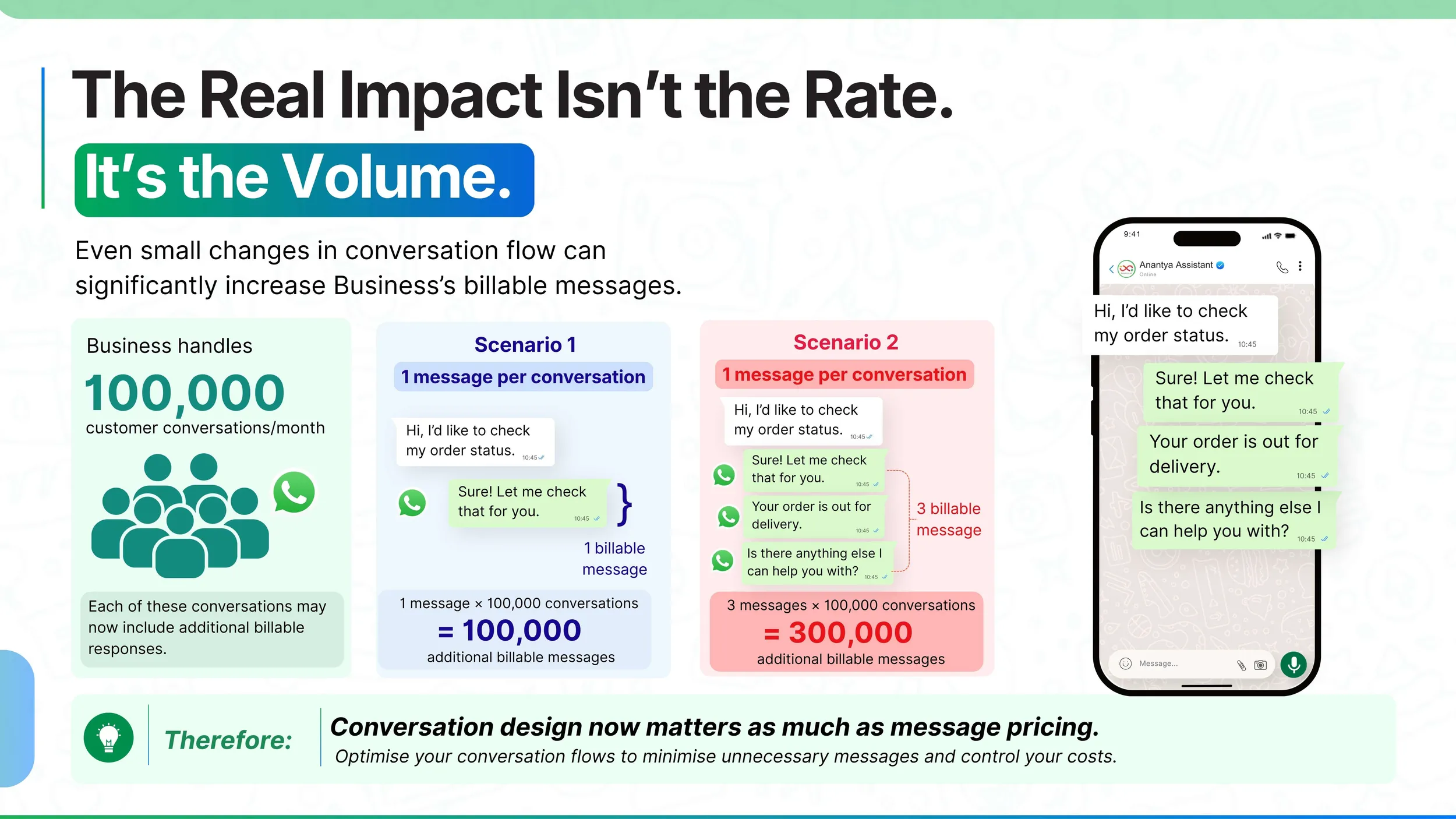
When a customer asks about their order it doesn't automatically mean they want their phone buzzing for the next 24 hours.
The session window gives businesses room to answer questions and resolve issues. Repeated prompts and unwanted follow-ups turn that convenience into a reason to mute the chat. From a customer-experience perspective, per-message pricing puts a financial cost on that wasted attention.
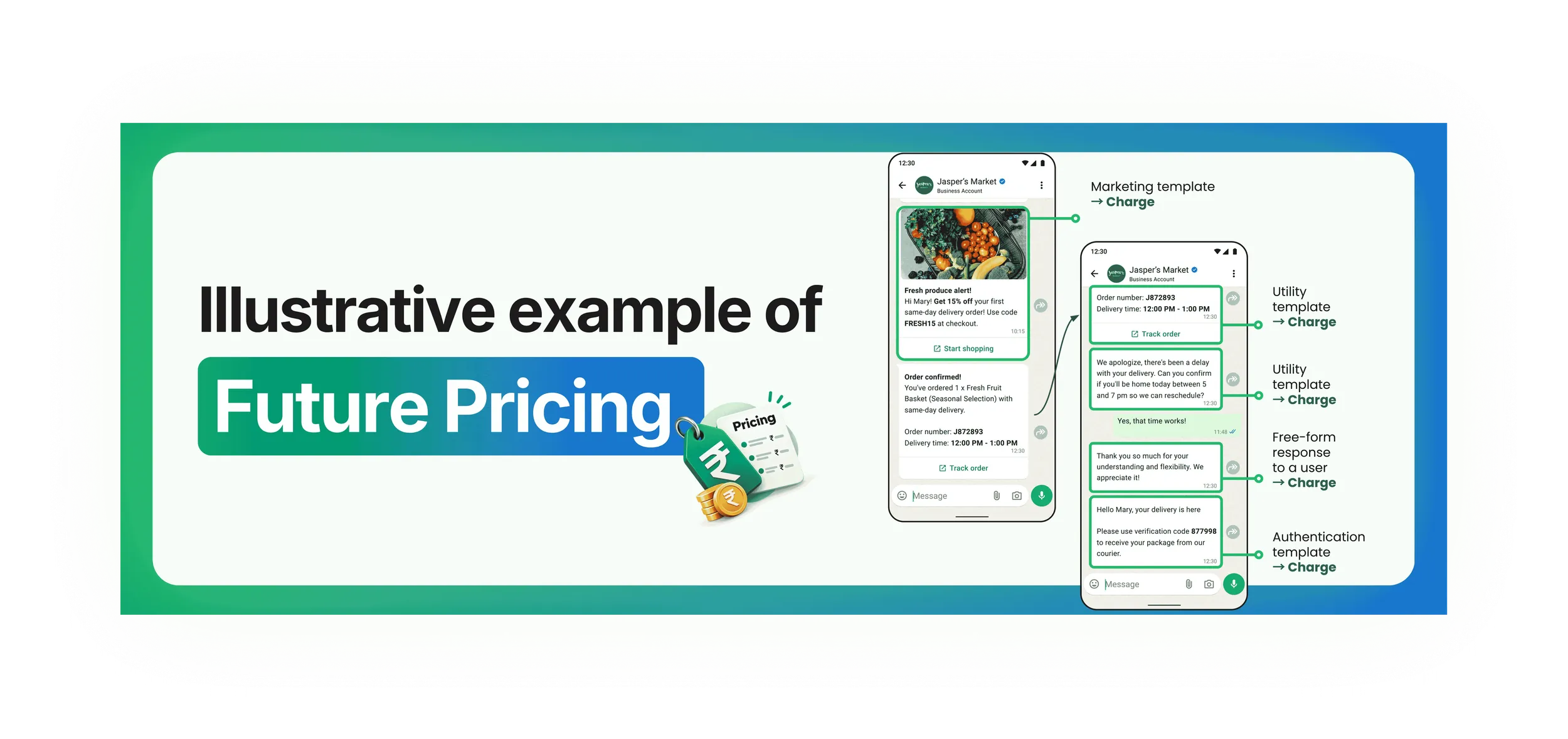
From 1 October 2026, Meta charges for each delivered non-template service reply within the 24-hour customer-service window. Replies from agents and third-party chatbots count. Incoming customer messages remain free of Meta charges. Personal WhatsApp chats are outside this update.
For businesses, this creates a clear incentive to make each reply useful. Give the customer a complete answer. Pass their details to the agent. Stop automated follow-ups once the issue is resolved. The charge itself does not judge message quality, though.
So where do businesses cut back? Start with repetition. Better service gives every reply a purpose. The October update gives that purpose a place in the budget. The benefits go beyond the bill:
Build customer trust. Clear answers and relevant follow-ups show customers that your business respects their time. Give them a reason to welcome your next message.
Support account health. Respecting opt-ins and stopping unwanted messages helps reduce the risk of blocks and reports. WhatsApp links negative feedback and sustained low quality to account restrictions.
Make support easier. Complete answers and informed agent handovers save customers from repeating details and teams from repeating work.
Control wasted spend. Remove duplicate replies and needless reminders so the budget goes towards messages that help customers.
These benefits come from improving how you choose to communicate. Paying per message alone does not improve trust or account health. So, be intentional and keep on reading to see what more you can implement within your current systems.
Your AI Writes Replies. Tokens Write the Bill.
Once a business handles enquiries at scale, AI becomes part of the discussion. It answers questions, helps customers choose products and handles work that otherwise reaches the team.
Also brings its own cost model that is beyond normal computation.
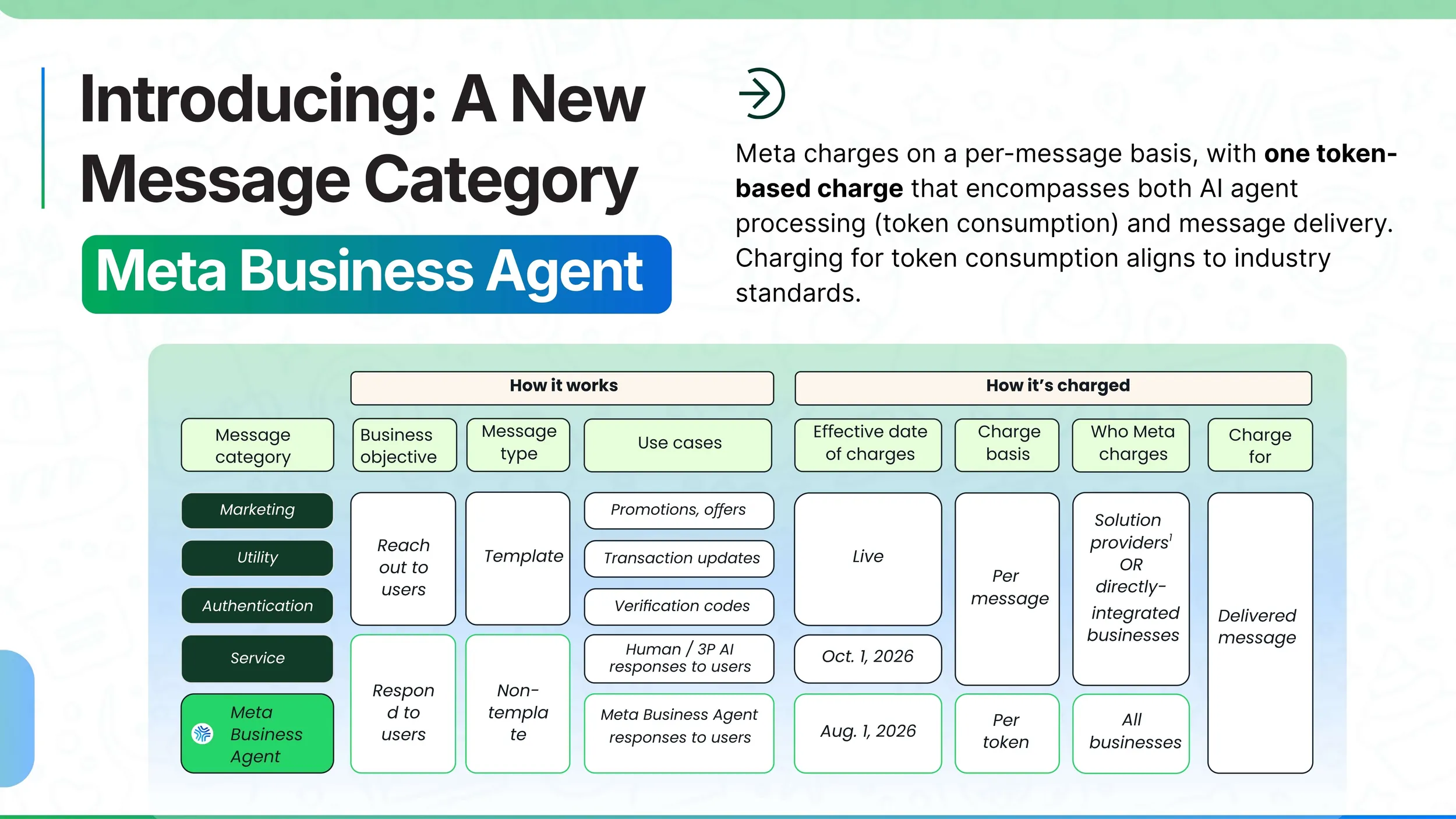
Meta Business Agent pricing took effect on 1 August 2026, at US$2 per million tokens. Tokens count the pieces of information the AI reads and produces. A simple answer takes less work than product advice that involves browsing a catalog.
Meta’s guide illustrates that difference through three journeys, using an assumed US$0.05 per Business Agent message:
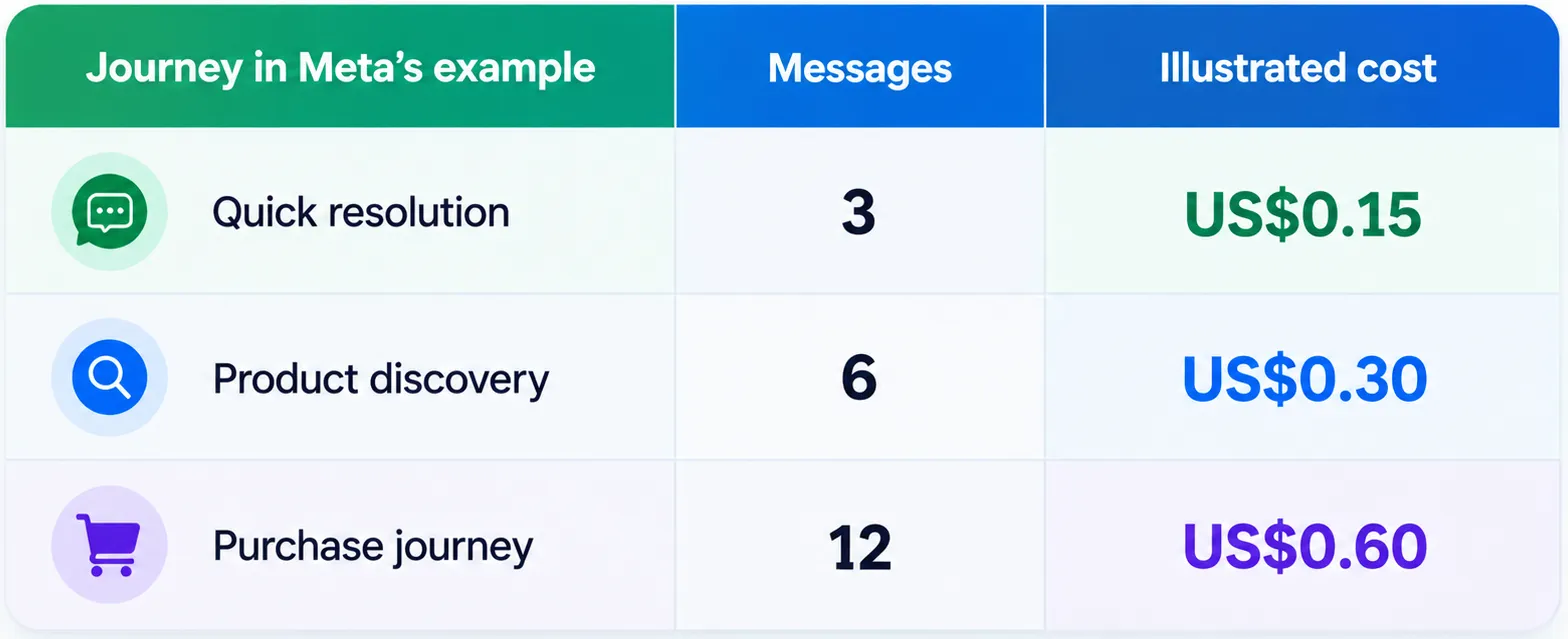
These figures are illustrations. Actual billing follows token consumption at US$2 per million tokens. One Meta Business Agent charge covers AI processing and message delivery. Meta does not add a second service-message charge to that same reply.
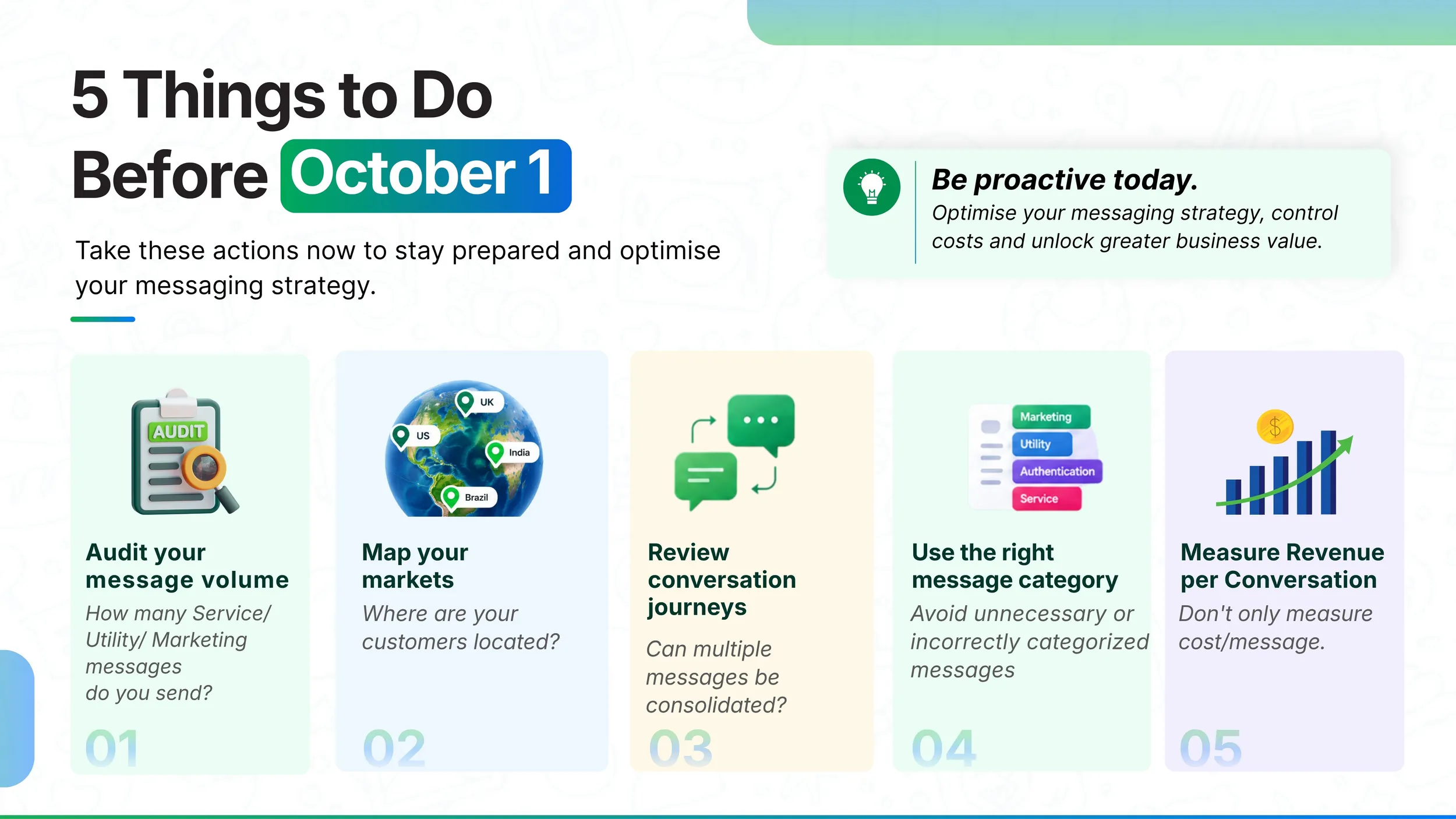
Five Fixes Before Your October Bill
Before changing channels or cutting campaigns, find out what your current setup asks customers, and your budget, to sit through.
1. Audit WhatsApp Volume: Count Beyond the Campaign
The campaign report shows how many messages went out. What happened after customers replied?
Pull a recent month of delivered-message data. Separate campaign messages, service replies and Meta Business Agent usage. Then group service replies by task: order tracking, appointments, product questions, complaints and sales enquiries.
A busy inbox tells you customers are talking. This breakdown tells you which work creates the volume.
Leave this step with: Message-volume baseline and the three journeys that generate the most service replies.
2. Map Your Markets: One Campaign, Different Costs
A campaign reaching customers in India, the UAE and Saudi Arabia needs a budget that reflects those recipient markets.
Group delivered messages by the recipient’s country calling code, then apply the relevant October rates. Keep provider fees and AI usage visible as separate costs.
Ask your WhatsApp API provider to review this estimate against your account’s actual usage. A global average hides the markets driving the bill.
Leave this step with: October cost estimate broken down by customer market.
3. Review the Journey: Your Bot Needs an Editor
Open your busiest support flow and use it as a customer.
Count the greetings, menus, repeated questions and acknowledgements before the answer arrives. Check what happens when someone asks for an agent.
“Let me check,” “Your order is on its way,” and “Delivery is expected by 6 PM” occupy three messages. A single update gives the customer the useful information together.
For product browsing, put a WhatsApp catalog or a relevant product page within reach. For handovers, pass the details already collected to the agent. A complaint still deserves time and care. Focus the edits on steps that add neither.
Leave this step with: Three revised journeys, tested through to resolution, including the handover.
4. Check Message Categories: The Label Follows the Job
A promotion, a verification code and an agent’s service reply serve different purposes. Review your templates and automated messages against Meta’s category rules.
Keep sales campaigns and support flows distinct. Check that each template’s content matches its approved category. Treat classification as an accuracy check. A cheaper label does not change what a message says.
Leave this step with: Reviewed templates and a clear purpose for every automated message.
5. Measure Revenue per Conversation: Busy is not a Result
A WhatsApp marketing campaign brings in 1,000 chats. How many become qualified leads, bookings or purchases?
Connect the campaign to the outcome. Include ad spend, messaging, AI and provider costs in the calculation. Record the attribution method so the same sale is not credited repeatedly across channels. Support needs its own measure: cost per resolved query, time to resolution and repeat contact. A refund conversation has value even without a new sale.
Leave this step with: A report showing what conversations cost and what they achieve.
WhatsApp, Webchat or SMS? Match the Message
Once those five checks are complete, channel choices become easier.
A customer comparing six plans needs room to browse. Someone confirming an appointment needs a quick exchange. A subscriber reading your monthly newsletter needs neither a chatbot nor a sales agent.
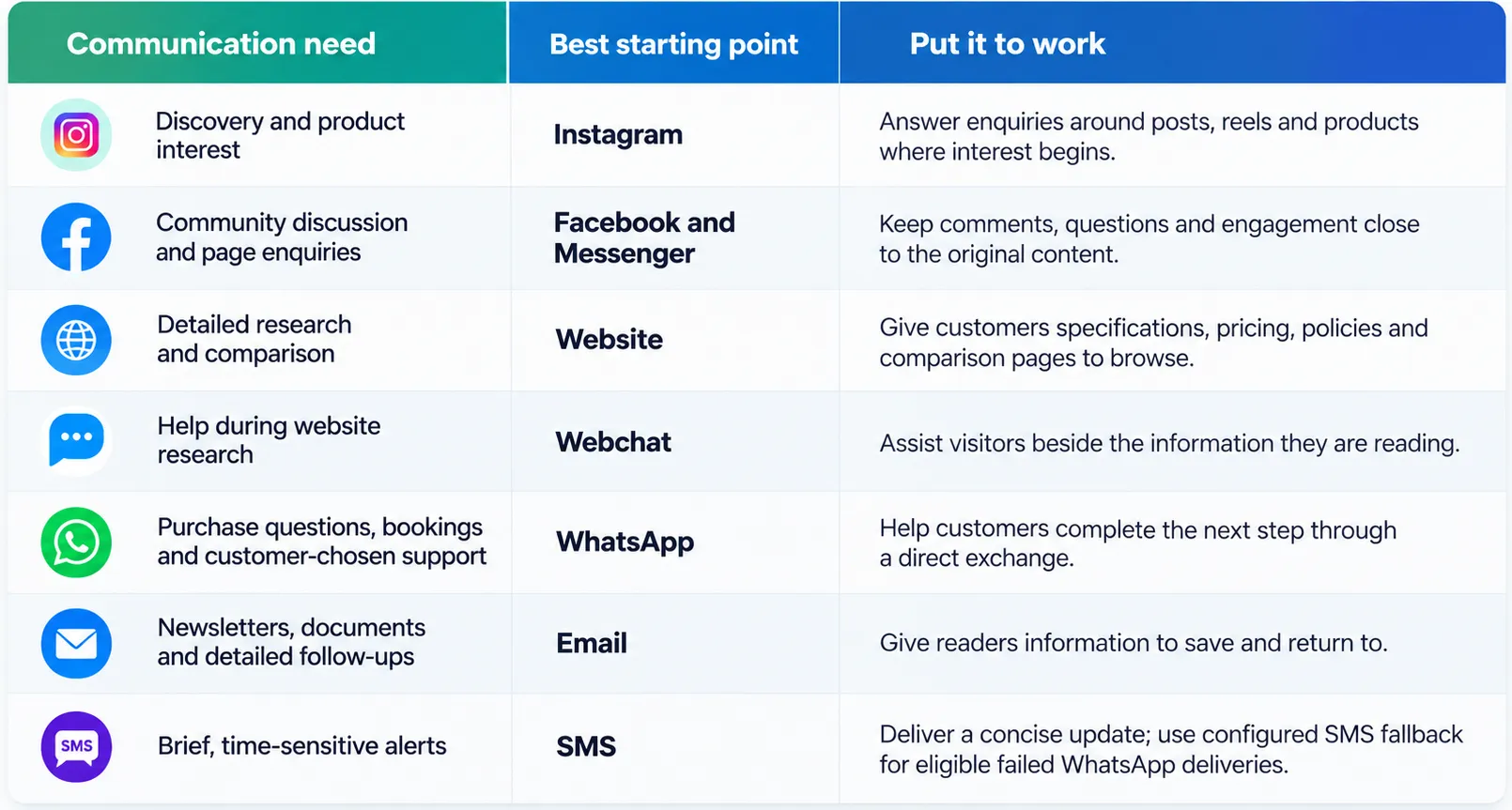
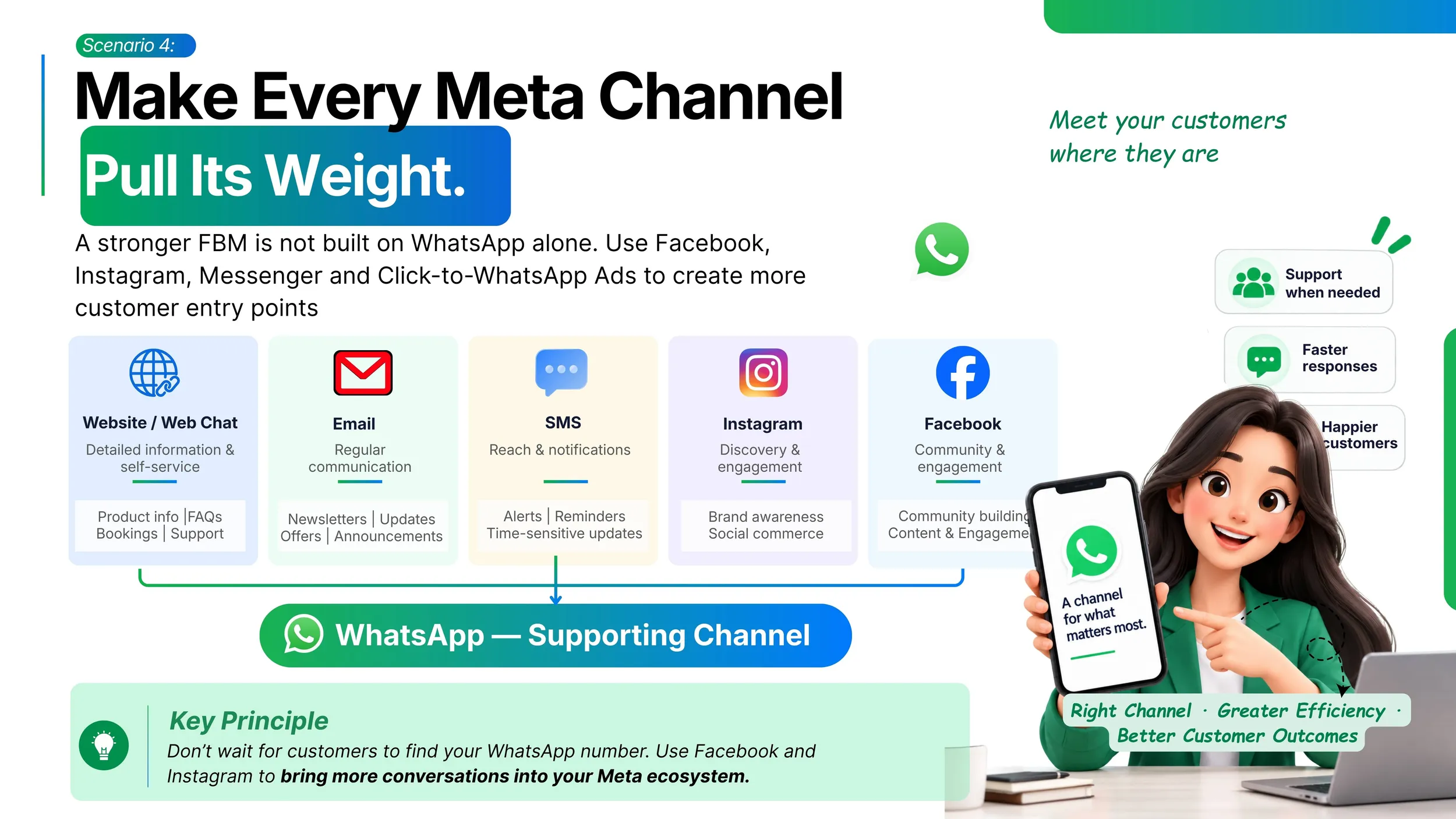
These are starting points, not instructions to move every existing conversation. A customer already discussing a purchase on WhatsApp does not need a tour of your other channels. Give the receiving team the relevant customer details and previous answers. Moving between channels loses its value when the customer has to begin again.
Anantya’s Team Inbox, Lead Inventory and connected workflows support that coordination. Start by connecting the channels your customers already use, then test the journeys between them.
Keep WhatsApp. Rethink the Workload.
On 1 October, customers will still ask where their order is. Prospects will still need help choosing. Your team will still have sales to close and complaints to resolve.
The pricing change makes the route to those outcomes worth examining.
Before October, know which journeys create your message volume, which markets drive the cost and which conversations produce results. Give each channel a defined role, with a team ready to handle what arrives there.
WhatsApp did not become expensive overnight. It became essential first.
Keep the access to customers that made it valuable. Take a closer look at the habits your business built around it.
Bring your busiest customer journey to Anantya. Let’s review the messages, handovers and channel choices before October’s bill arrives.
Sources and References
Meta: Introducing Business AI on WhatsApp for Small Businesses in India. The 2025 Kantar statistic on weekly business messaging among online adults in India.
Meta: It’s Time to Reserve Your WhatsApp Username. June 2026 statement that WhatsApp has more than three billion users.
Meta, Pricing on the WhatsApp Business Platform. Supplied deck, effective 1 July 2025 and annotated for 1 October 2026. Pages 2–5 cover delivery-based charges and service messages
Meta Business Agent Platform Pricing Guide. Supplied deck, effective 1 August 2026. Pages 2–5 explain billing and cost illustrations; pages 8–10 cover monthly invoices, single-category charging, volume tiers and exemptions.
Meta: Upcoming WhatsApp Pricing Updates. Update documentation linked from both Meta decks.
Meta Business Agent Billing. Token billing and invoicing reference.