

A polished product walkthrough can look brilliant for ten minutes, especially when every click follows the script. Real businesses are less cooperative. Their CRM has custom fields nobody documented, one campaign attracts three completely different audiences, and the “temporary” spreadsheet has quietly become business-critical.
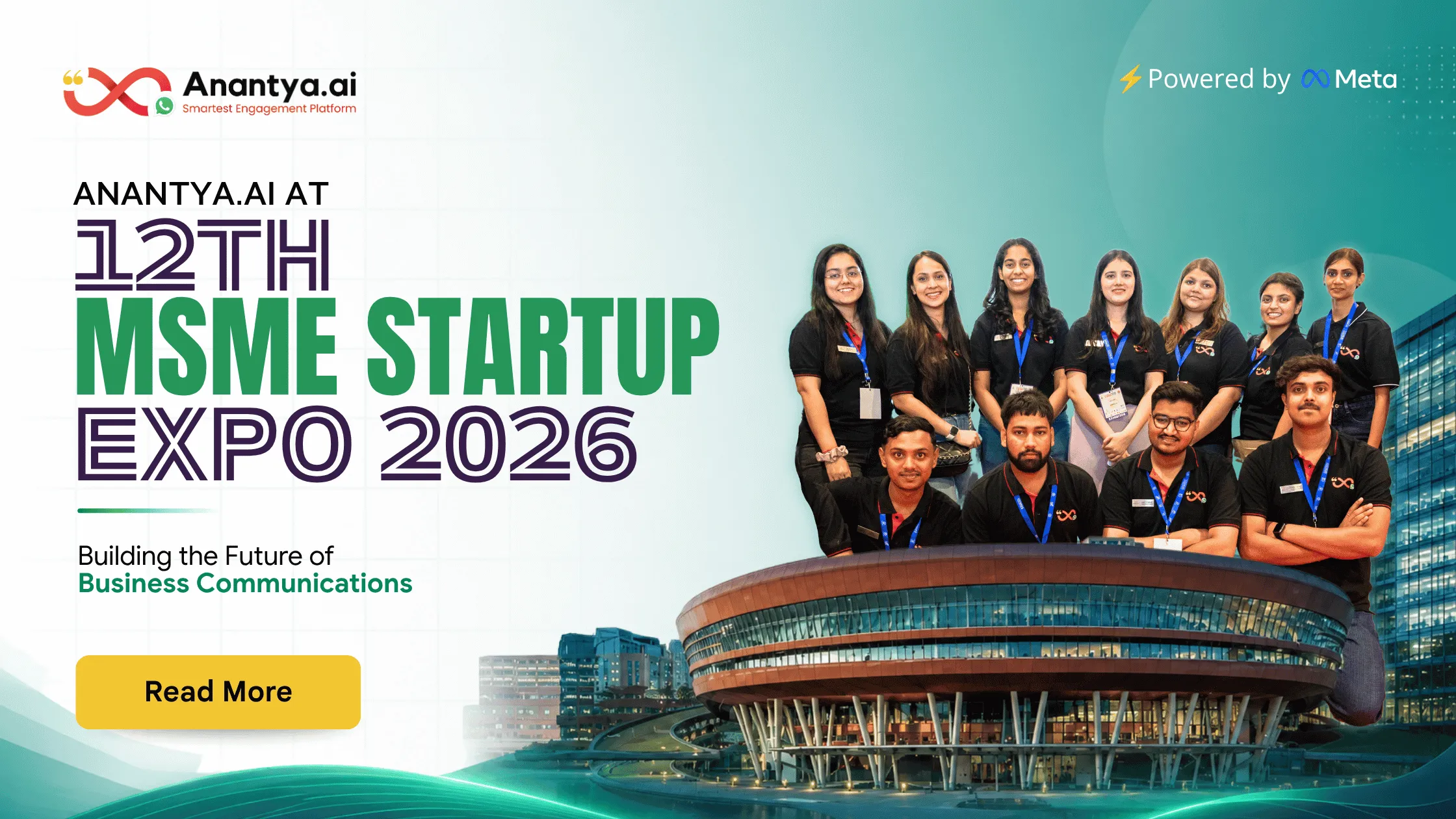
That is the version we want to meet at MSME Startup Expo 2026. The Anantya.ai booth will operate less like a software showroom and more like a live stress test. Visitors can arrive with an awkward workflow, an integration question or a customer journey that falls apart after the first reply, and put the platform to work.
WhatsApp Business API still anchors the experience, while RCS, AI, WebChat, omnichannel operations, custom integrations, lead management and analytics now show what happens beyond the first conversation. Instead of presenting seven disconnected products, the showcase follows the full movement of a customer journey, and leaves room for visitors to challenge it.
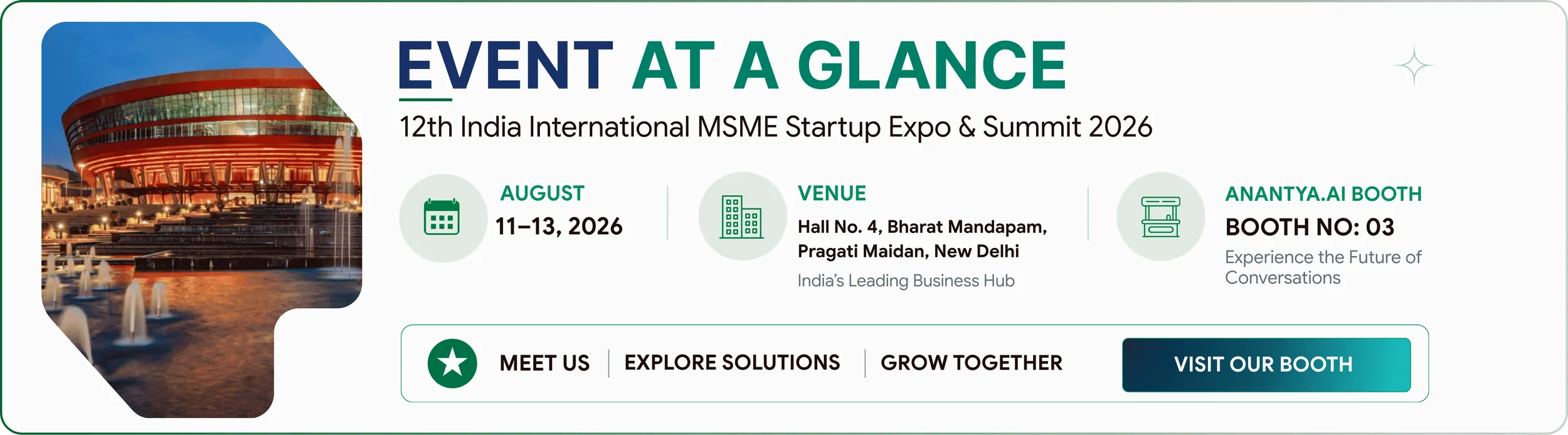
The 12th India International MSME Startup Expo & Summit 2026 runs from August 11 to 13 at Hall No. 4, Bharat Mandapam, Pragati Maidan, New Delhi. Clean use cases are welcome; chaos will probably make the better demo.
Register Now: https://anantya.ai/msme-landing-page/
Foundational Application to Convert Clicks into Revenue
Most software demonstrations are designed to avoid surprise. The sample lead has complete data, the bot understands the first attempt, the correct agent is available and every system agrees with every other system. Nothing breaks because nothing realistic has been allowed into the room.
Our booth experience this year takes the opposite approach. A visitor might begin with a Click to WhatsApp Ad, change the requirement midway, request a human and then ask where the information reached the CRM. Another journey could start through RCS, require an SMS fallback and end with a support agent who needs the complete history.
These transitions reveal more than a dashboard tour ever could. They show whether context survives a channel change, automation knows when to step aside, if ownership is clear and the data reaches the system that needs it next.
Product specialists will still explain individual capabilities, but the demo does not end after a message is delivered. It continues through qualification, routing, handover, follow-up and reporting. Technical teams can inspect APIs, webhooks and integrations; marketing and operations teams can focus on what the customer and agent experience.
This format also keeps the event honest. Some workflows need WhatsApp Automation. Others make more sense over RCS, SMS or WebChat. A useful customer engagement platform should choose the channel according to the job rather than forcing every problem through the newest feature.
WhatsApp Business API provides the foundation because the channel is already familiar to customers and flexible enough to support marketing, commerce, authentication and support.
WhatsApp Business App vs WhatsApp Business API
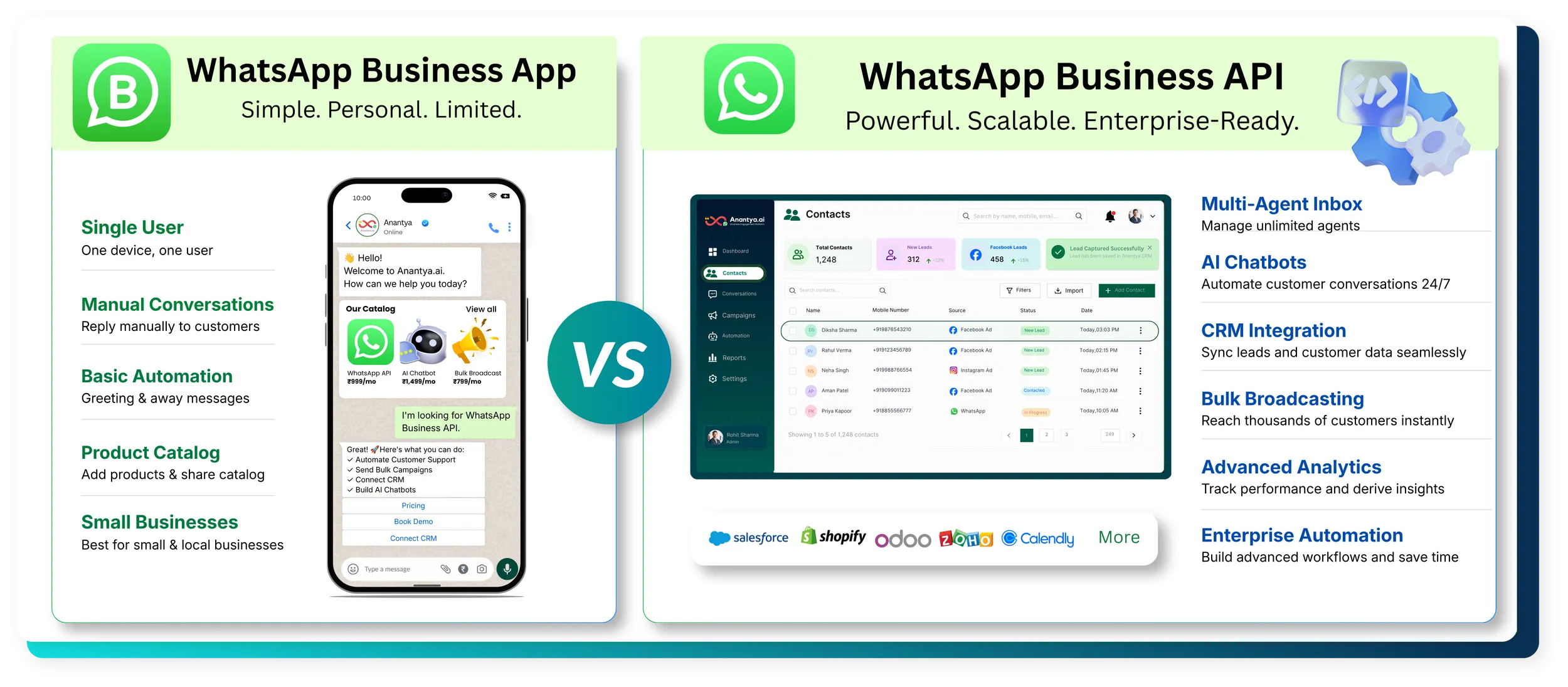
The regular WhatsApp Business App is a sensible starting point for a small operation. It offers a business profile, catalogue, labels, quick replies and direct access to customers through a familiar interface. A single-store owner or a very small team can manage a modest number of conversations without much setup.
Growth changes this equation. More enquiries bring more agents, longer histories, additional campaigns and a greater pressure to respond quickly. The same phone-centred setup begins creating blind spots. Nobody knows who owns a lead, managers cannot see performance clearly, and an important conversation may be trapped on a device when the person handling it is unavailable.
WhatsApp Business API is built for this stage. It allows businesses to work through an authorised business messaging platform with multiple agents, automation, approved templates, campaign tools, integrations and analytics. The API is not another version of the mobile app. It is the layer that lets WhatsApp participate in a larger business workflow.
Imagine a real estate company running Click to WhatsApp Ads for three projects. A prospect enters through an ad for a premium development in Noida. The system recognises the campaign, asks for budget and preferred configuration, shares the correct brochure and offers available site-visit slots. Once the prospect qualifies, the conversation moves to the relevant sales agent along with every response already collected.
No one asks, “Which property were you looking at?” The lead does not repeat information. Marketing can trace the source, sales receives context, and follow-ups can continue according to the lead stage.
The same infrastructure can help a clinic book appointments, an education business schedule counselling, a retailer confirm orders or a financial company handle service requests through structured verification. Different industries require different journeys; the underlying need remains consistent.
For MSMEs, the API matters because it creates operating leverage. Routine work can continue automatically while people focus on exceptions, negotiations and decisions. A ten-person team gains the process discipline of a much larger organisation without pretending every interaction should be handled by a bot.
Business App vs API: The Practical Difference
The choice is less about company size and more about operational complexity. A business may be small in headcount and still receive thousands of monthly enquiries. Another may have a larger team but only need simple one-to-one communication.
The Business App is usually enough when one or two people can manage conversations manually and reporting is not critical. The API becomes relevant when multiple agents need shared access, customers require automated updates, campaigns need segmentation, or information must move between WhatsApp and another system.
A useful test is to examine what happens after a message arrives. If the next step depends on someone copying data, forwarding screenshots or remembering to follow up later, the process is already asking for better infrastructure.
So, What Changed Between 2025 and 2026?
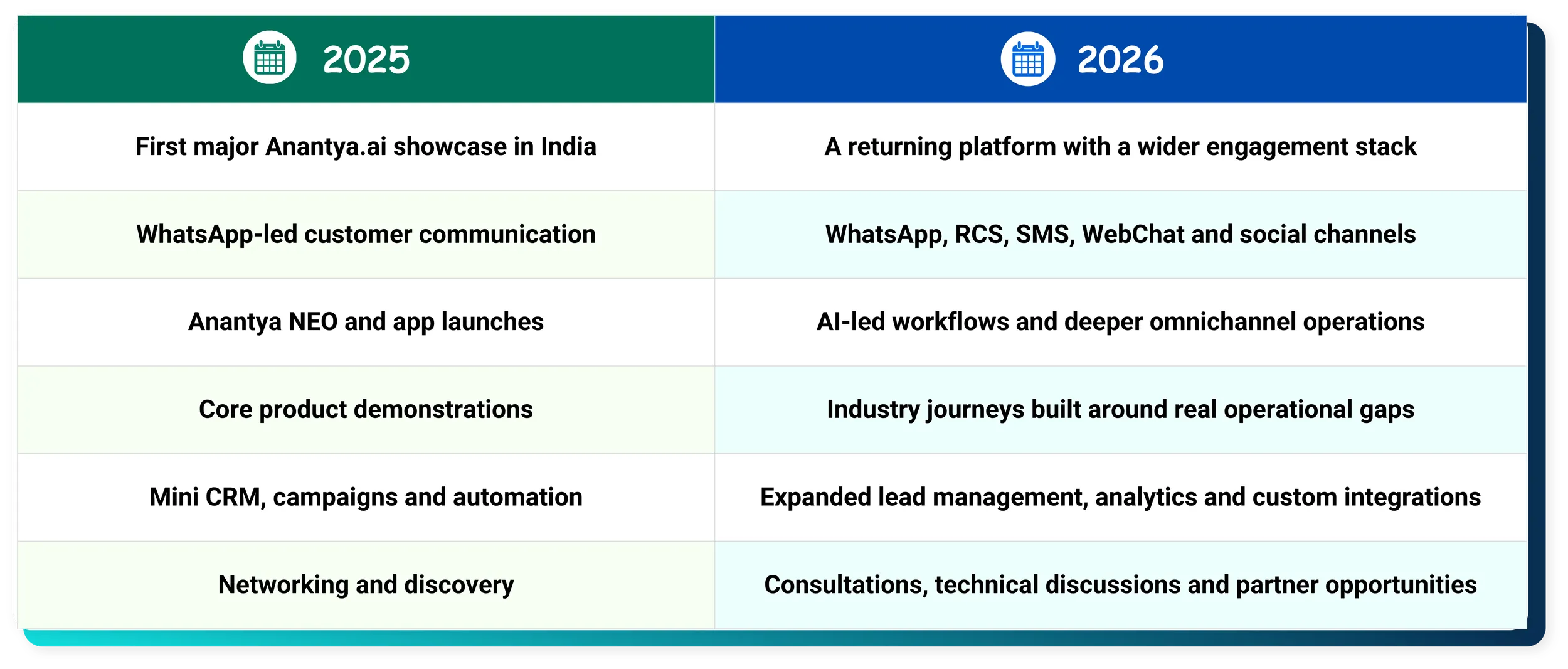
The 2025 expo marked Anantya.ai’s first major event appearance in India after years of serving businesses across international markets. We introduced Anantya NEO, launched the Anantya App and demonstrated a WhatsApp-led platform built for growing businesses.
The platform returning this year has expanded around the work that happens before, during and after a WhatsApp conversation.
RCS adds richer, verified mobile messaging. WebChat gives high-intent website visitors an immediate entry point. AI handles more flexible customer requests while clearer handover rules protect the human moments. The omnichannel inbox brings conversations into a shared operating view. Custom integrations allow CRM, ERP, e-commerce and internal systems to exchange data with those journeys. Analytics and lead management give marketing, sales and support teams a better view of what happened after a message was sent. Self-serve webhook controls offer technical teams more direct ownership of real-time events and connected workflows.
The change is not a pile of extra features arranged under a new headline. Anantya.ai has moved from helping businesses run messaging to helping them run the processes built around messaging. Returning visitors will recognise the platform. They will also find a wider answer to the operational questions they brought us last year.
From 2025 to 2026
What You Will Actually See at the Anantya.ai Booth
“Live demo” has become an event phrase that can mean anything from a working product to someone clicking through a very optimistic slide deck. Our goal is simpler: show the journey, including the boring operational parts that decide whether the technology is useful after the expo. Visitors will be able to follow an enquiry from its first point of contact to qualification, routing, agent handover, follow-up and reporting. Product specialists can demonstrate individual features, while business teams can discuss how those pieces fit into an existing process.
So bring a real use case, a messy one is even better.
WhatsApp Business API without the brochure language
At the booth, the WhatsApp Business API demonstration will focus on what happens around the message. You can see how a business handles multiple agents, assigns conversations, uses approved templates, automates routine steps and stores useful customer context.
The flow may begin with a simple “Hi,” but it does not have to end in a generic menu. A WhatsApp chatbot can collect requirements, validate information, share a catalogue, book a slot or route the conversation according to intent. Human agents receive the history instead of entering midway with no idea what the customer has already done.
Campaign management sits inside the same operating environment. Teams can create WhatsApp campaigns, organise audiences, track responses and build follow-up logic around customer behaviour. The platform becomes useful across marketing, commerce, authentication and support rather than serving as a bulk sending tool with a nicer interface.
Technical visitors can go deeper into APIs, webhooks and integrations. Business leaders can stay focused on the outcome. Both conversations belong at the same booth because a good WhatsApp API solution has to satisfy the process and the technology behind it.
WhatsApp Marketing that knows who it is talking to
Most bad marketing is not bad because the copy is terrible. It is bad because the message has no idea who received it.
A first-time lead, a loyal buyer and a customer waiting for support should not enter the same campaign. Anantya.ai helps teams segment audiences, personalise templates, schedule communication and study how people respond. Customer data can shape the message instead of sitting unused in another tool.
WhatsApp Marketing can support product launches, event invitations, lead nurturing, cart recovery, renewals, feedback and re-engagement. The channel offers immediacy, but frequency and relevance decide whether that immediacy feels useful or intrusive.
Our demonstration will show how a campaign moves beyond delivery and read rates. Replies can trigger different paths. Interested customers can move to sales. A support request can leave the marketing journey and reach the correct team. Unresponsive leads can enter a measured follow-up sequence rather than receiving the same offer again tomorrow. The objective is not higher volume; it is fewer wasted messages.
WhatsApp Broadcast with some respect for the contact list
The phrase “bulk WhatsApp messaging” has done a lot of damage to how businesses think about broadcasts. Volume sounds efficient until a customer receives an irrelevant offer at 8:07 on a Sunday morning.
A responsible WhatsApp Broadcast begins with opt-in, segmentation and a clear reason for contacting the audience. Businesses can use approved templates for offers, launches, reminders, service alerts or event communication. Dynamic fields allow useful personalisation, while scheduling and frequency controls prevent the campaign calendar from becoming a daily ambush.
Analytics help teams understand which audience responded, what message drove action and where interest dropped. That information should influence the next campaign rather than disappear into a monthly report nobody opens.
Visitors can see how Anantya.ai manages broadcasts alongside one-to-one conversations, customer data and follow-up journeys. The broadcast creates reach; the system must be ready when that reach turns into replies.
Click to WhatsApp Ads: fewer steps between curiosity and a human answer
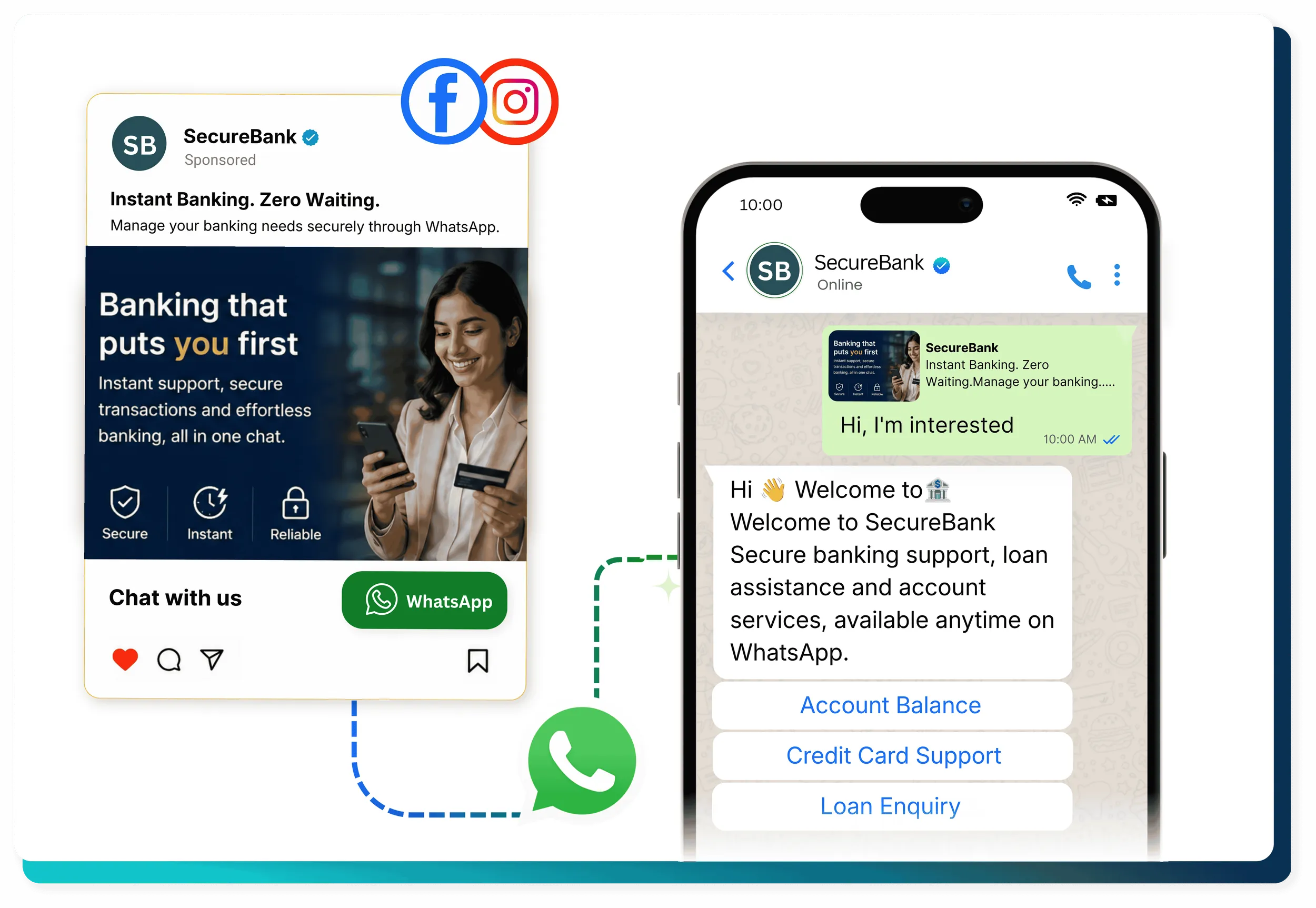
Digital advertising often pays for attention and then immediately tests how patient that attention is. An interested person reaches a slow landing page, meets a seven-field form and receives a call four hours later from an unknown number. By then, the lead has already moved on.
Click to WhatsApp Ads shorten that route. A person taps an advertisement on Facebook or Instagram and enters a WhatsApp conversation connected to the campaign. The opening flow can reflect the exact product, service or property shown in the ad.
A chatbot may ask two or three useful questions, but qualification does not need to feel like a loan application. The answers help route the lead, tailor the next message and give the sales team a cleaner starting point. Campaign-source data can also support attribution and retargeting decisions.
At the expo, we will demonstrate how Meta Business Messaging, WhatsApp Automation and lead management work together after the click. The advertisement may create the first spark; the journey afterward decides whether the budget produced a customer or another row in a spreadsheet.
AI chatbots that know when to stop talking
Nobody wakes up hoping to have a long conversation with a customer-support bot. People want the answer, the action or a fast route to someone who can help.
An AI-powered WhatsApp chatbot can understand intent, collect details, retrieve approved information and guide customers through repeatable tasks. Multilingual support becomes valuable for businesses serving diverse markets, while media handling allows journeys to include images, documents and other useful content.
The bot should not improvise its way through a sensitive complaint or trap a high-intent buyer inside an endless loop. Clear handover rules keep human judgment in the moments where it matters.
Our booth demonstrations will cover practical automation across FAQs, lead qualification, appointment booking, order tracking, service requests and customer feedback. Visitors can discuss the boundaries as seriously as the possibilities. Trust grows when automation works predictably, not when it pretends to be magic.
RCS: the message that finally discovered design
SMS has survived every new channel because it is direct, familiar and available on almost every phone. Its visual range, however, remains close to a receipt.
RCS messaging adds verified business identity, images, video, rich cards, carousels, suggested replies and interactive buttons to the native messaging experience. Customers can browse options, respond to prompts or take action without downloading another brand application.
A retailer can present a product collection through swipeable cards. A travel company can send a visual itinerary with relevant actions. A healthcare provider can build clearer appointment communication. Promotional messages can carry branding and interaction without resembling a dense block of shortened links.
Anantya.ai supports RCS within the same broader engagement environment as WhatsApp and SMS. That matters because RCS is not required to replace another channel. It can strengthen the parts of a customer journey where rich, verified mobile communication makes more sense. Visitors will be able to experience the format rather than reading another explanation of what “rich messaging” means.
WebChat for visitors who are interested right now
Website analytics can tell a business that people visited a high-intent page. They cannot recover the questions those visitors never asked.
Anantya.ai WebChat gives visitors a direct way to start a conversation while they are still browsing. The widget can be customised with brand colours, welcome messages, pre-filled text and relevant contact details. Customers and agents can also exchange images, videos and documents.
Every WebChat conversation reaches the Anantya.ai Team Inbox, where it can be handled alongside enquiries from other channels. A visitor does not have to fill a generic form and wait for a callback simply to ask whether a product is available in their city.
The bigger value appears after the first message. Website conversations can enter lead workflows, reach the correct team and retain context if the customer later continues through WhatsApp.
Omnichannel inbox; for customers on multiple platforms
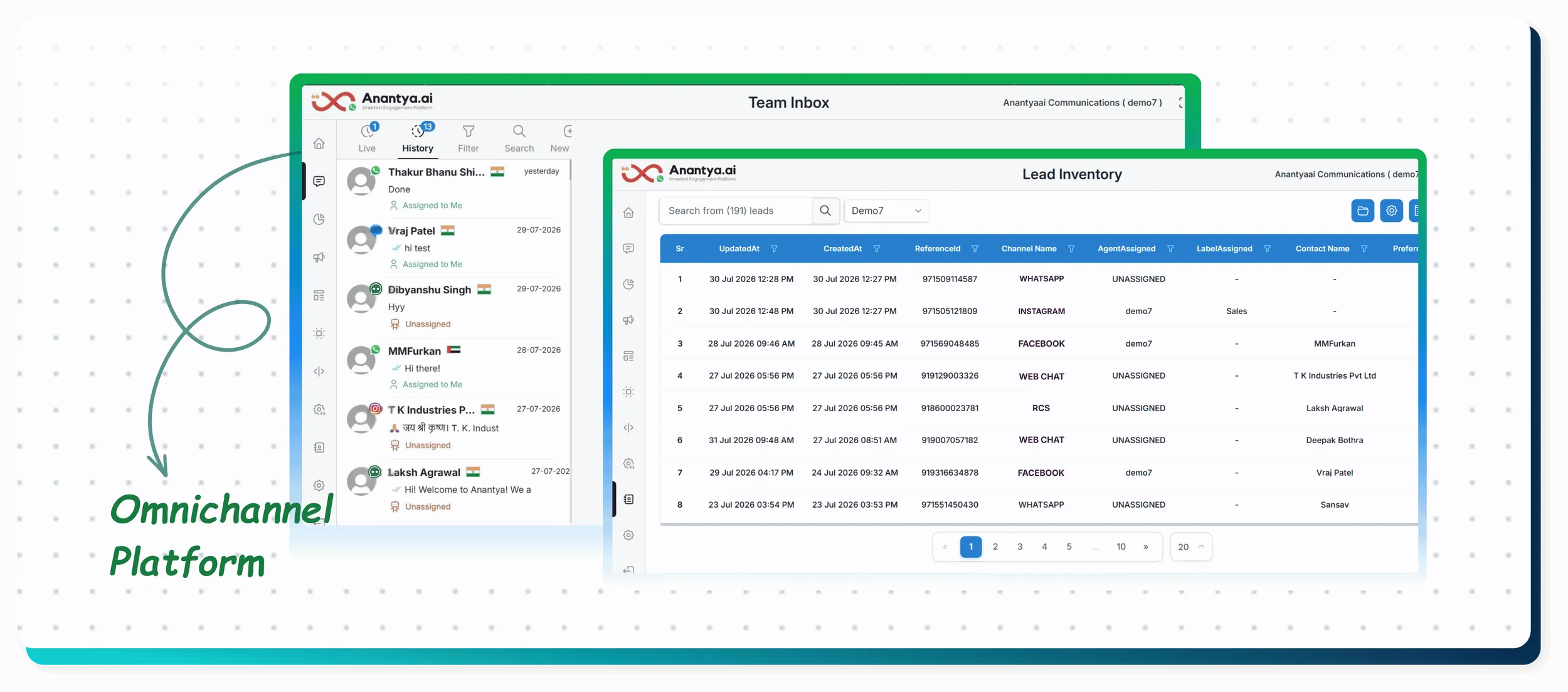
An omnichannel inbox is not valuable because it puts many logos on one screen. Its value comes from giving teams a coherent view of the customer journey.
Anantya.ai can bring conversations from WhatsApp, WebChat, RCS, SMS and social channels into a connected workspace. Agents gain clearer ownership, conversation history and customer details. Managers can inspect response patterns and workload without collecting separate reports from every channel.
Cross-channel continuity also improves the customer experience. A person who began on the website and returned through WhatsApp should not be treated as two unrelated leads. An integrated customer engagement platform can preserve enough context for the next interaction to begin in the right place.
The booth demonstration will show how messages, lead information, routing and agent activity work together. One inbox is useful; a shared operating view is better.
Custom Integrations for brands that already have a tech stack
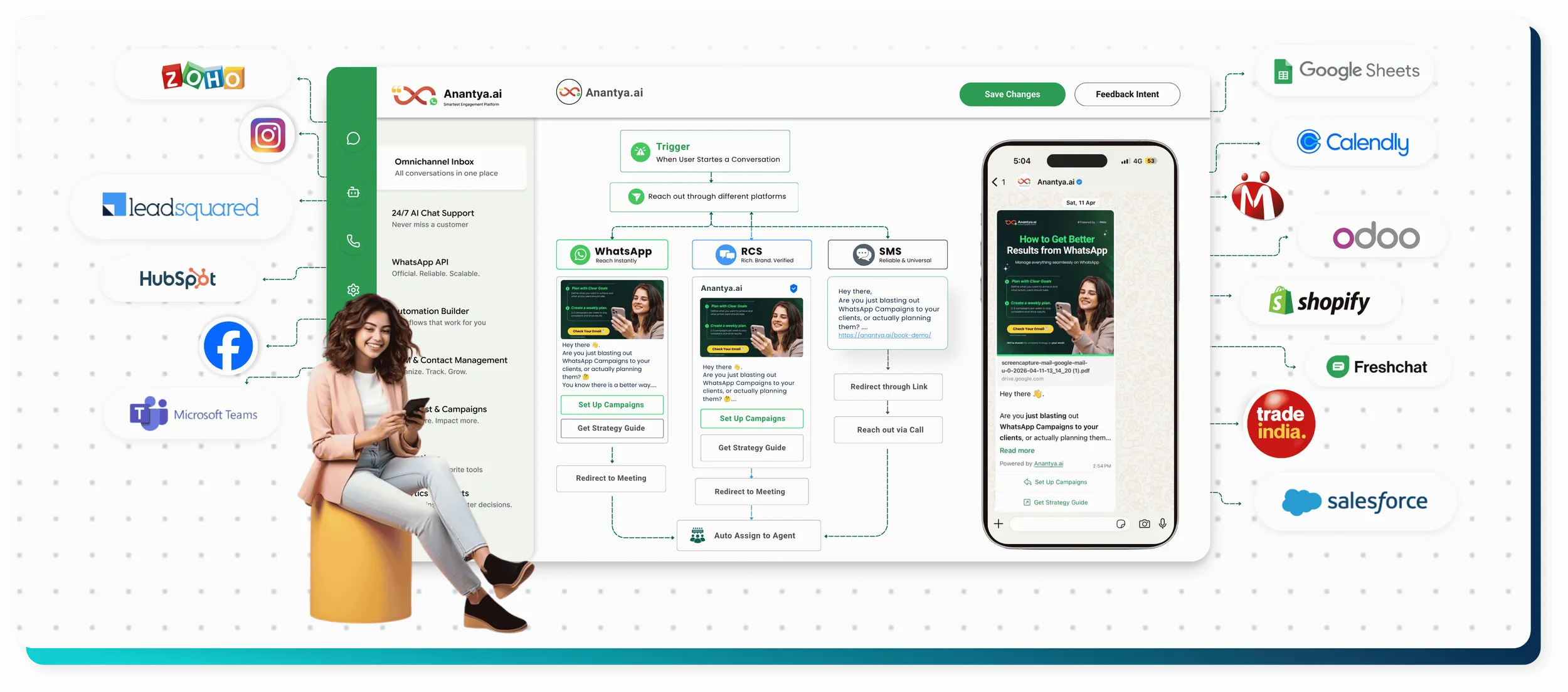
MSMEs are often told that digital transformation means replacing everything they currently use. That is a very expensive way to discover that the new system has its own problems.
Anantya.ai is designed to connect with existing CRMs, ERPs, e-commerce stores, websites, payment tools, booking systems and internal software. More than 60 plug-and-play integrations cover common platforms, while APIs and webhooks support tailored requirements.
A CRM integration can create or update a lead when a customer responds. An ERP connection can trigger order or dispatch communication. A booking system can expose available slots inside a chat flow. Custom webhooks can send event data to an internal application in real time. The exact workflow depends on the business. A useful WhatsApp Business Solution Provider should adapt communication to the company’s operations instead of offering the same pre-built journey to a clinic, a university and a furniture manufacturer.
SMS, OTP and fallback: still doing the unglamorous work
No customer engagement strategy is complete if critical messages fail because the most fashionable channel was unavailable. We support transactional and promotional SMS, user verification and OTP delivery. SMS fallback can help maintain reach when a message on another channel is not delivered. The format may be simple, but reliability remains essential for authentication, alerts and urgent updates.
Bringing SMS into the wider communication setup gives businesses better control over channel selection and delivery continuity. Not every message needs a carousel. Some need to arrive, quickly and clearly.
How the Same Platform Looks Different Across Industries
A feature list can make a platform look like a one-size-fits-all solution. In reality, every industry works differently. Even companies within the same industry have their own goals, workflows, customers, and operational challenges. That means they often use the same platform in different ways.
The real value of a platform comes from how well it adapts to the way a business operates. Features may stay the same, but the problems they solve, the processes they support, and the outcomes they deliver can vary from one company to another. Understanding these differences is key to seeing how the same platform creates value across industries.
Healthcare: Extending the Front Desk Beyond Business Hours
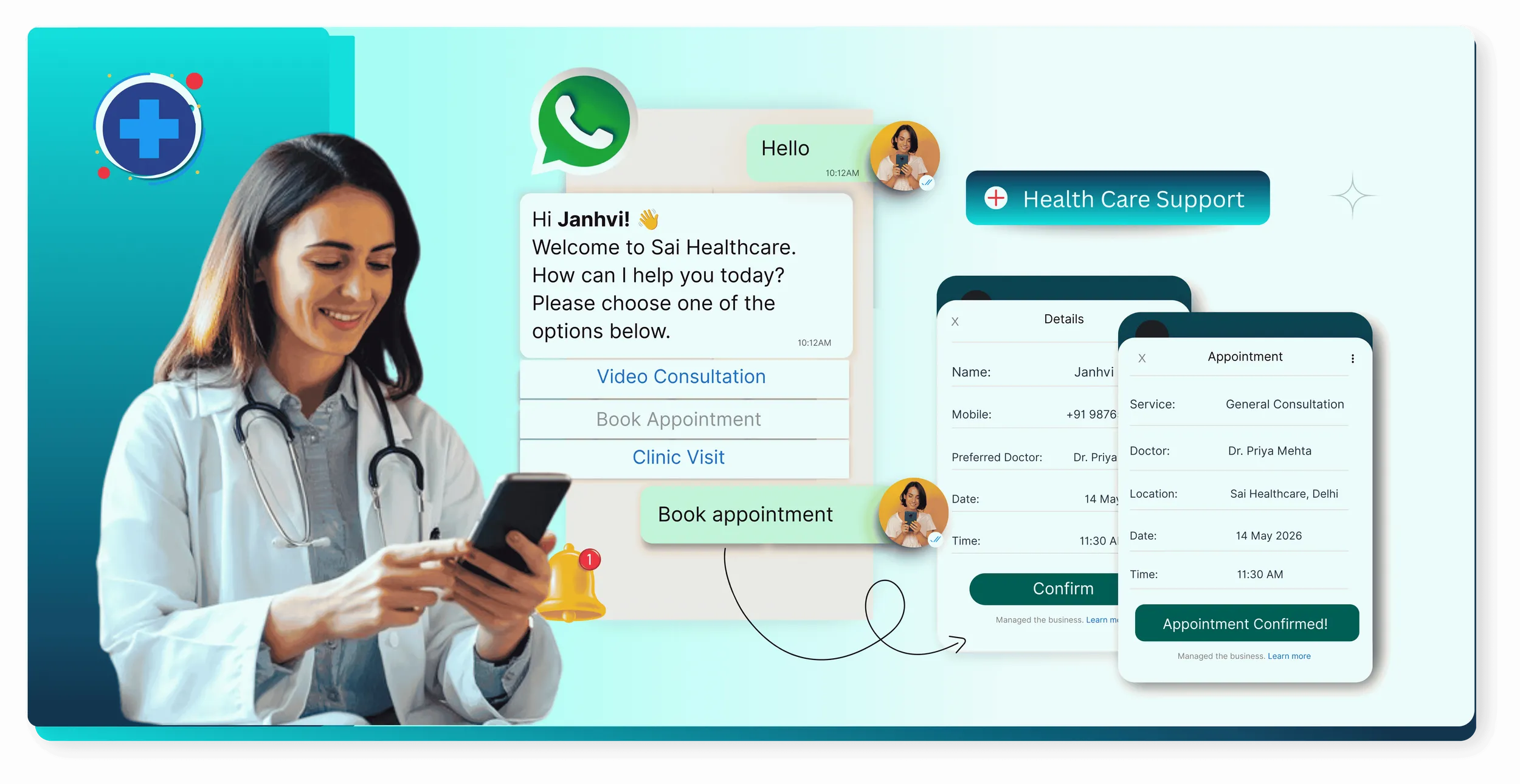
Clinics, hospitals and wellness businesses can use WhatsApp for appointment discovery, booking, rescheduling, reminders and routine service information. A chatbot can collect the preferred department or location before presenting suitable slots.
Support staff receive fewer repetitive calls, while patients gain a quicker route to common actions. Complex medical questions and sensitive cases can move to trained personnel with the conversation history intact. The automation supports access; it does not attempt to replace clinical judgment.
Education: Turning Enquiries into Enrolments
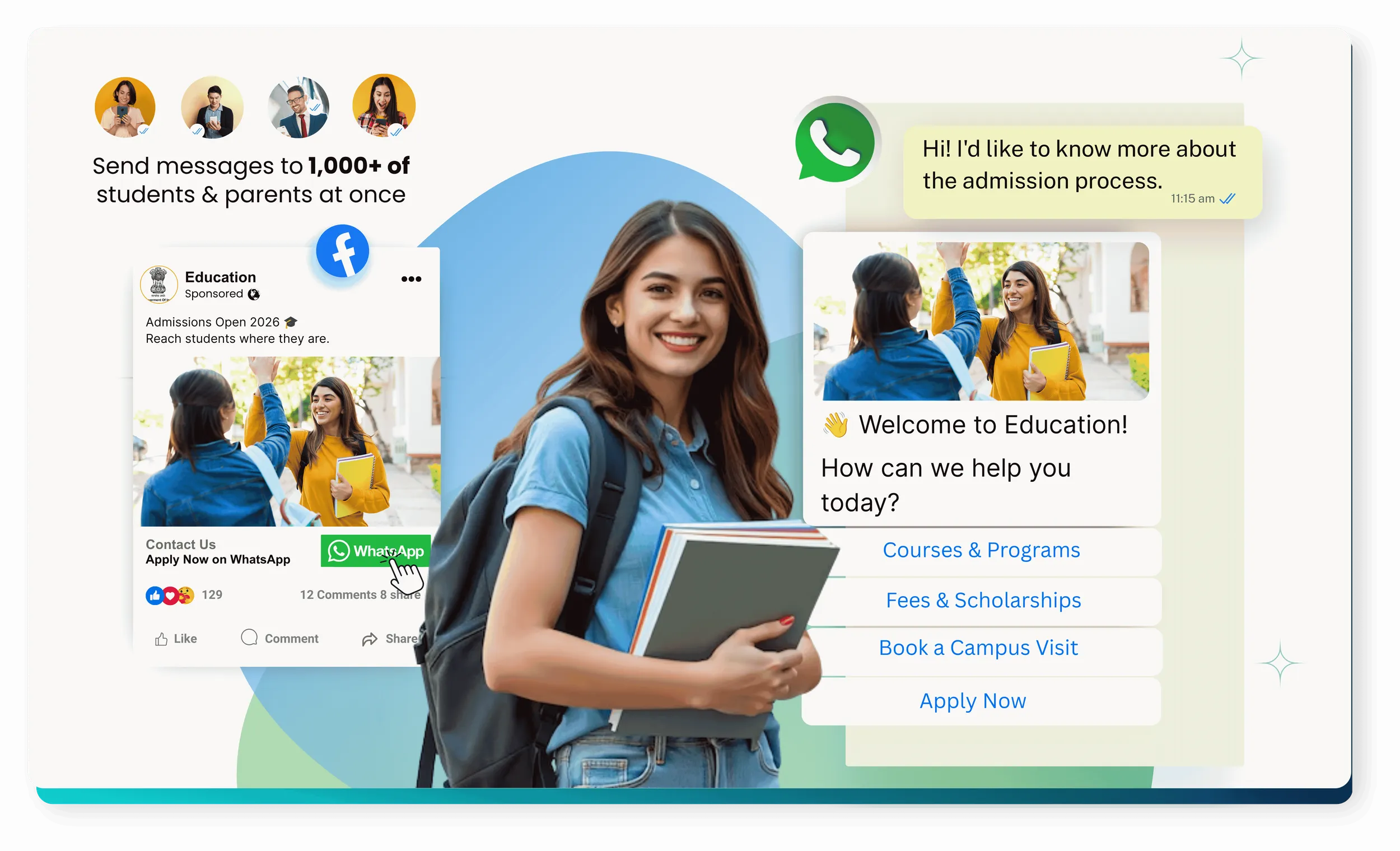
An education enquiry often begins months before enrolment. A student asks for a brochure, compares fees, checks eligibility, speaks with family and returns later with new questions. Manual follow-up struggles to match this timeline.
A connected journey can share course information, collect preferences, schedule counselling and continue useful follow-ups according to the student’s stage. Counsellors see the context when the lead is ready for a deeper conversation instead of calling every enquiry with the same opening script.
Retail and E-commerce: Reducing the Gap Between Browsing and Buying
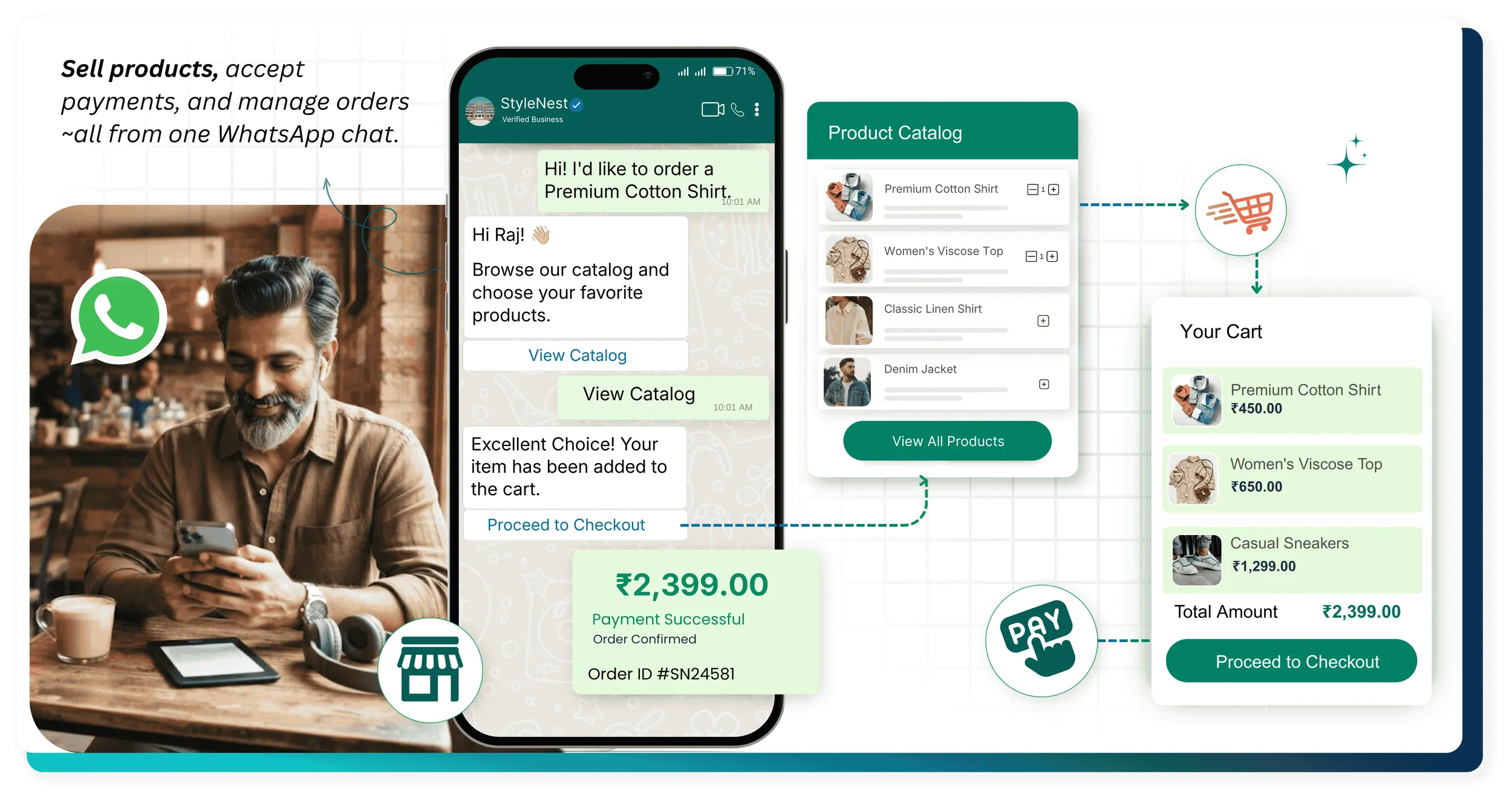
Retail journeys can include product discovery, catalogue sharing, order confirmation, shipping updates, cart recovery and feedback. Purchase history and customer preferences make subsequent campaigns more relevant. RCS can present visual product cards, while WhatsApp handles questions and assists buying. The customer receives a connected experience even when multiple channels participate behind the scenes.
Real Estate: Streamlining Lead Qualification
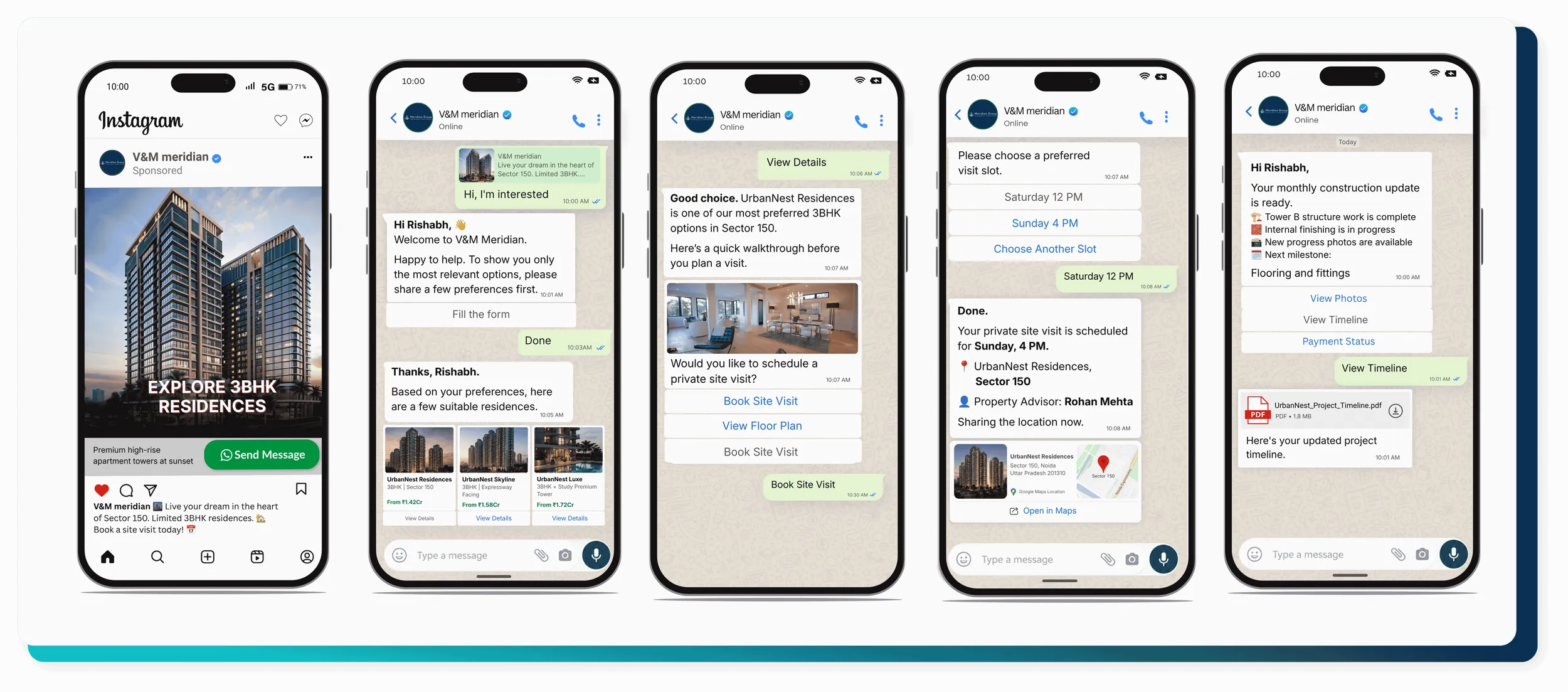
Property campaigns produce high enquiry volumes and wide variation in intent. Click to WhatsApp Ads can open a project-specific flow that collects budget, configuration, preferred location and site-visit interest. Qualified prospects can reach the correct sales representative with their requirements already recorded. Brochures, videos, floor plans and appointment reminders remain part of the same journey, reducing the usual hunt through chat history.
Banking and financial services: structure before speed
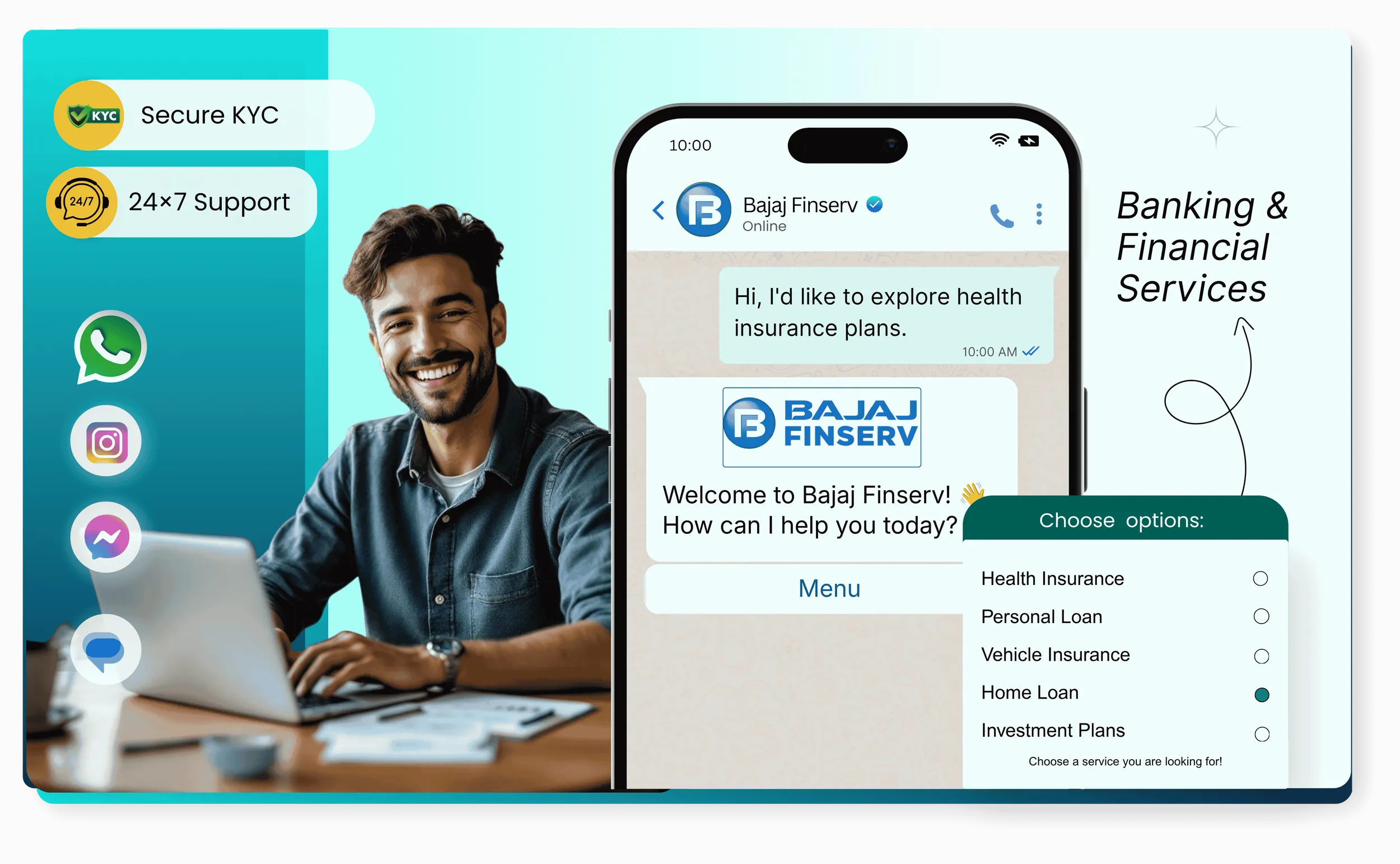
Financial communication requires more than a quick reply. Controlled access, verification and clear workflow logic are essential.
Businesses can build journeys around EMI information, payment reminders, application updates, statement requests and service tickets. Authentication steps protect account-related information, while human escalation remains available for exceptions and sensitive cases.
Travel and hospitality: communication that moves with the booking
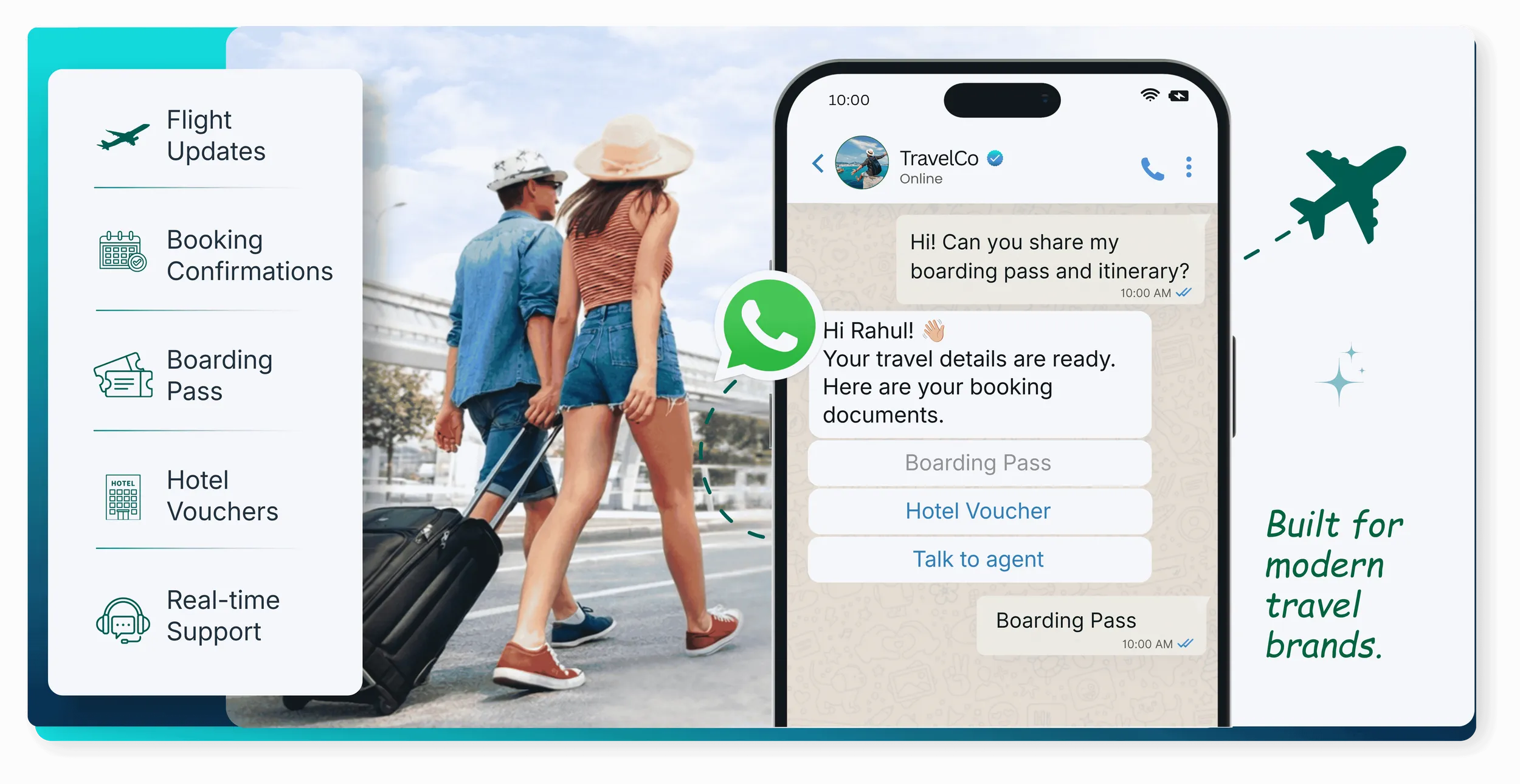
Travel plans rarely stay still. Confirmations, itineraries, check-in reminders, payment links and schedule changes must reach customers at the correct time.
An integrated setup can automate routine updates while giving agents access to booking context when plans change. RCS adds visual information; WhatsApp supports direct assistance; SMS provides a dependable fallback for urgent alerts.
Manufacturing and distribution: fewer status calls, cleaner dealer communication
Manufacturers can connect dealer enquiries, quotation requests, product documents, dispatch updates and service scheduling with internal systems. An ERP-triggered message removes the need for someone to check the order status and type the same update repeatedly.
Distributors receive timely information, internal teams handle fewer repetitive calls, and the communication record remains available when an exception needs attention.
Who Should Visit the Booth?
The short answer is not “everyone.” A useful event conversation starts with a problem we can examine together.
Founders should visit if customer communication still depends heavily on individual memory. Marketing teams will find value when campaigns generate replies but attribution and follow-up remain unclear. Sales leaders can examine lead qualification, routing and nurturing. Support teams can test automation and omnichannel visibility against their everyday workload.
Technical teams can discuss APIs, webhooks, data flow and custom integrations. Agencies, consultants, SaaS companies, resellers and system integrators can explore partnership models for offering WhatsApp, RCS, AI and customer engagement solutions to their clients.
The platform serves startups, MSMEs and larger enterprises across retail, D2C, healthcare, education, finance, real estate, travel, logistics and manufacturing. Company size is not the deciding factor. Communication complexity is.
Ask Our Experts the Question You Cannot Solve with Another Subscription
Businesses rarely arrive at an expo saying, “Please show me a customer engagement platform.” They arrive with a lead problem, a support bottleneck, a campaign that underperformed or a CRM implementation nobody enjoys using.
Bring that version of the question.
Questions can be as specific as how WhatsApp should qualify leads without adding friction or whether customer support should be automated at all. A stubborn CRM, the spreadsheet holding follow-ups together, uncertainty about where RCS belongs, or a chatbot with poor handover logic can all become part of the discussion.
Our team can map the current journey, identify the gaps and show which parts of Anantya.ai are relevant. If the answer does not require every feature, that is useful too. Software should reduce operational clutter, not become a fresh source of it.
Why Businesses Choose Anantya.ai
Anantya.ai combines WhatsApp Business API, RCS, SMS, WebChat, social messaging, AI chatbots, campaign management, lead nurturing and analytics inside one customer engagement environment.
The platform currently supports more than 450 brands across global markets. Businesses can start with a focused use case and expand as teams, channels and message volumes grow. More than 60 integrations help connect communication with common business software, while custom APIs and webhooks support specialised processes.
Technology is only one part of implementation. Onboarding, workflow design and ongoing support decide how quickly a company moves from a demo to a working system. Dedicated assistance helps teams configure journeys, troubleshoot issues and improve the setup after launch.
For businesses comparing a WhatsApp API Provider in India, the decision should extend beyond pricing and message volume. The right provider must understand the operational goal, support Meta-compliant communication, integrate with existing systems and remain useful as the company becomes more complex.
Anantya.ai is built around that longer journey.
Plan Your Visit to MSME Startup Expo 2026
The 12th India International MSME Startup Expo & Summit 2026 will bring MSMEs, startups, service providers, industry bodies, investors and government representatives together at Bharat Mandapam. Visitors can learn about business opportunities, technology, policies, legislation and government schemes relevant to the MSME ecosystem.
Anantya.ai will exhibit from August 11 to 13 in Hall No. 4. Live product demonstrations and one-to-one discussions will run throughout the event. Visitors can experience WhatsApp Automation, RCS journeys, AI chatbots, WebChat, omnichannel operations and custom integrations while discussing their own business requirements with the team.
A dedicated appointment is recommended for anyone bringing a detailed integration requirement or an existing workflow for review.
Returning in 2026 with Fewer Gaps, Not Just More Tools
The first wave of business digitisation gave MSMEs access to more software. The next challenge is getting that software to behave like one business.
WhatsApp Business API remains a powerful place to begin because customers already understand the channel. Sustainable growth, however, depends on what surrounds the conversation: reliable automation, useful AI, shared context, cross-channel visibility, CRM data, clear ownership and an easy route to human help.
That is the story Anantya.ai is bringing to MSME Startup Expo 2026.
Last year, the expo introduced our WhatsApp-led platform to Indian businesses. This year, visitors will see how WhatsApp, RCS, SMS, WebChat, AI and integrations can operate together across the customer journey.
If your current setup works only because one person knows where everything is, it is time to meet the system that does not need them to remember it all.
Find Anantya.ai at Booth No. 3, Hall No. 4, Bharat Mandapam, Pragati Maidan, New Delhi, from August 11-13, 2026.
Sources and References
This draft is based on Anantya.ai’s official website and its published coverage of the 2025 MSME Expo, along with publicly available event information for the 12th India International MSME Startup Expo & Summit 2026.
Anantya.ai. Conversational Engagement Platform for Businesses. https://anantya.ai/
Anantya.ai. MSME India Expo 2025 Highlights & Updates. https://anantya.ai/blog/msme-india-expo-2025-highlights/
Anantya.ai at MSME Startup Expo 2025. https://anantya.ai/blog/msme-startup-expo-2025/
Embassy of India, Warsaw. 12th India International MSME Startup Expo & Summit 2026 event notice.
https://www.indianembassywarsaw.gov.in/news_detail/?newsid=179